
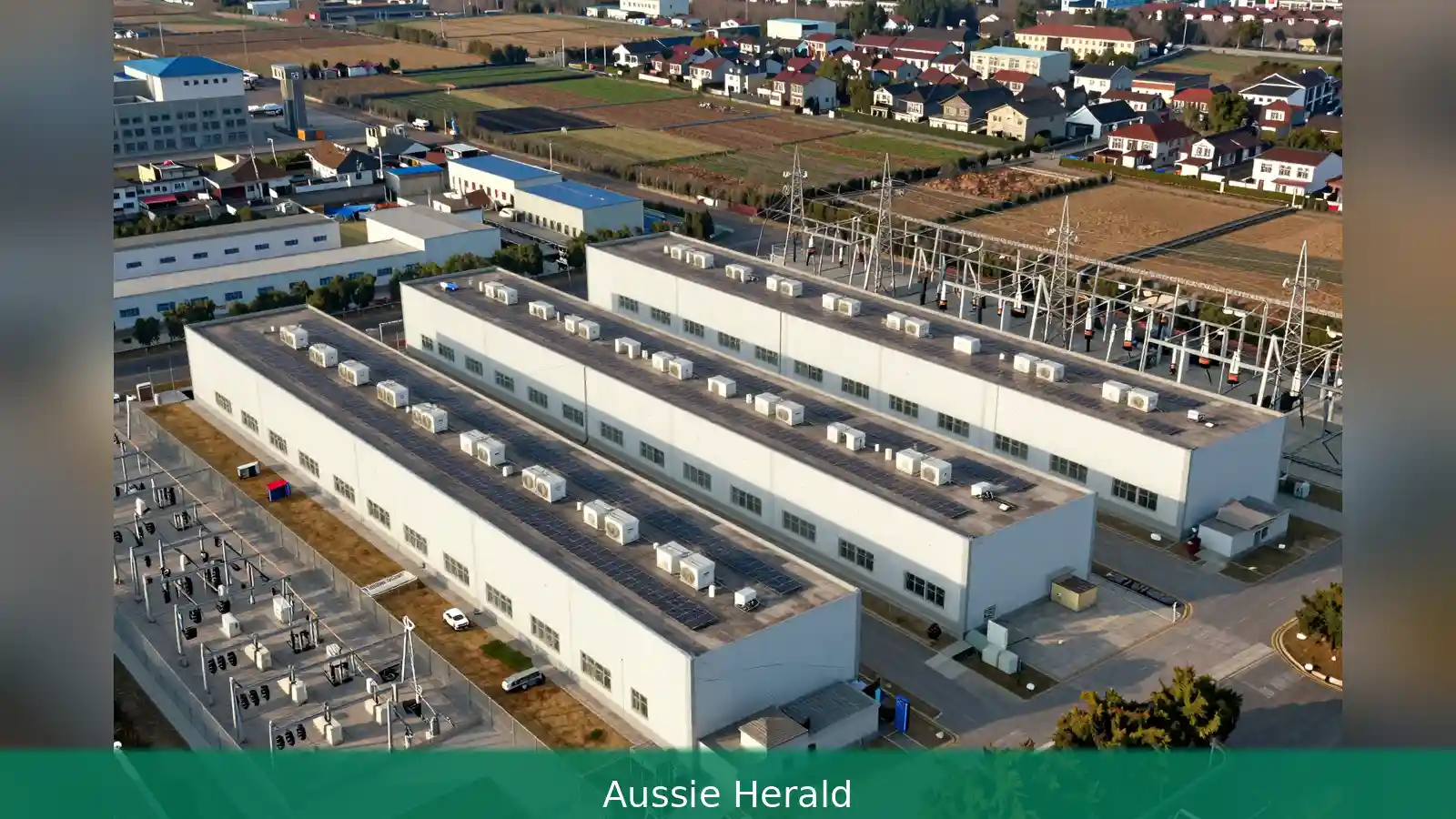
300 billion. That's the rough sum private investors poured into new buildings, equipment and machinery in New South Wales and Victoria over the past 12 months as data centre construction accelerated. The surge has converted Australia into one of the world’s most sought-after locations for hosting cloud and artificial intelligence infrastructure, while exposing gaps in planning for energy, water and climate risk. State and federal energy ministers will meet in July 2026 to decide how to turn national expectations for data centre development into consistent rules across jurisdictions.
There are now hundreds of data centres across Australia, with significant clusters in Sydney and Melbourne, figures cited by federal cabinet secretary Andrew Charlton as he set out the scale of the boom. Charlton has argued the investment is delivering an economic lift comparable to major historical infrastructure waves. Real estate firm Knight Frank has ranked Australia the second most in-demand destination globally for data-centre investment, a status driven by the country’s Asia-Pacific location, land availability and renewable energy potential.
Private capital has flowed into new builds, server halls, power plants and cooling equipment, and rapid expansion of local hosting capacity is a central effect of that spending. The result is that Australian firms, and regional customers across the Asia-Pacific, can now colocate the large-scale compute needed for AI and cloud services that previously would have been routed offshore. Proponents, including Charlton, say the opportunity isn't only to host infrastructure but to translate it into productivity gains, new businesses and higher-value jobs.
Governments have started to put conditions on approvals to preserve community support. Several state and federal authorities are requiring developers to source grid-scale renewable energy or enter power-purchase agreements as part of their consent conditions. The policy aim is to protect household electricity bills and secure the social licence that allows communities to accept large clusters of industrial-scale computing near suburban and peri-urban areas.
Where planning is falling behind
A global analysis of planned data centre projects by XDI found many digital infrastructure hubs had emerged as climate-risk hotspots. XDI’s director of science and technology, Karl Mallon, said energy demand and water consumption have dominated public debate so far, but physical climate risk must be considered in its own right. He asked whether assets can remain operational, insurable and economically resilient over their intended life, a question the report says is increasingly urgent for Australia.

On the resource front, the pressures are immediate and concrete. Some large data halls can require tens of millions of litres of water per day for cooling in certain designs, a scale that prompted the Water Services Association of Australia to flag questions about local water supply impacts. That level of demand sits alongside worrying electricity system scenarios that industry reporting summarised as a risk of concentrated builds creating blackout exposure.
In extreme cases, a single fault could shed very large blocks of megawatts almost instantly, regulators warned in those accounts.
Land-use trade-offs have also surfaced. Analysis cited in industry reporting valued the most productive farmland at risk of redevelopment for data centres, provoking warnings from agritech stakeholders about potential impacts on food production and prices if conversion of prime agricultural land continues without stronger planning controls. XDI and other commentators pointed to jurisdictions with weaker development controls as magnets for rapid, sometimes ill-sited builds.
Industry and government proponents counter that modern data centres can be paired with renewable generation, battery storage and demand-management systems to reduce their grid impact. They say regulators are increasingly attaching conditions to development approvals to protect household bills and grid stability. But the variety of state planning rules means the implementation of those protections is uneven, which is the core problem ministers now face.
Politically, the federal cabinet secretary has framed the investment as a national economic opportunity that must be married to protections for households and local communities. That framing reflects the tension at the heart of the boom: the same factors that make Australia attractive to investors also concentrate environmental and infrastructure stresses in particular places. Knight Frank’s ranking and the heavy capital flows make it clear the market will keep coming unless planning and regulatory settings change.
Officials are responding. Federal and state energy ministers have been moved to discuss conditions around renewable energy procurement, water use, grid connection and land-use safeguards. The central task for policymakers is to reconcile the scale of private investment with the operational realities of ageing grids, local water systems and accelerating climate risk, while preserving the economic benefits that proponents emphasise.
Related Articles
- AI strategy: big tech invests while rules stay vague
- 55-inch Amazon Fire TV Omni QLED discounted ahead of Prime Day
- AI erases classic phishing warning signs, attacks rise
State and federal energy ministers meet in July 2026 to agree how the federal government’s expectations for data-centre growth will be turned into consistent rules on renewable procurement, water use and grid connections. Originally reported by ABC News.
This article was created with AI assistance.


