
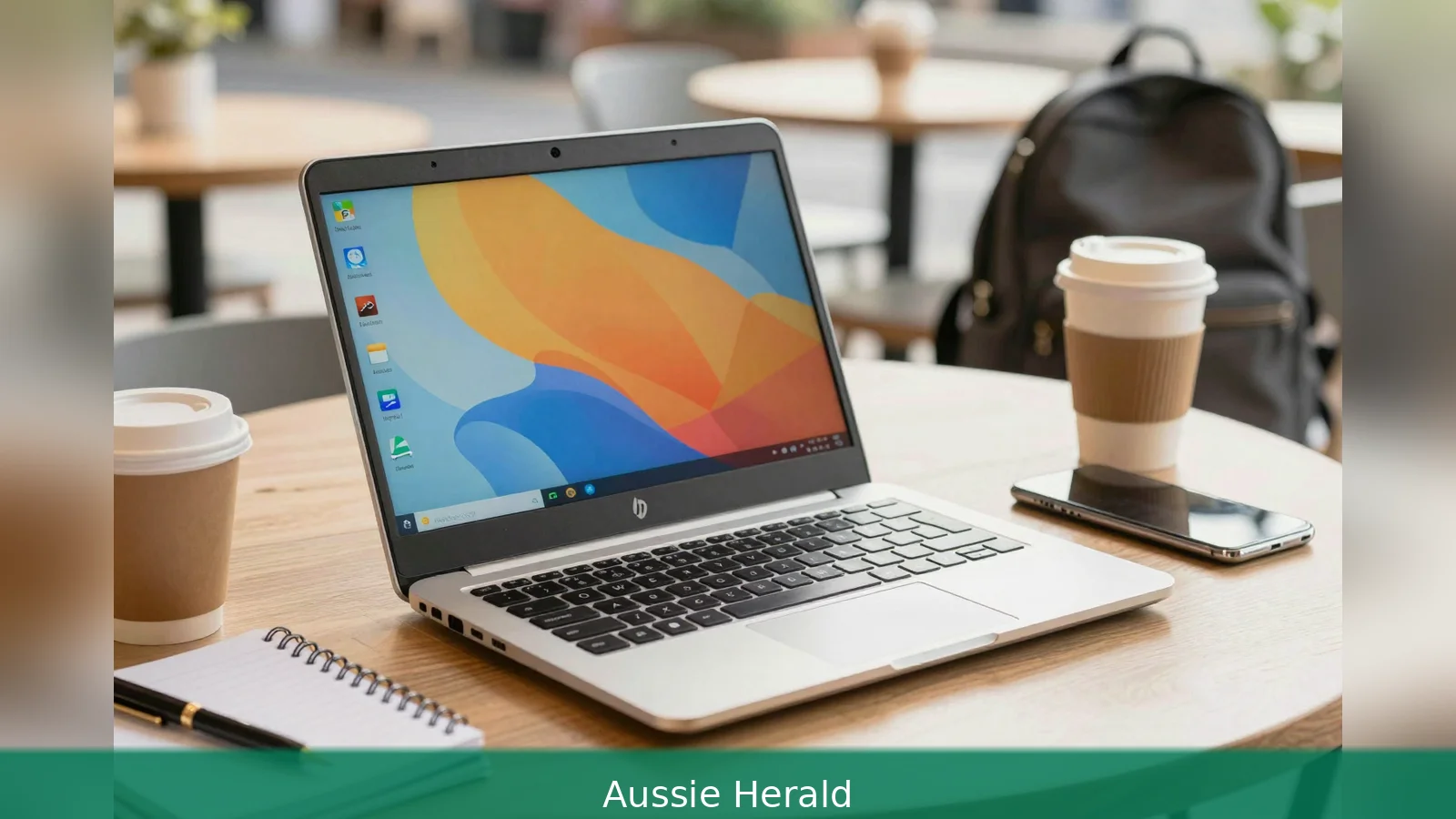
Students and remote workers get longer battery life and a noticeably better screen because HP has shipped the OmniBook 3 as a budget laptop priced at about $500. The 2026 OmniBook 3 focuses on practical gains rather than premium finishes, pairing a sharp 2K OLED panel with what ZDNet called outstanding battery life for a sub-$700 machine. Some configurations also undercut the MacBook Neo on memory and storage, Wired reported, giving buyers fewer compromises for everyday multitasking and local files. For anyone who values all-day endurance and vivid colour on a tight budget, the OmniBook 3 is a persuasive alternative to the Neo.
Students and remote workers will notice longer sessions between charges because HP designed the OmniBook 3 around battery life and a premium-feeling screen rather than thinness or metal finishes.
HP positioned the OmniBook 3 as a low-cost, no-frills portable that prioritises the core user experience. The review unit ZDNet tested arrived in a Glacial Silver finish and is compact enough for backpacks and travel, but thicker than the slimmest ultraportables. ZDNet noted the chassis is plastic, the lid is thicker than average and the keyboard uses rubber-capped keys, yet the laptop still passes the one-finger hinge test and feels sturdy rather than flimsy.
Two practical wins that change day-to-day use
The OmniBook 3 earns its place against the MacBook Neo through two concrete advantages: battery life and a 2K OLED display. ZDNet described the battery performance as outstanding for a budget machine, a trait that shifts the usual bargain-laptop trade-off away from endurance. Alongside that stamina is a sharp 2K OLED panel, which delivers stronger colour and contrast than the typical budget LCD. Together these two things make the OmniBook 3 a credible daily driver for web browsing, documents, online classes and light media playback.
Wired added a third practical point about value choices. Some OmniBook 3 configurations ship with roughly twice the memory and storage compared with base MacBook Neo models, Wired reported. That extra RAM and local storage matters in real workflows: fewer slowdowns when you have multiple browser tabs and apps open, and less need to rely on cloud storage for everyday files. For buyers who accept a thicker plastic shell, those trade-offs are meaningful.

What HP traded to hit the price
HP clearly trimmed surface polish to fund those everyday gains. The OmniBook 3 uses a plastic chassis rather than aluminium, and ZDNet and other testers described the lid as thicker and the overall profile as less elegant than the Neo. The lid doesn't magnetise fully shut, a detail Wired and reviewers flagged as inelegant compared with the Neo's thinner aluminium design.
Those choices extend to audio and brightness. ZDNet flagged muffled speakers and a low peak screen brightness as weaknesses that limit outdoor usability and diminish immersive media playback. Reviewers found the speakers underwhelming for movies and music, and the panel's lower peak output means the vivid OLED canvas can struggle in bright sunlight or on a sunlit café table. Port selection, webcam quality and some other niceties also remain common sacrifices in sub-$700 Windows notebooks.
Still, the OmniBook 3's approach has a clear logic. By prioritising battery chemistry, an efficient processor platform and an OLED panel over thinness and metal, HP has produced a machine that feels capable in everyday tasks where most buyers actually measure value. ZDNet emphasised Qualcomm's push into laptops, crediting recent Qualcomm-powered Windows notebooks with bringing efficient performance to an affordable segment, and saying the OmniBook 3 is an example of that trend.
Design conservatives will prefer the Neo for its finish, hinge feel and speaker system. But for a student or remote worker whose primary metrics are hours between charges, screen clarity for long Zoom calls and more generous RAM and storage at a low entry price, the OmniBook 3 changes the conversation about what a $500 notebook can be.
The physical details underline the choice. The review unit's Glacial Silver shell and rubber-capped keys make it straightforward to use, and the one-finger hinge test suggests HP didn't cut corners on basic durability. At the same time, the thicker lid and plastic body are reminders that the OmniBook 3 is designed to deliver function over form.
Price positions the device clearly. Coming in at about $500, the OmniBook 3 sits in a segment where buyers usually accept short battery life or weak displays. HP has tried to flip those expectations by giving endurance and an OLED to the foreground, while accepting compromises in materials and some component quality.
Related Articles
- Prime Day moves to June, big discounts on smart home gear
- Google March 2026 update hit 79.5% of lifestyle sites, developer checklist maps fixes
- Brazil emergency alerts offline after 'misantropi4' message
The single concrete fact to take away is the price: the OmniBook 3 ships at about $500, offering longer battery life and a 2K OLED display where a MacBook Neo buyer would otherwise trade those strengths for thinner metal and marginally better speakers.
This article was created with AI assistance.


