
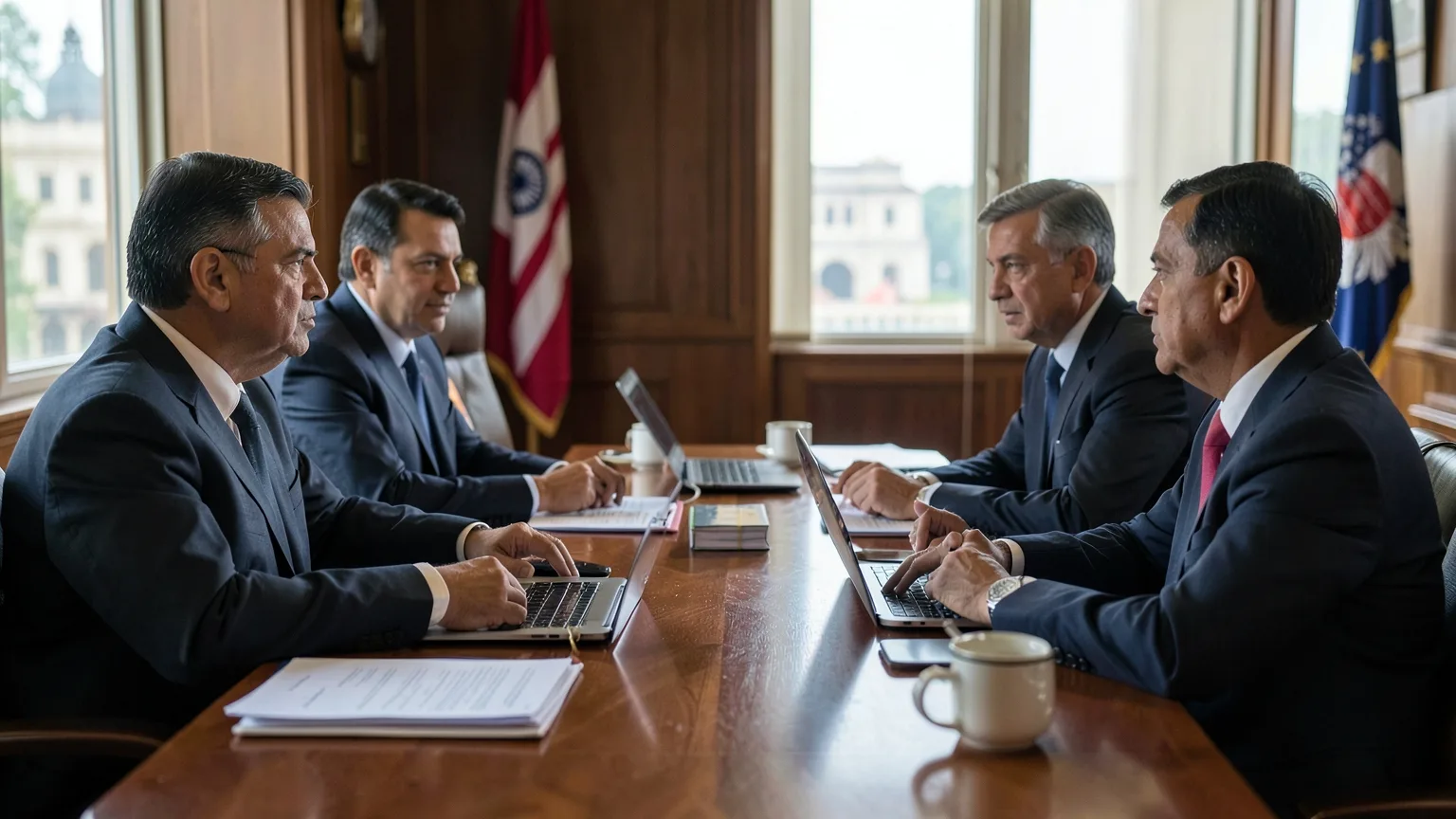
Negotiations between New Delhi and Washington are ongoing but stalled, with India’s finance minister warning further give-and-take may be “very, very difficult” and looming US tariff powers narrowing the options.
India and the United States are talking, but tariff powers have shrunk what either side can credibly offer, leaving talks on a broader trade deal stalled. Officials describe a practical impasse: negotiators can keep negotiating, but U.S. tariff measures and pending probes have sharply narrowed the space for compromise.
On Monday, Oct. 5, Finance Minister Nirmala Sitharaman said negotiations on a bilateral trade agreement were still under way but had “reached a plateau” beyond which “giving or taking might be very, very difficult” [m.thewire.in].
United States Trade Representative Jamieson Greer has likewise signalled the talks are unresolved, saying a deal is not “imminent” as negotiators work through remaining sticking points [www.reuters.com].

The two sides agreed an interim framework in February that cut a previously imposed punitive tariff from 50% to 18% on most Indian goods, but officials have not finalised a broader deal, Reuters reported. Negotiators continue to list specific categories where they cannot yet bridge differences, and neither government has announced a timetable for concluding the talks [www.politico.com].
The bargaining space has been squeezed by U.S. tariff measures that are partly already in force and partly authorised as a threat. A 10% baseline tariff now applies to many imports after U.S. legal changes around the use of emergency tariff powers, creating a new baseline rate for some goods, Reuters reported. At the same time, Congress last month passed a law that gives the president authority to impose tariffs of up to 100% on major buyers of Russian energy: an authorisation that could be applied to countries including India but does not itself impose those tariffs, Reuters said.
India also faces a 10% rate on around half its exports as part of a U.S. probe linked to forced-labour concerns, and a separate U.S. investigation into manufacturing overcapacity under Section 301 could lead to further duties if it finds harm to U.S. industry, the Politico newsletter reported. The combination of existing duties and the possibility of much larger, discretionary tariffs has limited what Washington can credibly offer and reduced New Delhi’s incentive to make concessions.
Sitharaman criticised that shift in tactics, saying negotiation used to be the principal tool to address imbalances but that “tariff has become weaponised,” and that tariffs are being used outside the traditional framework of negotiated tradeoffs [www.aninews.in]. Reuters also noted that Indian purchases of Russian oil have not been significantly reduced, which has heightened the risk that New Delhi could face additional U.S. tariffs under the new authorising law.
With those tariff dynamics in play, negotiators in both capitals are coping with a narrower set of compromises than earlier expected, and officials from each side have warned publicly that bridging the remaining gaps will be hard [www.cnbc.com].
Watch whether Washington clarifies the scope and likely application of its new tariff authorities and related probes, and whether New Delhi (which has signalled limited room for further concession) signals any further willingness to loosen current red lines. Until one or both do, negotiators will face a constrained choice between protecting domestic priorities and accepting terms that could leave exporters exposed to higher levies.
This article was created with AI assistance.


