
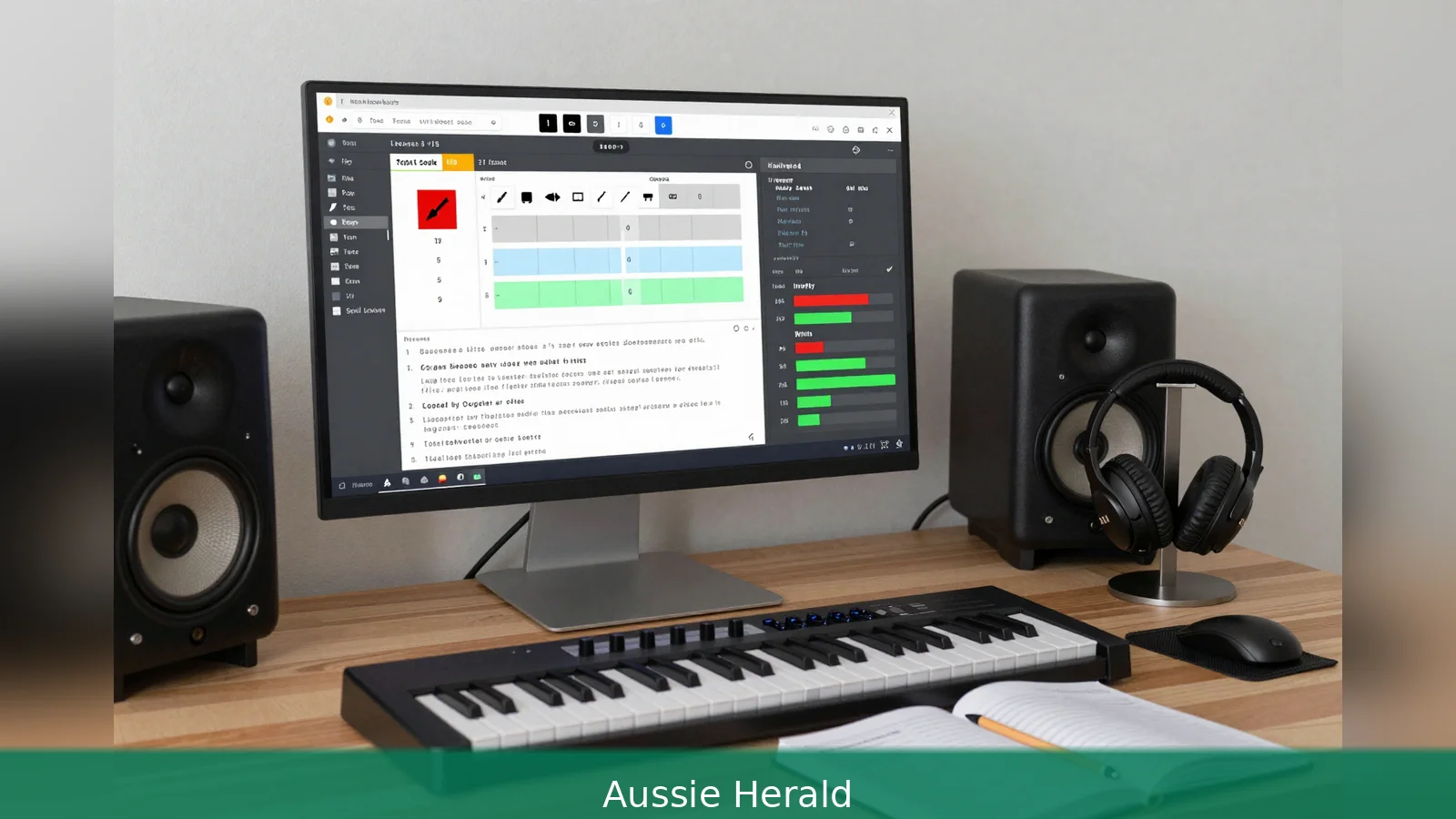
Promises of instant, production-ready tracks sit uneasily beside most AI music outputs, which too often sound generic. Tunesona has pushed the human step of writing a precise song brief into the product itself, adding a Confirm Before You Create flow, a Plan Mode that shows full song structure, and a live progress panel that reveals what the system is building. The update makes the song blueprint an explicit, editable object and advertises that every track is cleared for commercial use under a 100 percent royalty-free licence. That change reframes the problem many engineers and composers face: getting the model to hear what you hear starts with saying it clearly.
The startup makes an implicit part of the AI workflow explicit, not optional.
The company now surfaces a complete song brief for confirmation before generation. Users see a plan view that lays out sections, mood, instrumentation and a lyric outline so they can approve or edit the blueprint before the engine composes. A real-time progress panel then tracks each stage of the generation, from intent parsing through a melody skeleton to the first version and the final mix. The interface highlights iterative refinement, persistent project memory and precision editing tools that let users tune instrumentation, the emotional arc and structure across versions rather than accepting a single opaque render.
Why the brief matters more than the render
A recent essay argued that quality in AI music is rarely set by the model and instead rests on the ability to translate an internal musical idea into language precise enough for the generator to act on. The essay framed prompt quality as threshold-based: below a specificity threshold the model defaults to the statistical mean of a genre cluster, producing generic results; above that threshold, constraints narrow the solution space and yield distinctive outputs. Short examples in the essay show the gap. Prompts like "upbeat background music" typically return bland, broadly serviceable tracks, while a compact but specific brief that sets tempo, motion, motif, density, loopability and section goals yields output that could not have come from the generic cluster mean.
The company's plan view maps directly onto that five-dimension structure. The product forces users to pick tempo, main motif, production density and intended use case in the visible blueprint and shows how those constraints flow through the generation pipeline. By converting vague intent into committed constraints, the interface changes the model's output distribution. The platform then lets users confirm the plan, watch the generation steps, and refine instrumentation and structure across versions. The practical phrase the team has leaned on is "vague in means vague out," and the product is clearly designed to make being specific the easiest path.

The platform positions itself as an "AI music agent" that plans and refines rather than simply sampling one-shot outputs. The company says tracks created on the platform are cleared for commercial use under a royalty-free licence, a point it lists alongside the confirm-before-generation flow, plan view and live progress panel as current features. That commercial clarity matters for creators who need usable masters without licensing headaches.
The update also contrasts with some rivals that prioritise conversational throughput and low latency. For example, ElevenLabs presents its ElevenCreative suite as a broad audio generation toolbox that includes music, voice cloning and sound effects. The startup's change is not aimed at raw latency or single-turn convenience. It is a workflow intervention designed to make the brief-writing step measurable and editable so users constrain the model before it composes.
That choice reflects a product judgement about where most quality gains live. Low latency is vital for real-time conversation and some interactive experiences. But when the goal is a composition with clear structure, emotional arc and commercial readiness, the human task of translating a melody in the head into language the model can follow looks like the real bottleneck. The company has turned that human skill into an explicit part of the interface and, in doing so, made the iterative process visible to the user.
The platform also emphasises iterative work rather than a single pass. Users confirm a detailed plan, watch generation steps, then make targeted edits to instrumentation, density and structure across versions.
Persistent project memory means those edits carry forward, allowing a session to evolve toward a final production rather than repeatedly starting from scratch. That workflow is the product response to the problem the essay identified: generic outputs follow generic prompts, while specific constraints produce distinct material.
For creators who have struggled with opaque generators, the interface is an invitation to learn how to "hear in words." The site-level presentation makes the brief a first-class object in the creative loop, and the visible pipeline turns what was previously model mystique into a sequence you can watch, judge and change.
None of these design choices guarantees great music, and the update does not claim to change the underlying models themselves. What it does is reallocate human effort into a step that materially affects outcomes: writing the brief. By doing that, the platform bets that the human skill of specifying tempo, motif, density and use case will be more important to most users than shaving milliseconds off generation time.
Related Articles
- Deezer launches free scanner after spotting about 75,000 AI uploads a day
- Amazon pulls Sam Altman biopic after roughly US$50bn OpenAI tie-up
- Battery boom trims 1,500 km from transmission plan
The next test is whether rivals adopt plan-first workflows and add templates, DAW integration and collaboration tools. If they follow, brief-first design could reshape how creators work and become the default approach.
This article was created with AI assistance.


