
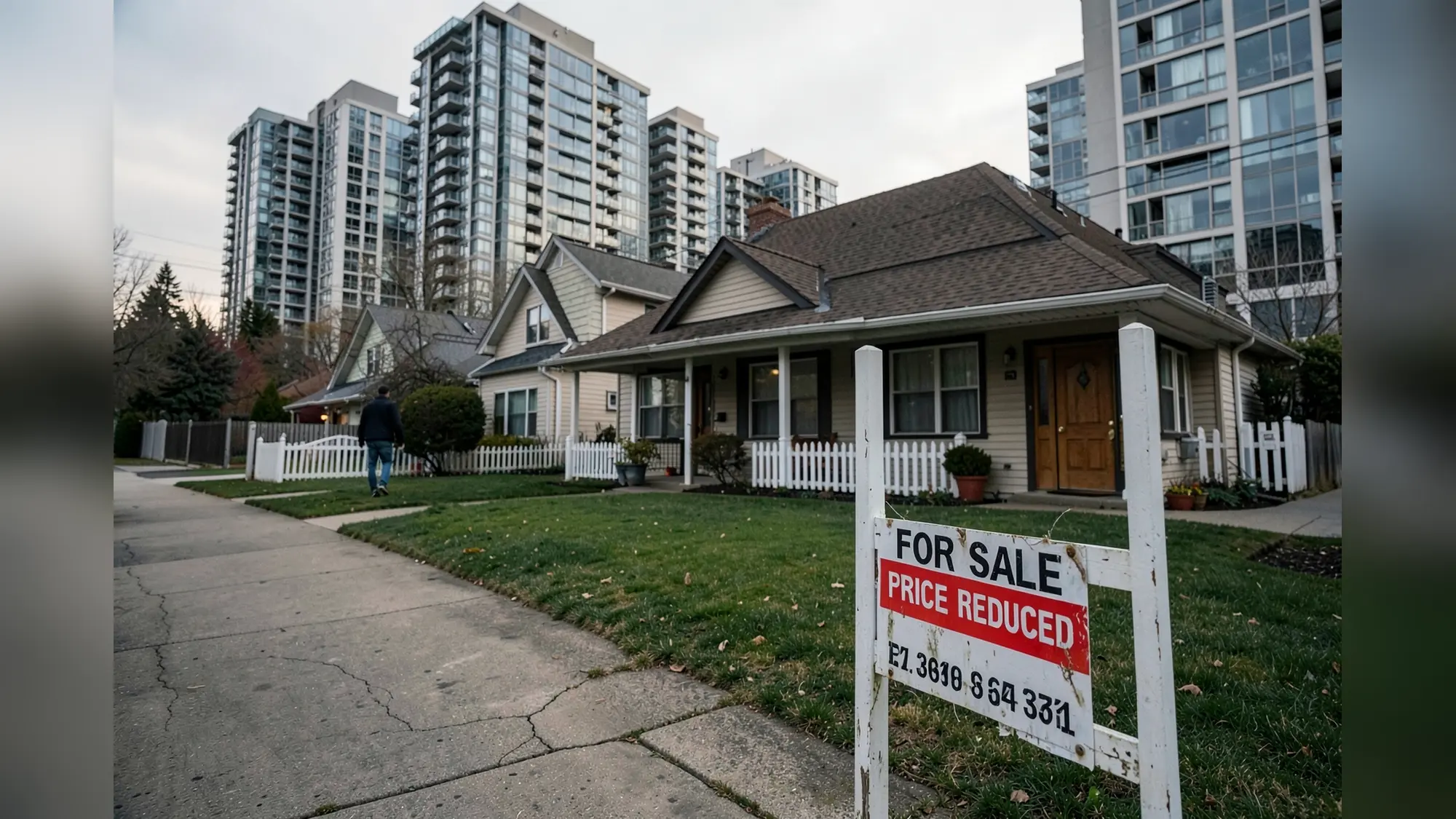
House prices in Australia's capital cities fell 1.4% in the June quarter, even as annual growth stayed positive, signalling a split market. Domain's June-quarter House Price Report, released in July 2026, showed unit values slid 1.2% over the same quarter and warned the quarterly falls mark a turning point. The weakness is concentrated in higher-priced areas and apartments, while some outer and cheaper suburbs continue to push new highs. Domain and independent economists say higher rates, tax changes and weaker buyer confidence are already reshaping demand.
The weakness is concentrated in premium and inner-city markets, even as a handful of regions sit at record highs.
Domain reported national capital-city house prices down 1.4% and unit prices down 1.2% for the quarter to June 2026. Sydney recorded the largest house price fall of any capital, a 3.3% decline that trimmed about $60,000 from the median to $1,733,891. Sydney's median unit price fell 1.5% to $849,068.
Every capital city except Darwin recorded a quarterly fall in unit prices, and annual growth for both houses and units slowed to its weakest pace in nine months, Domain found. At the same time, house prices in Adelaide, Brisbane, Perth and Hobart remained at record levels in the June quarter. Some outer suburbs also posted strong year on year gains, including nearly 13% annual growth in parts of south-west Sydney.
Domain flagged several features of the changed conditions: higher listings, longer selling times, greater discounting and rising supply. In Sydney, auction clearance rates were about 48%, the lowest since April 2020, and withdrawn auctions hit a record 29.3% according to Domain's reporting.

Higher interest rates, affordability pressure and falling buyer confidence were named as the main drivers of the shift.
Domain's chief residential economist, Dr Nicola Powell, described the quarterly declines as a "decisive shift in market conditions" and said they reflect investor nervousness and a more cautious stance from first-home buyers.
Investors have stepped back, which Domain said has amplified weakness in unit markets that carry a higher share of investor ownership. Real-estate practitioners described buyer confidence as "at an all-time low," and agents in outer suburbs reported that while some buyers' savings remain intact, many are waiting for prices to fall further. Sellers are facing longer listing periods and higher rates of auction withdrawals.
Independent economist Saul Eslake said banks were already tipping further national price falls of around 5 to 10% if the tightening in borrowing conditions persisted. Domain and other economists expect further downside through 2026 as higher mortgage costs and the behavioural impact of the federal budget changes feed into demand. Dr Powell warned, "this is just the beginning" of negative growth.
The federal government's May budget changes to negative gearing and capital gains tax concessions were also cited as dampening investor demand. Those tax changes are scheduled to take effect on July 1, 2027, and Domain reported they're already shaping investor expectations.
Related Articles
- Mortgage brokers report pause as investors delay decisions
- ANZ, NAB cut house price forecasts to 2% fall
- Rising Interest Rates, Not Middle East Conflict, Pose the Bigger Threat to Borrowers
The next clear checkpoint is mid-2027, when federal budget changes to negative gearing and capital gains tax concessions are scheduled to take effect.
This article was created with AI assistance.


