
Advanced Braking posted record FY26 revenue of $23.5m and said BRAKEiQ hit independent certification milestones, steps the company identifies as catalysts for aftermarket growth and commercialisation.
Advanced Braking has cleared key technical hurdles with BRAKEiQ, confirming it meets the MOSH TRL4 ISO 21815 specification through independent testing at the University of Pretoria. This milestone brings the product closer to operational interoperability with third-party proximity systems and is a crucial step towards commercial rollout.
The timing matters because Advanced Braking also reported record FY26 revenue of $23.480 million, a 22.7% lift from FY25, with underlying EBITDA of $2.2 million and cash and cash equivalents rising to $5.6 million. Recurring aftermarket sales grew 26.2%, gross margin improved to 49.3% and underlying operating profit rose 63.0%, a performance the company links to demand for its sealed, fail-safe SIBS FailSafe braking systems and recent commercial wins including deployments at Rio Tinto’s Oyu Tolgoi and new footprints in Ghana and Zimbabwe. The FY27 filing adds that BRAKEiQ completed CAS Level 9 certification subsequent to year end, and management has listed commercialising BRAKEiQ among five stated priorities for FY27.
What Was Announced
Advanced Braking reported record FY26 revenue of $23.5 million and said independent certification milestones for BRAKEiQ cleared key technical gates, moves the company says will accelerate aftermarket growth and BRAKEiQ commercialisation. Revenue rose 22.7% from FY25, underlying EBITDA increased to $2.2 million, and cash and cash equivalents climbed to $5.6 million. The company also reported recurring aftermarket revenue growth of 26.2%, which helped lift gross margin to 49.3% and drive a 63.0% increase in underlying operating profit.
The company said BRAKEiQ met the MOSH TRL4 ISO 21815 specification after independent testing at the University of Pretoria, and its FY27 filing states BRAKEiQ completed CAS Level 9 certification subsequent to year end. Practical, on-machine testing remains part of the remaining compliance pathway.
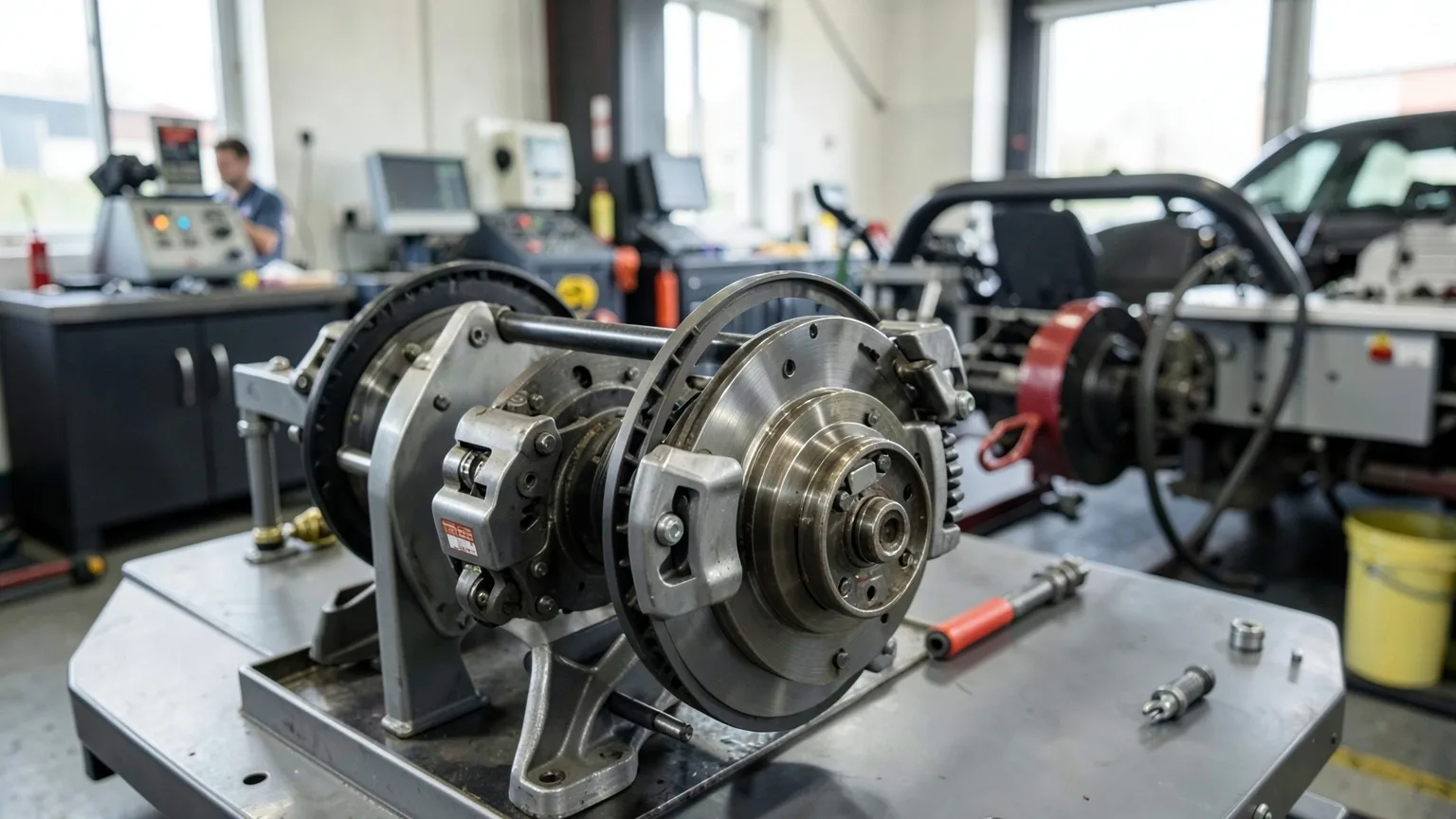
The business confirmed its main product line focuses on its sealed, fail-safe braking technology. This includes the SIBS FailSafe systems designed for heavy vehicles and mobile equipment operating in tough mine-site conditions like dust, wetness and abrasion.
Commercial traction disclosed in the results included:
- deployments of SIBS FailSafe on JCB telehandlers at Rio Tinto’s Oyu Tolgoi operation in Mongolia;
- domestic mandates at MMG’s Dugald River and at a Gold Fields operation;
- geographic expansion into Ghana and Zimbabwe.
Management outlined five priorities for FY27: strengthen its presence in key mining markets and regions; increase revenue from aftermarket parts and a Refurbishment Program; commercialise BRAKEiQ after certification; develop SIBSiQ; and expand the operating platform while looking into strategic growth opportunities.
How It Works
Advanced Braking combines rugged, sealed fail-safe brakes with BRAKEiQ, a system designed to work with mine-site proximity detection standards. Its main products are sealed, fail-safe SIBS braking systems made for heavy vehicles and mobile equipment used in dusty, wet, and abrasive mine conditions.
Independent testing at the University of Pretoria confirmed BRAKEiQ met the MOSH TRL4 ISO 21815 specification, a formal step on the pathway toward CAS Level 9 certification, and the FY27 filing states CAS Level 9 was completed subsequent to year end. The MOSH TRL4 program is part of the traffic management requirements used in South Africa, and the TRL4 result validates BRAKEiQ’s interoperability with third-party proximity detection systems built to the same international standard.

The company says the remaining compliance work is practical, real-world machine testing of BRAKEiQ before broader roll-out.
Why It Matters
Advanced Braking's FY26 results and BRAKEiQ certification shift the company from a small parts supplier to one with cash flow and a clear path to product commercialisation. Revenue rose by over 20% from the previous year, underlying EBITDA improved, and cash reserves grew. Recurring aftermarket revenue and gross margin also increased, boosting operating profit significantly.
That mix matters because it is the installed base and aftermarket that turn one-off system sales into predictable, higher-margin revenue. Advanced Braking flagged SIBS FailSafe deployments on JCB telehandlers at Rio Tinto's Oyu Tolgoi in Mongolia, domestic mandates at MMG's Dugald River and at a Gold Fields operation, and geographic expansion into Ghana and Zimbabwe, all concrete signs the installed base is expanding.
Certification is the other axis. The company announced an August 2026 certification milestone for BRAKEiQ, independent testing at the University of Pretoria confirmed MOSH TRL4 ISO 21815 compliance, and the FY27 filing says BRAKEiQ completed CAS Level 9 certification subsequent to year end. Certification matters because it confirms interoperability with third-party proximity detection systems, a precondition for fleet-wide rollouts at mine sites.
Taken together, stronger margins, rising cash and a certified braking automation product alter the commercial calculus. Management has flagged five FY27 priorities that mirror the commercial shift: deepen presence in key mining regions, grow lifecycle revenue through parts and a Refurbishment Program, commercialise BRAKEiQ after certification, progress SIBSiQ, and scale the operating platform while pursuing strategic growth. Watch next for evidence that BRAKEiQ moves from certified lab tests into paid, on-site installations.
What's Next
Advanced Braking has parked a clear execution list for FY27, and the next 12 months hinge on turning technical milestones into paying customers. The company’s stated priorities centre on commercialising BRAKEiQ after certification, driving more aftermarket revenue from its installed SIBS base, moving SIBSiQ toward market readiness, and scaling the operating platform to support wider geographic rollout.
The FY27 priorities, as the company set them
- Deepen market presence in established mining markets and priority regions, including further deployments in existing customers and new sites.
- Grow lifecycle revenue through aftermarket parts and a Refurbishment Program aimed at extracting more value from the installed base.
- Commercialise BRAKEiQ after certification, progressing from lab and interoperability tests to real-world machine trials and paid installations.
- Advance SIBSiQ development toward commercial readiness.
- Scale the operating platform while pursuing strategic growth opportunities that support faster, larger deployments.
Those priorities are anchored by the certification work completed so far. BRAKEiQ passed independent testing at the University of Pretoria to the MOSH TRL4 ISO 21815 specification, and the company says the product completed CAS Level 9 certification after the FY26 year end. Practical, on-machine testing remains the next compliance and commercial step.
Advanced Braking enters FY27 with strong momentum in aftermarket sales and a healthier balance sheet. The growth in recurring revenue, improved margins and higher operating profit provide the company with resources to fund field trials, the Refurbishment Program and expand into new markets like Ghana and Zimbabwe where it has recent activity.
Key dates to watch include the schedule for BRAKEiQ’s real-world testing and any paid contracts linked to CAS Level 9 certification. Also important are rollout plans and commercial terms for the Refurbishment Program, updates on SIBSiQ, and new or expanded contracts with major customers such as Rio Tinto’s Oyu Tolgoi, MMG’s Dugald River and Gold Fields where SIBS is already in use.
If BRAKEiQ turns its lab and interoperability successes into CAS Level 9-enabled, revenue-generating deployments in FY27, the company could boost aftermarket income and margins. Without those initial contracts, the gains from FY26, including higher recurring revenue and improved margins, will be less convincing as proof of sustainable commercialisation, putting FY27 growth targets at risk.
Originally reported by Kalkine.
This article was created with AI assistance.


