
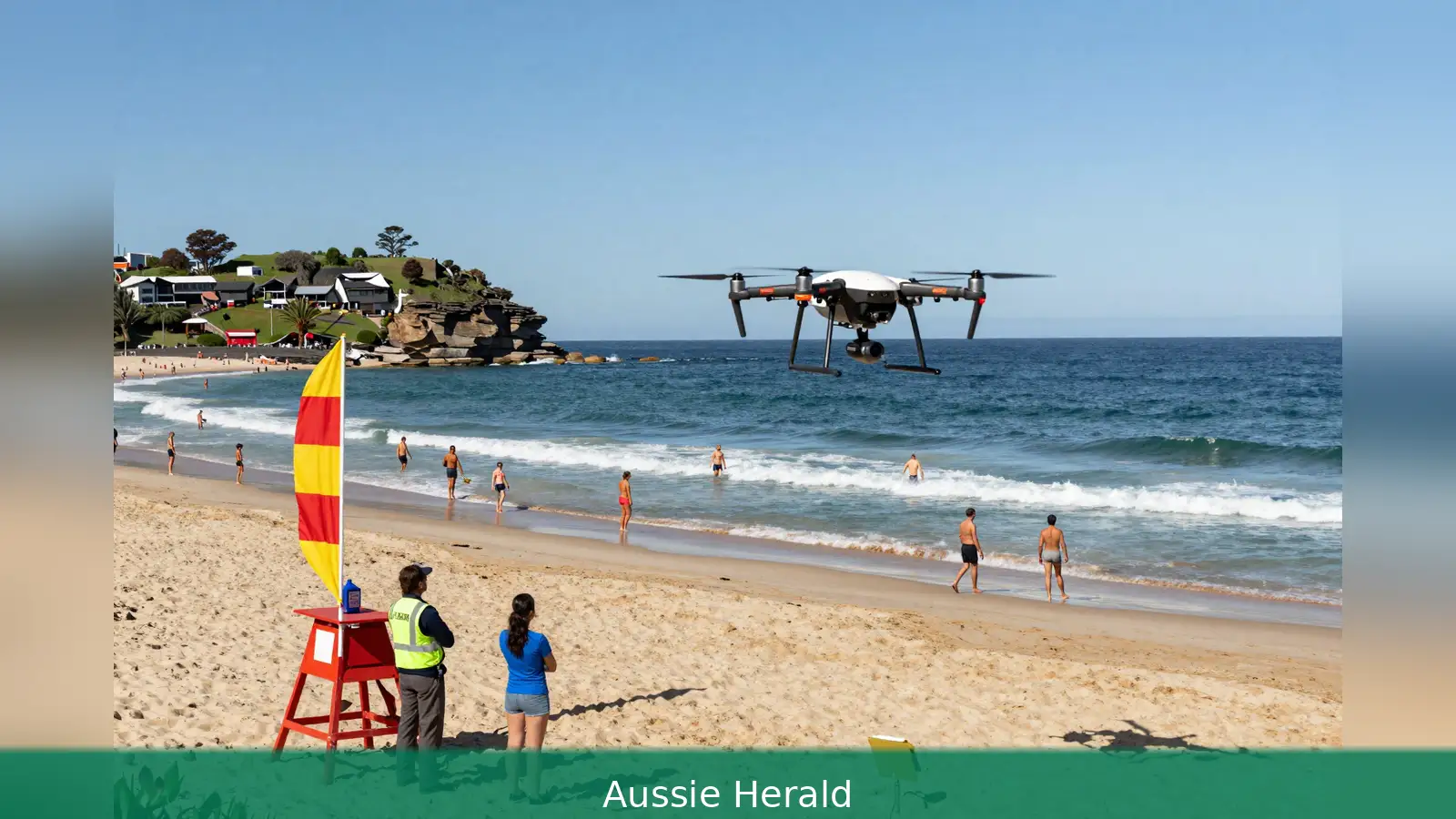
Beachgoers will see more drone patrols and earlier shark warnings after the NSW government added $34 million to expand its shark-spotting drone programme. The boost takes the state’s Shark Mitigation Program to $120 million over the next two years and will extend year-round drone coverage to about 70 ocean beaches, with all Sydney ocean beaches scheduled to be included from July 1. The program will run daily patrols each summer from December 1 to April 30 and weekend flights year-round, and the state plans trials of AI systems for automated shark detection over the coming summer.
Swimmers and surfers can expect more drone activity, because the extra funding follows a suspected white shark attack at Coogee Beach that critically injured a 34-year-old woman and exposed gaps in local surveillance. At the time of that incident there were no drone patrols at Coogee, the government said, because the popular swimming spot sits close to Sydney Airport's flight path.
More flights, earlier warnings
The $34 million top-up increases state investment in the Shark Mitigation Program to $120 million for the next two years and will expand operations so around 70 ocean beaches receive year-round drone coverage. From July 1, all Sydney ocean beaches will be included in the expanded plan. The government has said the program will run daily between December 1 and April 30 and maintain weekend flights every week throughout the year.
The practical result is more frequent patrols in the busiest and highest-risk locations. Officials say the expansion will concentrate extra flights where they can most quickly inform lifeguards and local authorities, rather than attempting uniform coverage of the entire coastline. At least one beach in each coastal local government area will receive daily surveillance under the new plan, and some popular unpatrolled beaches will gain their first drone patrols.
Surf Life Saving NSW will conduct the expanded patrols. Steve Pearce, chief executive officer of Surf Life Saving NSW, described the allocation as the "largest ever funding commitment to shark management in Australia" and cautioned the scheme won't prevent every interaction, but it will "allow the development of a safety program that will give the greatest opportunity to prevent these from occurring."
AI trials and approvals
The rollout will also trial artificial intelligence systems to improve automated shark detection, with two AI systems scheduled for trial over the coming summer. The government said it will work with Surf Life Saving NSW and the Civil Aviation Safety Authority on approvals to introduce more autonomous drone operations.
Officials warned the higher rate of patrols is likely to produce more shark alarms because more animals will be spotted earlier, not because there are necessarily more sharks in the water.

Premier Chris Minns framed the expansion as a step change in surveillance. He said the increased operations are intended to increase detections and issue more alarms, calling the program "world-leading" and saying it would provide "extra detection of shark warnings in NSW beaches earlier." The government tied the expansion explicitly to rising shark incidents and the recent Coogee case, underlining the aim of reducing risk through faster warnings to coastal users.
The extra patrols will prioritise areas with the highest numbers of swimmers and surfers and known shark incidents. Officials stressed that the additional flights will be concentrated where they can most quickly inform lifeguards and local authorities, rather than creating identical coverage along the whole coast. That approach is intended to get warnings to people on the beach sooner and to focus limited resources on the places most likely to benefit.
Operationally, the program will need to balance the new drone footprint with aviation safety constraints. Coogee's proximity to Sydney Airport was specifically cited as the reason patrols were not in place at the time of the recent attack. The state said it will work with the Civil Aviation Safety Authority as it seeks approvals for more autonomous flights and AI detection tools over the summer trial period.
Officials reiterated that while the program raises the chance of spotting sharks earlier, it won't remove every risk. Pearce emphasised the surveillance is about reducing interactions where possible and improving response times for lifeguards, rather than delivering absolute protection.
The funding package was announced on Sunday and marked by the state as the largest and most expensive shark mitigation program of its kind in Australia. Beyond the $34 million top-up, the increased capacity and new technologies are aimed at improving early warning times and boosting the number of detections that can be turned into active responses by lifesavers.
For beach managers, the expansion brings both more data and more decisions. More alarms mean lifeguards and councils will need to set protocols for how sightings are confirmed and how beach users are notified. The government says those patrols will be concentrated where they can most quickly inform lifeguards and local authorities, a practical recognition that a sighting off a remote headland has a different operational meaning to one off a crowded patrolled beach.
Steve Pearce said the scale of the commitment will help develop the systems and processes needed to make rapid, evidence-based responses to drone detections. The state also flagged that the program will concentrate patrols in ways that reflect actual coastal use, directing resources to beaches with the highest swimmer and surfer numbers.
The announcement follows public concern after the Coogee incident and a run of shark encounters along the coast. The government has linked the decision directly to those events, framing the expansion as a response designed to reduce risk and provide faster warnings to coastal users.
Related Articles
- AI music: human briefs beat low-latency models
- Amazon pulls Sam Altman biopic after roughly US$50bn OpenAI tie-up
- Battery boom trims 1,500 km from transmission plan
Coverage begins July 1 when all Sydney ocean beaches move to year-round patrols, and two AI detection systems will be trialled over the coming Australian summer.
This article was created with AI assistance.


