
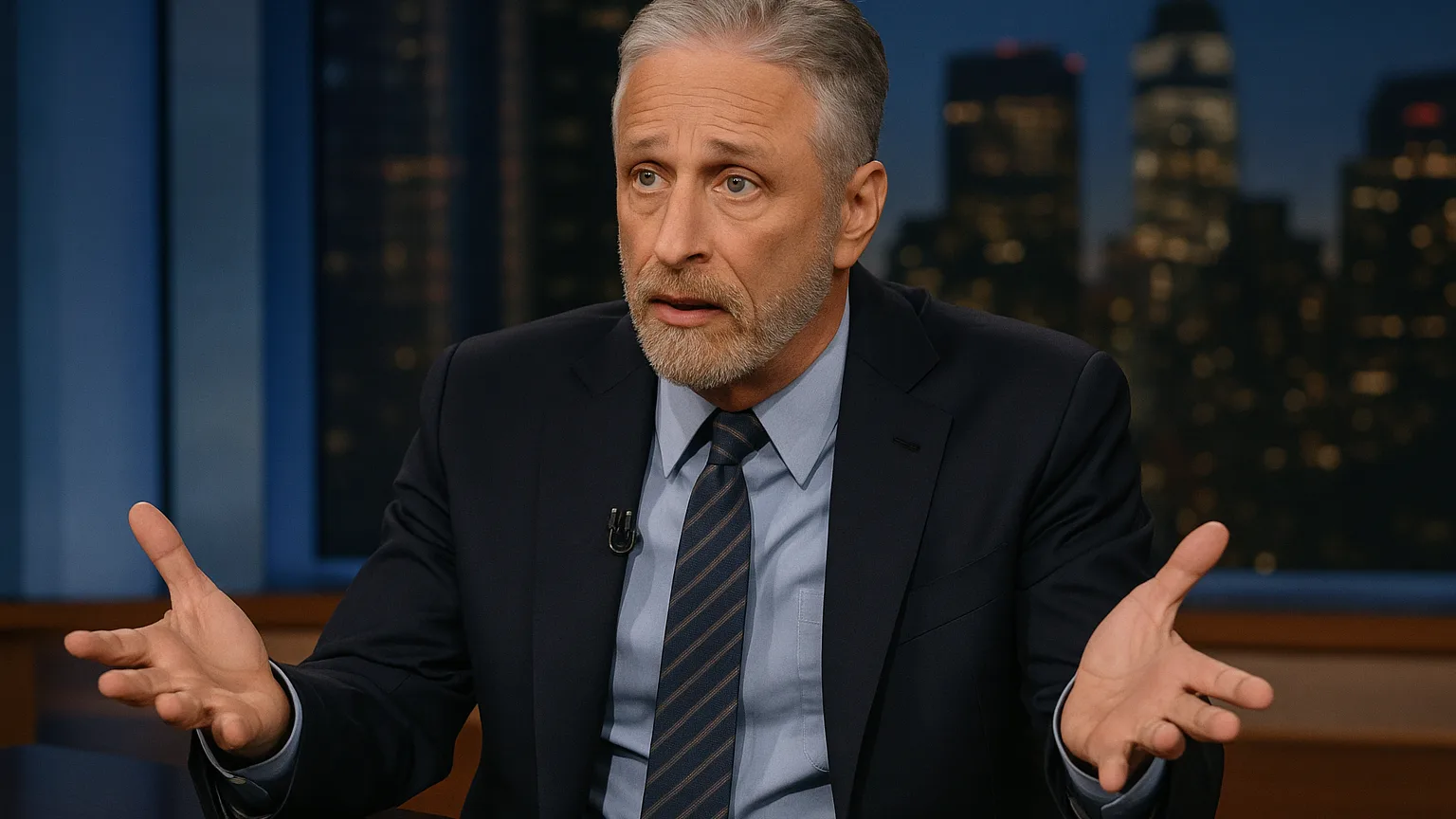
On the October 5 Daily Show, Jon Stewart mocked the White House’s voluntary AI pact and asked who benefits: warning that tech’s big promises so far don’t come with a clear public payoff.
Stewart’s central challenge: what does the public get in return?
Stewart opened by saying AI leaders are asking the public to accept serious risks now while promising sweeping future benefits, yet they have not shown what ordinary people receive in return. He framed that demand as a kind of dishonesty the public should call out, using the phrase “Stop lying to us” and cutting through executives’ soaring promises (“end poverty, cure disease, eliminate drudgery”) to demand a clear accounting of present payoffs. In comic and furious mode, he argued audiences are being asked to accept dangers without a visible public benefit. He told viewers, “I’m getting the sense you guys might be full of s---,” and used satire to expose the gap between future claims and current uses, contrasting talk of curing disease with examples he said are in play now: including a quip that AI today is mostly “murder, surveillance, and surge pricing for the McRib,” offered as comedy about pricing engines rather than a verified catalogue of AI applications.
Trump’s self-policing pact and the reversal Stewart targets
Stewart aimed much of his ire at US President Donald Trump’s public embrace of a voluntary industry agreement. Mirror reported that Trump said he and AI executives had signed a voluntary accord on September 30 under which the companies would submit to internal and external reviews. The document lists Trump alongside tech leaders including Anthropic’s Dario Amodei, Google’s Sundar Pichai, Meta’s Mark Zuckerberg, OpenAI’s Greg Brockman, Nvidia’s Jensen Huang and Elon Musk as signatories. Stewart played clips of Trump’s past attacks on “Big Tech,” then showed Trump telling reporters the companies would “self-police,” and mocked how that on-the-record reversal looks given his history of criticising the same firms, which have long been presidential targets. Stewart’s lines and clips were comic commentary; the pact he mocked is voluntary rather than a binding law or formal regulation.
The risks and promises in the AI debate
The segment collected recurring themes from debates about AI: job disruption, the local and environmental effects of data centres, surveillance and security concerns alongside industry claims about future jobs and medical benefits. Stewart set executives’ grand predictions about new jobs and medical breakthroughs against examples he said are appearing now: AI in immigration enforcement, tools used in cyberattacks, expanding surveillance, and the earlier joke about surge pricing. AV Club described Stewart’s broader critique as a dismantling of tech figures’ “sky-high promises and suspiciously vague details,” and noted his satire of a cuddly corporate avatar (a “Muse” mascot) as a sales tactic. Industry defenders argue the technology can raise productivity, produce medical gains and broaden access to tools; those claims remain prospective and contested rather than settled. Stewart mixed straight examples, contested claims and comic exaggeration to press a central question: who profits, and who bears the harms as these systems roll out?
The interview and what readers should take away
Stewart moved from monologue to an interview with Jacob Coxon, described as a former researcher at Anthropic and OpenAI, who has warned uncontrolled AI could pose existential risks. That shift brought industry expertise and alarm into the segment and narrowed the debate to a concrete policy question: who sets the safeguards, and who benefits while those safeguards are being devised? The show pressed a procedural and distributive tension (that the public is being asked to accept major risks while the payoff remains vague) and Stewart’s jokes and sceptical framing aimed to press that challenge rather than prove wrongdoing. The programme aired Coxon’s warning and Stewart’s questioning. Watch whether the voluntary accord leads to any formal oversight or instead remains a public-relations arrangement.
This article was created with AI assistance.



