
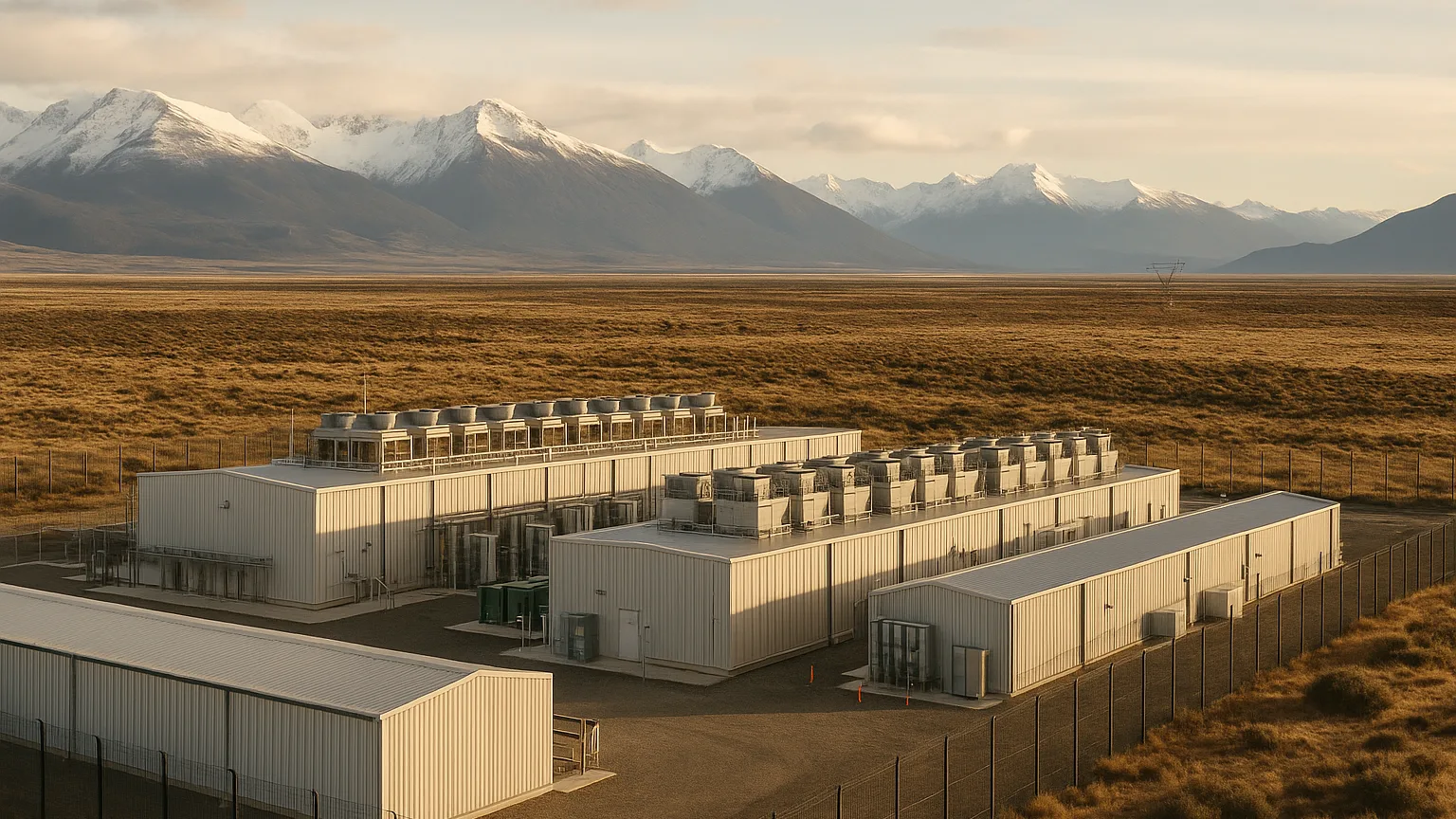
Global cloud players and Argentine energy firms are advancing multi-hundred-megawatt AI data centre proposals in Patagonia, betting on wind, Vaca Muerta gas and RIGI incentives while connectivity, community relations and approvals will decide which plans proceed.
OpenAI has signed a letter of intent for a possible 500 MW data centre in Patagonia, while much of the region still lacks the fibre, grid and site infrastructure needed to feed such a project. That gap matters. The LOI with Argentine developer Sur Energy, announced in October 2025, describes up to 500 MW, a reported $25 billion investment and a first 100 MW phase due in 2027. Investors point to Patagonia's cool climate, abundant onshore wind and firming supply from the Vaca Muerta shale gas basin as the technical rationale for hosting heavy AI loads. But developers and analysts say major fibre and grid shortfalls, plus community consultation and permitting steps, must be resolved before announced plans can scale. Projects are being pursued under the RIGI incentive regime, with developers targeting initial agreements by end-2026, site tours pencilled for February and early construction phases aiming for 2027.
Why are tech companies scouting Patagonia for mega data centres?
Tech firms and energy investors see Patagonia as a place where cheap, steady power and natural cooling can be combined at scale, making the region a potential data centre hub.
OpenAI and other corporate proposals
OpenAI’s letter of intent is only the most visible move; a clutch of local and regional players have landed concrete proposals of their own. Pampa Energía has pitched a 500 MW site in Neuquén designed to run on gas from Vaca Muerta, with an estimated infrastructure bill of about $900 million and a small 30 MW first stage planned at Bahía Blanca. FlexDomes has costed a 120 MW first phase at $1.4 billion. Green Capital is aiming for 300 MW in Chubut with a $3 billion price tag and long-term ambitions that run into the gigawatt range. These are not conceptual memos. They are engineering and finance proposals sized for hyperscale workloads, and they signal a market betting that demand for AI compute will justify heavy upfront capital.
Patagonia’s energy and climate advantages
Developers point to three technical draws. First, abundant onshore wind in southern provinces supplies low marginal-cost renewable energy when the wind blows. Second, Vaca Muerta’s shale gas offers a firming fuel, meaning dispatchable natural gas that can supply power when wind output dips. Third, Patagonia’s cool ambient temperatures reduce the energy needed for server cooling, lowering ongoing operating costs. Together these factors create a mix of variable renewable output plus nearby firming capacity that matches how large AI clusters are typically built: high continuous load with a premium on reliability.
Investor incentives and macroeconomic context
Projects are being wrapped into Argentina’s RIGI incentive framework and into the wider push to attract capital after recent economic reforms. The incentives are aimed at making long-term power and tax arrangements bankable for investors who must underwrite transmission, fibre and plant construction. At the same time, some developers are already modelling offtake-style arrangements and multi-stage builds to reduce early financing risk, keeping initial phases modest while lining up the bigger infrastructure spend if early milestones hold.

Can projects clear infrastructure, community and regulatory hurdles by end-2026 and early 2027?
The practical test for Patagonia’s proposals is simple: can power, fibre and permits be put in place fast enough to turn announcements into active construction by 2027. Developers and analysts repeatedly flag three tangible bottlenecks that must be fixed before any hyperscale build can scale.
Connectivity and power delivery challenges
Fibre is patchy across much of Patagonia, and long-haul links to major peering points are scarce, forcing early projects to factor in lengthy trunk builds or expensive private routes. On the power side, developers say transmission capacity and on-site delivery infrastructure will need large, upfront investment before a 100 MW or larger phase can operate reliably. Those gaps are the proximate cause of the long lead times investors are budgeting for.
Upgrades're not just new cables and poles. Substations, dedicated switchgear and ringed transmission lines're required to meet hyperscale reliability standards, and those assets carry multi-year construction schedules. If the wiring and substations're not committed and financed, a signed offtake's paper, not deliverable compute.
Local communities and environmental concerns
So far Argentina hasn't seen the same organised local backlash that has slowed builds in parts of the United States, but that absence's a conditional advantage. Projects still face formal consultation, environmental impact assessments and permitting steps that can't be fast-tracked without political buy-in. Developers acknowledge that early engagement with local authorities and landholders'll be necessary to avoid delays once detailed site planning begins.
Environmental scrutiny overseas shows how quickly social opposition can become a schedule risk for any region hosting big power draws. That potential is why project teams are budgeting time for community liaison and compliance, not just engineering.
Regulatory steps, RIGI rules and near-term milestones
Developers are proceeding inside the RIGI rules, while a higher-threshold successor has been proposed that could change who qualifies and what incentives apply. Timetables in market reporting put initial commercial agreements as a key deliverable by the end of 2026, with site tours pencilled for February and first construction phases aimed at 2027.
That sequence leaves a compact to-do list for sponsors: secure grid interconnection studies, lock power purchase and project financing terms, complete environmental permitting and field initial fibre routes. Meet those milestones and the headline capacities move from plans into build permits. Fail to, and the announced gigawatt ambitions will slip. The 500 MW figure is the benchmark: watch whether it clears the financing, connectivity and permitting gateposts before the end of 2026.
Originally reported by The Next Web.


