
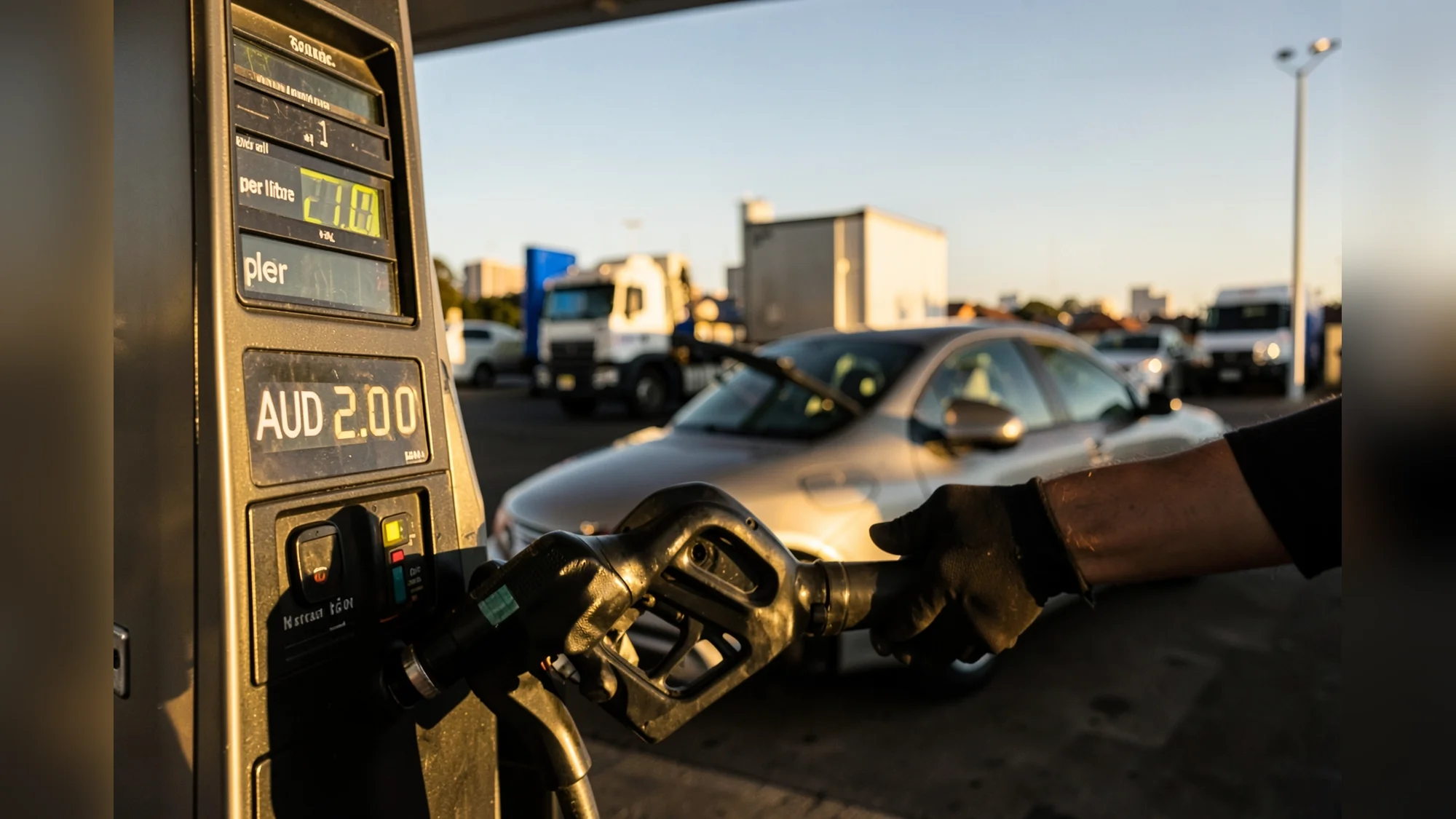
Drivers face higher costs at the bowser: petrol is set to climb back above $2.00 a litre once the temporary federal fuel excise relief ends on 2 August. The federal cut, introduced in April as 32 cents per litre, was halved to 16 cents in July and will lapse on 2 August, removing the last of the short-term subsidy that had been masking higher wholesale costs. Brent crude has climbed above US$100 a barrel and wholesale margins are rising, pushing city averages close to $1.80 a litre in late July, up from about $1.50 at the end of June, according to Motormouth and the NRMA. Diesel has already risen faster, jumping roughly 50 cents in some east coast cities to about $2.20 a litre, putting immediate pressure on freight operators and diesel-dependent industries.
What will drivers pay at the bowser and when? Households could see regular unleaded move above $2.00 a litre once the 16 cent excise respite ends on 2 August, because Brent crude has recently climbed above US$100 a barrel and wholesale margins are rising. Analysts at Barrenjoey and data collated by Motormouth and the NRMA put recent city averages near $1.80 a litre and forecast further increases after the excise fully resumes.
Why are prices rising now? Global supply disruptions tied to renewed Middle East hostilities and Houthi attacks on shipping routes have pushed benchmark crude higher, feeding directly into wholesale fuel costs. A rough rule of thumb from market commentary is that each US dollar increase in the oil benchmark translates to about a one cent per litre change at the pump.
Has the government signalled any further support? Prime Minister Anthony Albanese said maintaining the excise discount beyond the current extension is "not in our planning at this point in time" while indicating further fuel-related announcements are forthcoming.
The government has flagged funding for a fuel security plan with a reserve and other measures under discussion, but ministers haven't detailed new direct relief to offset the excise lapse. Energy Minister Chris Bowen and officials have stressed national fuel stocks and shipments remain secure, with several weeks of supply and ships en route.
Could rising petrol add pressure to monetary policy? Yes. Higher petrol will add upside pressure to headline inflation and make the Reserve Bank of Australia's task of returning inflation to target.
Financial markets are pricing a greater chance of another cash rate move ahead of the RBA board meeting on 11 August, and several economists said prolonged high oil prices would increase the risk of lifted inflation expectations among households and businesses.
Wider economic consequences? Higher fuel costs will hit households first through more expensive commuting and goods prices, and they will flow into operating costs across transport, mining and agriculture where diesel is central. Analysts warned that if oil prices remain elevated for an extended period it will add to inflationary momentum even as the economy shows signs of slowing, complicating fiscal and monetary settings.
Related Articles
- 5-10% house-price fall reshapes affordability, hits investors
- Australia's growth to slip below 2% for two years
- 30% minimum capital gains tax from July 2027 hits investors
Watch the Reserve Bank of Australia board meeting on 11 August and the June quarter inflation data due in early August. Originally reported by The Guardian.
This article was created with AI assistance.