
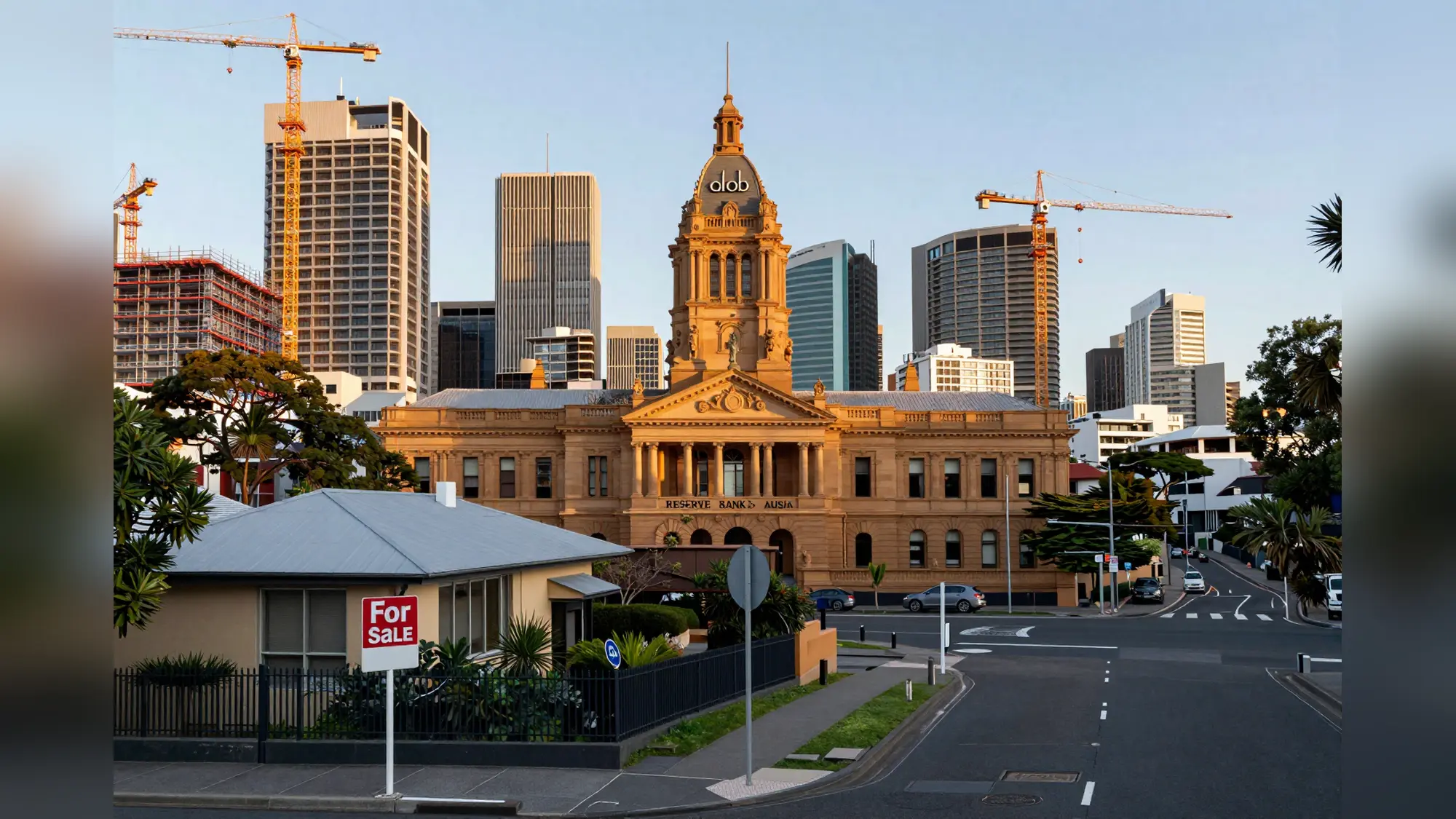
Deloitte now expects GDP growth to fall below 2.0 per cent in both the current financial year and the next, the longest stretch of sub-2 per cent growth since the 1990-91 recession. "Australia is now structurally exposed in ways that have become hard to ignore," Stephen Smith, partner at Deloitte Access Economics, said as his firm revised down its near-term outlook. The downgrade reflects sticky inflation, high borrowing costs and a constrained supply side that are already squeezing household budgets and business plans. Deloitte flags the Reserve Bank of Australia as the next policy inflection point, expecting a further rate rise at the August board meeting.
"For too long, strong population growth has masked a weak underlying productivity performance and lifted aggregate growth while doing less to improve living standards," Smith said, naming the core read behind the downgrade. Deloitte Access Economics credits the revision to a mix of stubborn inflation, higher interest rates and supply constraints that make ordinary growth look weaker in living-standards terms than headline GDP suggests.
Deloitte projects headline inflation will sit at about 4.0 per cent through 2026-27 before easing to 2.6 per cent in 2027-28. The firm warns that nominal income gains won't keep pace with those price pressures, and expects real wages to fall in 2026-27. Unemployment, currently cited at 4.4 per cent, is forecast to average 4.9 per cent next financial year and to peak at 5.0 per cent the year after.
Household finances are under immediate strain. Deloitte estimates Australian households are now paying about A$350 extra per month to service mortgages after the recent run of higher interest rates. That bite on cashflow is a key reason consumer demand looks set to weaken even as some firms step up investment.
On the corporate side Deloitte sees a clearer upshot. The report forecasts business investment to grow about 6.9 per cent this year and roughly 5.0 per cent in the following year, driven largely by spending on data centres and technology projects. Those investments are the main potential source of productivity upside if they translate into broader capacity improvements.

The economy won't move in unison. Regions will diverge sharply, Deloitte says.
Western Australia is forecast to slow to 0.7 per cent growth this financial year while the Northern Territory will probably expand by 5.9 per cent. Most mainland states are tipped to post modest growth around 1.3 to 1.7 per cent.
Deloitte also frames longer-run structural risks. The firm argues decades of underinvestment in housing, infrastructure and energy have left the economy less able to absorb demand without fuelling inflation. It warns an over-reliance on mining and a concentrated export base are vulnerabilities in a congested global trade environment, particularly if geopolitical tensions push commodity and energy prices higher.
The report notes some policy offsets. Recent tax changes and nominal wage gains, including higher award and minimum wages that took effect on July 1, will provide some relief for households, even if much of that's eroded by renewed inflation. Financial markets meanwhile have moved in both directions since Deloitte finalised its outlook, with some traders lowering the odds of further hikes and pricing in cuts next year.
Separately, Reuters reported that the Great Barrier Reef supports tourism and contributes more than A$9.0 billion a year to the economy, a reminder that local assets and sectors can still generate meaningful value even as the national profile softens.
Related Articles
- Gold Down 1.1% as Oil-Driven Inflation Fuels Rate Bets
- Fed holds rates for fifth meeting as policy split widens
- Oil futures point to years of higher prices after Iran war
Deloitte expects the Reserve Bank of Australia to lift the cash rate once more at its August board meeting, taking the cash rate to about 4.6 per cent. That meeting is the next clear test of how policymakers will weigh stubborn inflation against slower underlying growth. Originally reported by Sydney Morning Herald.
This article was created with AI assistance.


