
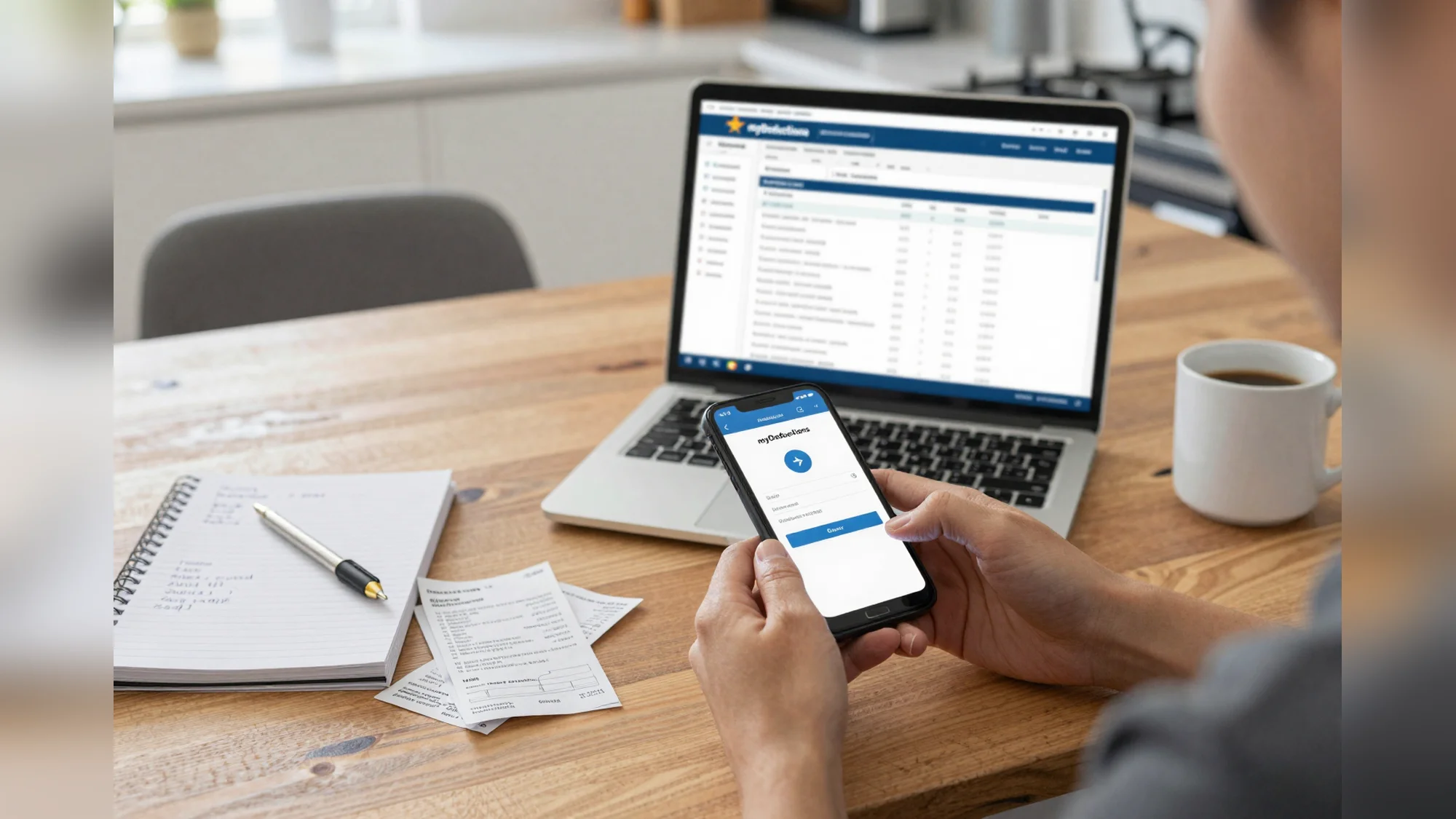
More than 10 million Australians claimed work-related expenses in 2024-25, and the ATO allows only out-of-pocket, income-related costs you can prove. To get what you are legitimately entitled to, the expense must have been paid by you, directly relate to earning assessable income and be supported by a record. Use the ATO's myDeductions tool to gather receipts and choose the right method for working-from-home and car claims. The government has proposed a $1,000 instant deduction for work-related expenses, but SBS reports it would apply only to the 2026-2027 return if it is legislated.
Some people treat broad bills as blanket deductions, but the ATO expects a direct link to income and records so you can lodge without triggering a review. Follow these nine steps and you will be able to decide what you can claim, calculate the work portion, keep the right evidence and lodge with confidence.
1. Confirm an expense is deductible
First, test the cost against the ATO's basic rule: the expense must have been paid by you, it must directly relate to earning your income, and you must hold a record that proves it. The cost must not be private, domestic or capital in nature, and where the item has both private and work uses you must apportion the claim to the work portion, according to Australian Taxation Office guidance.
Worked example: If you buy a laptop used 60 percent for work and 40 percent for private use, claim 60 percent of the cost and keep the receipt and a short diary showing the split.
2. Gather and keep the right evidence
Receipts, invoices, bank records and logs are the proof the ATO demands. The Australian Taxation Office recommends using the MyDeductions tool in the ATO app to record expenses and upload receipts for myTax or to share with a registered tax agent.
Worked example: Photograph each receipt as you get it, tag it as travel, tools or subscriptions in myDeductions and export the file when you lodge.
3. Choose the correct working-from-home method
There are two ATO-approved methods: the Fixed-rate method and the Actual-cost method.
The fixed-rate method uses a set cents-per-hour allowance and is simpler because it covers multiple running costs. The actual-cost method needs itemised bills and a clear apportionment to exclude private use.
Worked example: Use the fixed-rate method if you work from home sporadically and don't want to split internet and electricity bills. Use actual costs if you have large, measurable additional expenses and can keep detailed records.
4. Apportion mixed-use expenses precisely
When travel, accommodation or subscriptions mix work and private activity you must split the cost by the time or kilometres that relate to work. The ATO expects a consistent method and receipts to support the split.

Worked example: H&R Block gave a conference-versus-leisure example quoted in the Canberra Times where you apportion hotel, meals and transport by the days spent on work duties rather than the whole trip.
5. Apply the right motor-vehicle method and limits
You can claim car costs only for eligible work travel, not routine home-to-work commuting unless you travel between separate workplaces or carry bulky equipment essential to your duties. Many taxpayers use the Cents-per-kilometre method, which uses a fixed cents-per-kilometre rate and a kilometres limit per vehicle; check the ATO for the current rate and maximum business kilometres allowed.
Worked example: If you drive 4,000 eligible business kilometres, multiply those kilometres by the current cents-per-kilometre rate published by the ATO. If you claim actual expenses you must keep a logbook to prove the business-use percentage over a representative period, as the ATO explains.
6. Don't claim reimbursed or employer-paid costs
If your employer reimbursed an expense or paid it directly, you can't claim it on your return. The Australian Taxation Office may check with employers during reviews when reimbursement is plausible.
Worked example: If your employer paid for a training course, you can't include the course cost in your deductions even if you paid an initial invoice and were later reimbursed.
7. Avoid common high-risk mistakes the ATO flags
The ATO rejects clearly private claims. Assistant Commissioner Anita Challen, in ABC reporting of ATO statements, cited examples including a $17,000 claim for baby expenses and attempts to deduct money gifted to family members. The ATO also uses data matching, analytics and artificial intelligence to identify red flags and urges taxpayers to exclude private portions of bills like internet and streaming.
Worked example: Don’t claim day-to-day groceries, baby clothes or personal meal deliveries as work expenses. If part of a bill is work-related, calculate and document the work portion.
8. Look beyond work-related claims where applicable
Other deductible categories include gifts and donations, expenses relating to investment income, personal super contributions, income protection insurance and the costs of managing tax affairs. Claim these in the specific sections of your tax return and keep substantiation documents, following Australian Taxation Office guidance.
Worked example: Keep donation receipts with the charity name and date and claim them under the gifts and donations section of the return.
9. Lodge correctly and consider professional help
Use myTax to lodge online and upload substantiation from myDeductions, or engage a registered tax agent if your affairs are complex. CPA Australia and ATO guidance reported by SBS warn that copying last year’s return without reviewing changes is a common source of errors.
Worked example: If you changed jobs, moved home, or started a side business this year, take time to collect new receipts rather than relying on last year’s figures.
In short
1. Confirm each cost meets the ATO test and is paid by you. 2. Record and upload receipts into myDeductions. 3. Apportion mixed-use items by time or kilometres and keep the evidence. 4. Use the cents-per-kilometre method or a logbook correctly. 5. Don’t claim reimbursed or private expenses.
Related Articles
- Tax deduction myth: $1,000 purchase not $1,000 back
- Japan 4-0 Tunisia: rout ends Tunisia's World Cup hopes
- 20% cut to HELP debt: how to confirm and what to do next
Take one immediate step: photograph and upload all receipts into the myDeductions tool so you can export them into myTax or hand them to your registered tax agent. Note the proposed $1,000 instant deduction would apply only to the 2026-27 return if it is legislated, according to SBS reporting.
This article was created with AI assistance.


