
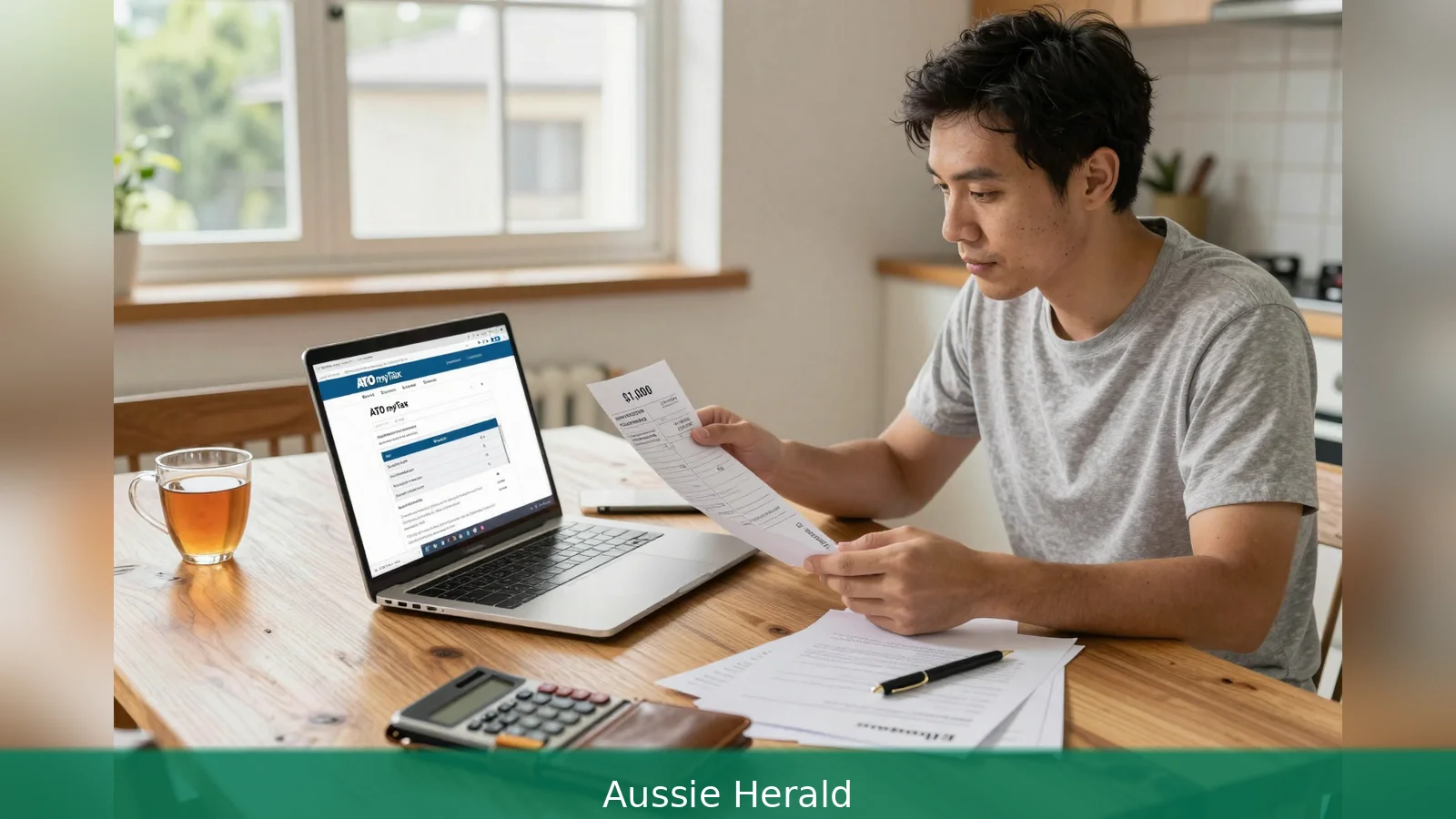
“Taxpayers won't get $1,000 cash back from the ATO from spending $1,000 on a work-related item,” Dr Elizabeth Morton, senior lecturer at Curtin University and chartered accountant, said. The practical effect is simple: a tax deduction reduces taxable income by the amount you spent, and the real cash saving equals your marginal tax rate, not the full purchase price. For example, Dr Morton used a $1,000 purchase to show someone on a 30 percent marginal rate would see only $300 less tax owing. The Australian Taxation Office myTax guidance for 2026 restates the entitlement rules and the record-keeping taxpayers must meet.
"The 'write-off' you may or may not be eligible for is only going to be as good as the tax rate you pay," Dr Morton said. In practice that means a deduction lowers the income taxed, not the bill you already paid. If you buy a $1,000 laptop for work and can legitimately claim the whole amount, your assessable income falls by $1,000. How much that reduces your tax depends on the slice of the tax scale you sit in. At a 30 percent marginal rate, the deduction is worth $300; at higher or lower rates the saving shifts accordingly.
The ATO myTax pages and the Employees guide set out the same basic tests. To claim, the expense must have been incurred in the 2025-26 year, paid or billed to the taxpayer, directly related to earning assessable income, and supported by records such as receipts. The expense can't be private, domestic or capital in nature, it must not have been reimbursed, and you need to be able to substantiate the claim.
Not every item that seems work-related will qualify. Dr Morton highlighted that when an item is used for both work and private reasons it must be apportioned on a reasonable basis. Her example: a $1,000 item used 20 percent for work yields a $200 deduction. At a 30 percent tax rate that gives just $60 in tax savings. The ATO expects taxpayers to show how they calculated any apportionment and to keep the records that back it up.
Timing matters. The ATO's myTax guidance says an expense counts for the 2025-26 year if you received the bill or paid for it during that year, even if you paid after 30 June 2026. That rule lets some late payments still fall into the correct income year, provided the bill or payment date meets the test.
Smaller purchases are treated differently in some cases. Mark Chapman, tax communications director at H&R Block, told Nine that carry bags and similar items mainly used to transport work equipment can generally be deductible. He also noted items costing $300 or less are typically claimable as an immediate deduction. The ATO requires a bag to be used more than half the time for carrying essential work items to qualify, and where private and work use mix the claim must be apportioned.
Record-keeping remains decisive. The ATO myTax instructions make clear you must have spent the money yourself and not been reimbursed, and you usually need a record to prove you incurred the expense and how you calculated the claim. The ATO lists common deductible categories such as home computer and phone expenses, tools and equipment, and education costs, but it reiterates that ordinary travel to and from work and private expenses aren't deductible.
For many taxpayers the headline temptation remains the same: treat a purchase as a full refund from the tax office. That isn't how deductions operate. The arithmetic is straightforward and depends on the marginal rate, the proportion used for work, and whether the expense meets the ATO's timing and substantiation rules.
Related Articles
- Federal contracts to Big Four fall to A$348m in 2025
- 123 states condemn slave trade, Accra pushes reparations
- Hawaiian to charge $11.99-$16.99 for Main Cabin meals from July 1
A deduction reduces taxable income, not the tax you have already paid, so your cash saving equals your marginal rate after any apportionment. Keep receipts and the records the ATO requires to substantiate any claim. Originally reported by ABC News.
This article was created with AI assistance.



