
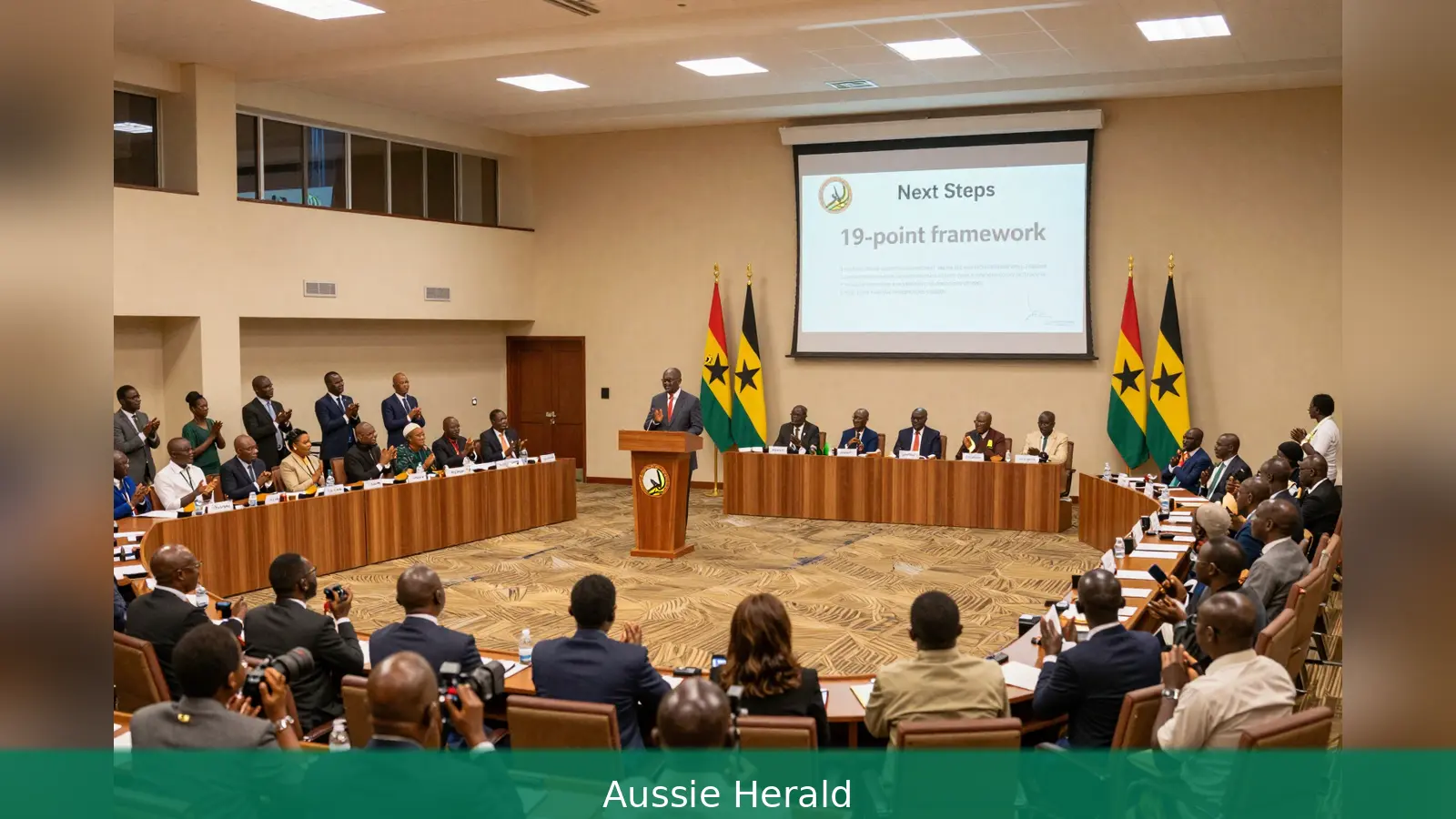
123 countries voted to declare the transatlantic slave trade the gravest crime against humanity, while 52 countries, including Australia and the UK, abstained and three nations voted against. That diplomatic split framed Juneteenth this year as more than a US commemoration: a high-profile conference in Accra ran from June 17 to 19, 2026, and steered the conversation toward concrete reparatory proposals. Delegates adopted a 19-point global framework on June 19 and Ghana's president John Dramani Mahama announced three international panels to advise on reparatory justice, restitution and legal implementation. The measures stretch into financial policy, with calls for debt relief and development finance aimed at communities and countries cited as suffering long-term harm from enslavement and colonialism.
The UN General Assembly vote was a moral condemnation, but Accra turned that verdict into planning and institutions.
The resolution, adopted on March 25, drew 123 votes in favour, 52 abstentions and three votes against. The abstentions included Australia and the United Kingdom. Three countries voted against. While the UN vote was non-binding, organisers said it set a diplomatic backdrop that delegates at the conference labelled Next Steps used to move from symbolism to operational work.
What the Accra framework proposes
More than 80 countries sent delegations to Accra, which convened heads of state, ministers, legal experts and civil society representatives. On June 19, delegates formally adopted a 19-point global framework that lays out a menu of measures intended to respond to centuries of forced labour, dispossession and displacement.
The framework includes a commitment to fair and adequate compensation for Africans and people of African descent, expedited restitution of cultural property and archives, and multilateral steps to address sovereign debt burdens linked to the enduring socioeconomic effects of enslavement and colonialism. Conference materials and participants repeatedly cited an historical estimate that about 12 million Africans were captured and transported across the Atlantic into enslavement between the early 1500s and the late 1800s, a scale that supporters say underlines the urgency of reparatory measures.
Ghana's president John Dramani Mahama used the closing session on June 19 to announce the creation of three international panels: an advisory panel on reparatory justice, an expert panel on restitution of cultural artefacts, and a legal panel on reparatory justice to support implementation and technical work. Organisers described those panels as the institutional architecture intended to translate moral and political commitments into concrete pathways for policy and law.

The measures under discussion reach squarely into finance. The Accra framework calls for debt relief and development finance targeted at countries and communities whose historical exploitation is cited as a cause of long-term economic harm. Advocates at the meeting said reparative forms under consideration range from direct financial compensation to development assistance and the return of looted assets.
Legal experts at the conference explored mechanisms that might convert moral and political commitments into enforceable schemes under international law. That work includes technical questions about how restitution of cultural property and archives would be expedited, and how sovereign debt adjustments could be structured so they reach the communities named in reparatory claims rather than simply shoring up national balance sheets.
Conference organisers framed the document as a basis for global collaboration and pledged transparent, good-faith dialogue among states and non-state actors. They positioned the three panels as the bodies that would build implementation plans, assess claims, and advise on domestic and international legal routes.
Supporters said the change is meaningful. Where the UN vote offered moral clarity, the Accra outcomes aim to put instruments in place that could be used in negotiations, financing arrangements and potential litigation. Skeptics noted the distance between declarations and enforceable remedies, and urged clarity about who pays, how compensation would be calculated and how restitution is prioritised.
Public and political responses were mixed. Governments voting for the UN resolution were largely from African, Caribbean and other Global South states and they pressed the conference to produce implementation pathways.
Several Western states either abstained or voted against the UN resolution, and commentators and some participants at Accra noted scepticism among diaspora communities about whether international declarations will yield binding remedies. Organisers said the panels are intended to respond to that scepticism by doing the technical work necessary to turn political commitments into concrete proposals.
The alignment of Juneteenth, the US date that commemorates the June 19, 1865 announcement of emancipation to enslaved people in Texas, with the Accra conference was deliberate. Delegates framed the day not only as an American observance, but as a global moment to link recognition of historical injustice with steps toward reparations and restitution.
International diplomacy in Accra made two things clear: there's wide international appetite to move beyond symbolic gestures, and major political divisions remain about what that move should cost and who should lead it. The framework and the panels mark a shift toward institution-building, but they also start a technical and political process that will test legal, financial and diplomatic resolve.
Related Articles
- Hawaiian to charge $11.99-$16.99 for Main Cabin meals from July 1
- OpenAI posts $20.92bn operating loss, customers face higher costs
- Tesla share price slips 1.6% as volatility rises
On June 19 delegates adopted the 19-point framework and announced three international panels to draft the legal and financial paths for reparatory justice and restitution. Originally reported by ABC News.
This article was created with AI assistance.


