
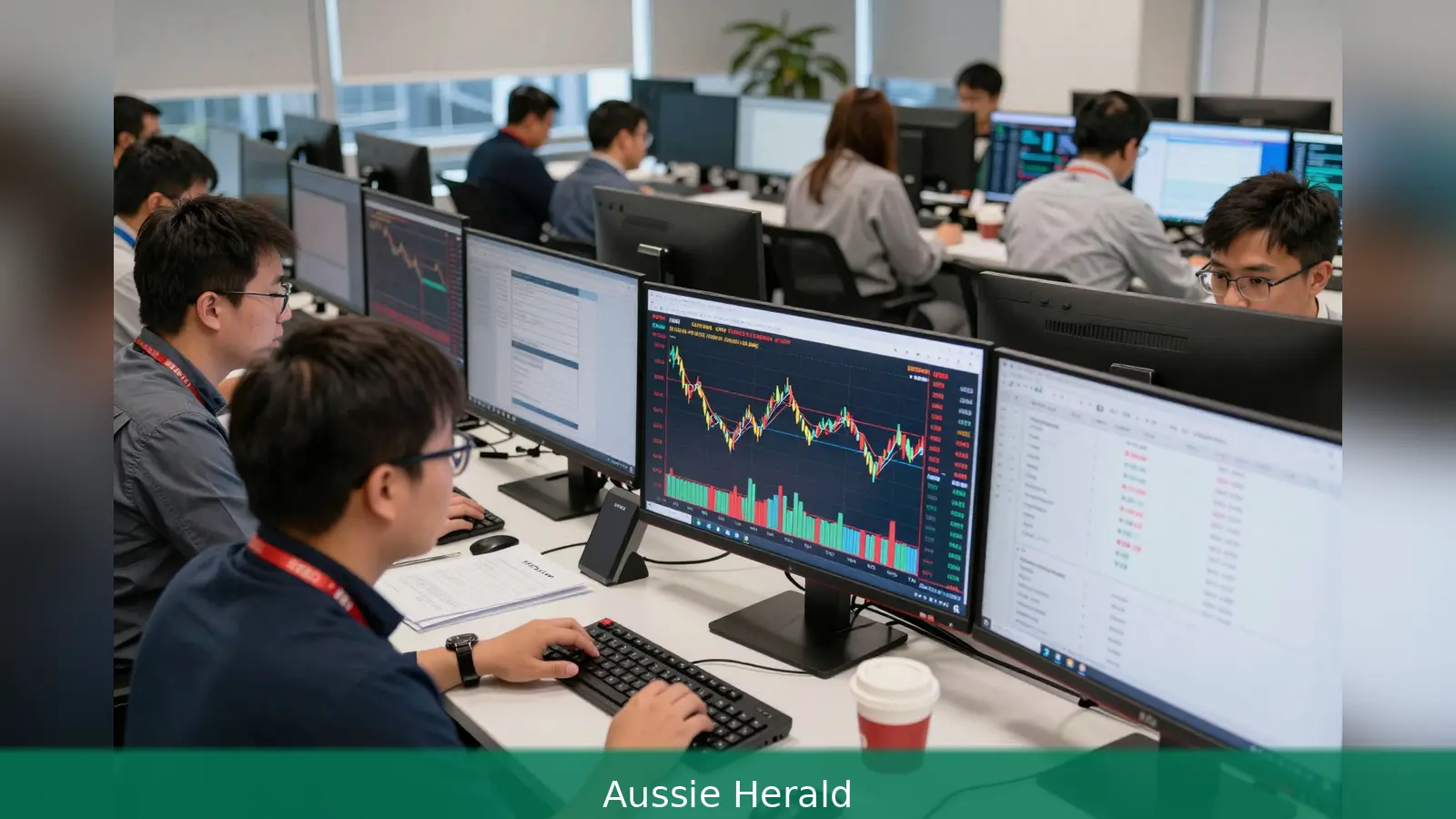
On the Nasdaq trading floor in midafternoon on Tuesday, traders leaned in on their screens as chatter about Elon Musk's other businesses rippled through the electric-vehicle complex. Tesla shares finished the session near $405, closing at $404.66 on June 16, 2026, a 1.58% drop from the prior session, CNBC reported. Intraday trading ranged roughly between $400.54 and $412.42, and CNBC data showed the company remains valued above $1 trillion, so even small percentage moves alter index weights and portfolio exposures. Tesla's next scheduled earnings on July 21, 2026, will be the next hard update on deliveries, revenue and guidance, according to CNBC's events calendar.
On the trading floor and across brokerage terminals, the mood was one of careful rebalancing rather than panic. Traders moved positions as headlines about related companies landed, a pattern that traders said fed higher swings in Tesla's stock and in the wider large-cap tech bucket.
How Musk's wider calendar lifted volatility
Short-term sentiment around Tesla has been shaped in part by Elon Musk's broader corporate activity. Reuters reported that SpaceX moved ahead with plans to price its IPO at $135 per share in early June 2026, targeting roughly a $75 billion raise and a valuation near $1.75 trillion, and that the roadshow began in early June. Traders and chart services flagged increased Tesla volatility in the run-up to the SpaceX listing, treating Musk's simultaneous headlines as a force that shifts investor risk appetite for Tesla equity. Some analysts adjusted their stance amid the cross-company news.
The practical effect plays out two ways. First, event-driven funds and hedge funds react quickly to any signal that could alter the richest, highest beta households of the market. Second, long-only tech managers that hold Tesla as a core large-cap position must rebalance to meet mandate limits when valuations swing. That combination magnified the move on June 16, and helps explain why traders watched intraday ranges as closely as closing prints.
Behind the headlines, company fundamentals have left some investors cautious. El País reported that Tesla recorded revenue declines in recent periods and a material fall in net income year-on-year. The same account said first-quarter 2026 revenue showed some recovery, but vehicle deliveries missed internal targets.
El País also noted that Tesla has gone several years without launching a new mainstream model and that Cybertruck inventories have accumulated in some markets, in part because of nonstandard regulatory fit in regions including parts of Europe. That inventory build has prompted unusual purchase behaviour both inside and outside the company, the newspaper reported.

For investors, the deliveries miss and the lack of new mainstream product cadence are concrete reasons to question near-term growth assumptions.
Regulatory and product-development news adds another layer of uncertainty. Regulatory scrutiny of Tesla's Full Self-Driving safety data in the European Union is ongoing, with approval steps in some member states and an EU-wide decision described as expected over the next few months. Those regulatory outcomes feed directly into revenue and margin lines embedded in analyst models, and they help explain why target prices are so dispersed.
That dispersion is stark. Markets Insider records a median analyst price target near $404.89, while the full spread runs from as low as $115 to as high as $600.
Such a wide range signals deep disagreement about Tesla's growth path and the value of its software initiatives, and it tends to amplify market swings as different investor types trade on contrasting scenarios. Flows from long-only tech funds, event-driven traders and discretionary managers all reacted to the mix of quarterly results and Musk-linked activity, magnifying intraday price moves.
Several groups feel the impact when Tesla moves. Shareholders see portfolio values shift. Institutional managers running large-cap tech allocations must rebalance mandates and risk limits. And the automotive supply chain watches deliveries and inventory trends to plan production and component orders. Those operational knock-on effects are why a one to two percent move in Tesla can matter beyond headline performance metrics.
Technical indicators remained attentive to the mid-$400s zone. Some chart services highlighted recent rejection patterns there and increased seller activity, a technical read that underpins shorter-term momentum strategies. Combined with the fundamental picture reported by El País and the corporate calendar noted by Reuters, the technical signals explain the sharper than usual reactions for a company that still sits above the trillion dollar threshold.
Markets are now positioned for the next clear data point: the company's next quarterly results, which will give analysts and fund managers a fresh set of numbers to rework models and reset targets.
Related Articles
- SpaceX IPO prices at $135, creating $1.77tn valuation
- SpaceX IPO priced at $1.75 trillion, $75bn raised
- Fund managers under 4% cash as SpaceX demand far exceeds planned supply
Tesla's next quarterly results are the next concrete moment for deliveries, revenue and guidance that investors are pricing into the stock.
This article was created with AI assistance.


