
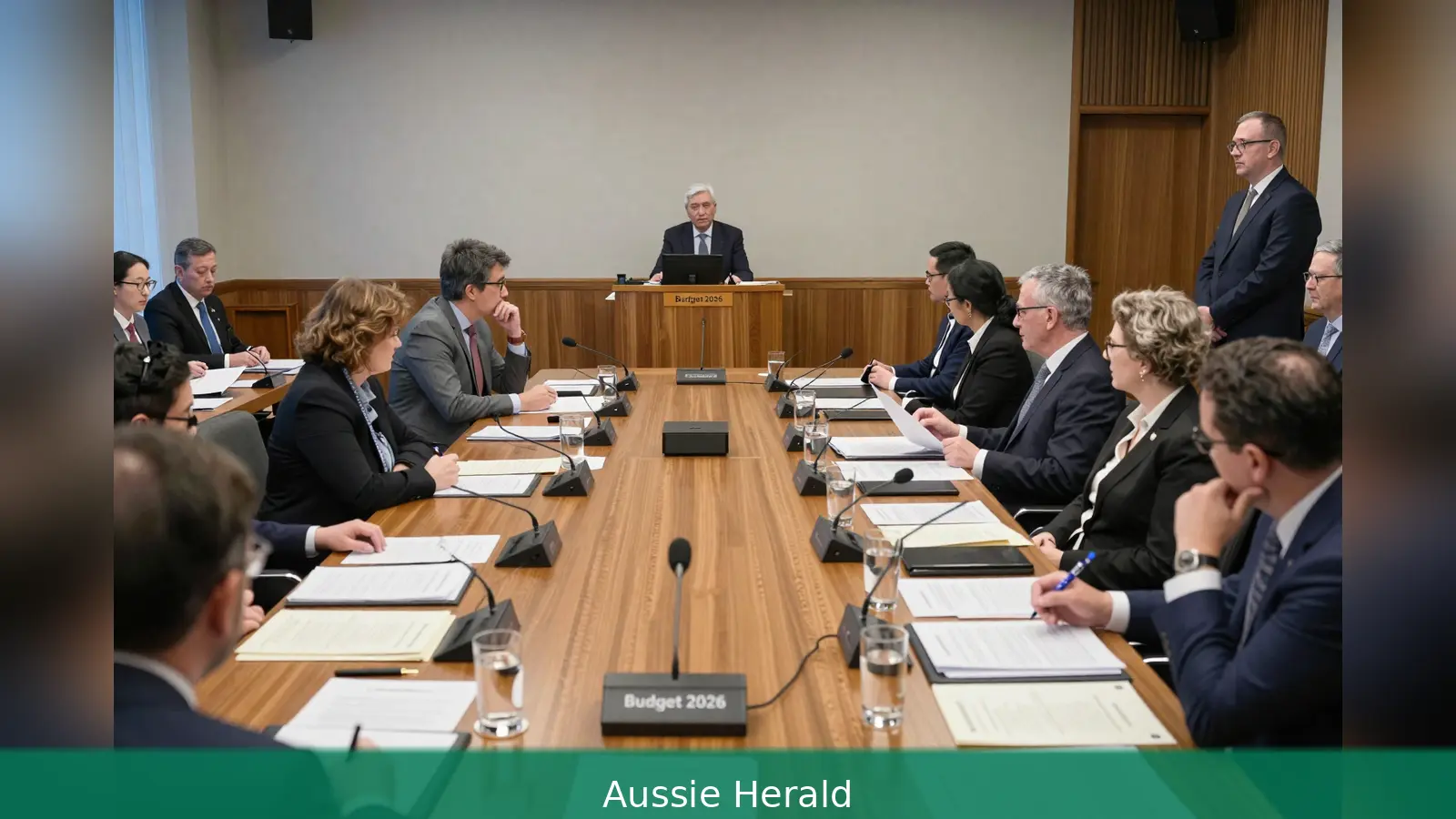
"It will be 147 per cent above the world average capital gains tax, and a 69 per cent increase on the current effective rate of capital gains tax in Australia," said Derek Francis, a fund manager and former NSW government economist, summarising modelling submitted to the Senate inquiry. The government has proposed replacing the existing 50 per cent capital gains tax discount with a discount indexed to inflation and imposing a 30 per cent minimum tax on discounted gains, a package set out in this year's budget and examined at parliamentary hearings on June 15 and 16, 2026. Households that hold investment property, retail investors, owners of small and early-stage businesses, and founders and employees of start-ups dominate submissions and testimony to the Senate economics committee. Treasury and the Senate will now consider submissions as ministers weigh limited carve-outs and possible fast-tracking of exemptions into budget legislation within the next fortnight.
"Australia needs more innovation, more entrepreneurship and more productivity growth, not less," said David Elia, chief executive of Hostplus, the $150 billion industry superannuation fund for hospitality and tourism workers.
His warning encapsulated the sharp pushback that followed the government's capital gains tax proposals. The budget package would scrap the flat 50 per cent discount in favour of a discount indexed to inflation, and it would apply a 30 per cent minimum tax on gains that still benefit from that discount. The measures, set out in this year's budget, were the central focus of two days of evidence to the Senate economics committee on June 15 and 16, 2026, and have produced an unusually concentrated debate across business, super funds, independent economists and household investors.
Support for indexation, concern about design
Independent economists who gave evidence on June 15 broadly supported the idea of moving away from a flat discount toward inflation indexation, while flagging weaknesses in the way the government has designed the package. Michael Brennan, former Productivity Commission chair and chief executive of the e61 Institute, described inflation indexation as "an ideal" at the heart of a reformed capital gains tax system and urged that any discount be applied across a broad range of assets. Robert Varela of the Australian National University's Tax and Transfer Policy Institute said Australia's arrangements for taxing investment income were "a mess" and called the budget measures "a step in the right direction" for reducing distortions between asset types.
Saul Eslake, an independent economist, criticised the 30 per cent minimum tax but said the proposal would bring the tax treatment of investment income closer to wage income and improve equity. Those endorsements from economists were measured. They accept the principle of indexing gains to remove inflation from taxable returns, yet they also highlighted problems that would arise unless the rules were broad, simple and consistent across asset classes.

Business and super funds push back
Business groups, large industry investors and super funds gave a far sterner reception. The Australian Industry Group warned the committee the changes would have "negative and unintended effects on Australian businesses and our broader economic performance." National employer representatives urged the government to withdraw the proposals and engage in further consultation, arguing the measures could damage business confidence, investment and Australia's reputation as an investment destination.
Hostplus, through its chief executive David Elia, said the reforms risked weakening the pipeline of new businesses and deterring founders, employees and investors from participating in the start-up ecosystem. Senior bank executives, while not named individually in committee public testimony, also urged a rethink of parts of the package, warning it could harm the supply of risk capital to growth firms.
The submissions and hearing testimony made clear which groups are most directly affected. Households with investment property and retail investors featured heavily in written submissions. Owners of small and early-stage businesses, and founders and employees of start-ups, also dominated the narrative in public comments. Those groups argued the 30 per cent minimum tax and the removal of the blunt 50 per cent discount could be disproportionately punitive where cost bases are low or zero, or where firms rely on equity incentives rather than cash pay.
Ministers and officials told the committee they recognise those concerns. Treasurer Jim Chalmers has held talks with business groups about exemptions, and ministers have signalled targeted carve-outs for early-stage and start-up businesses and possibly some small businesses facing capital gains tax on the sale of their firms. Officials said they're open to limited exemptions to reduce disproportionate impacts on firms with low or zero cost bases.
The government is planning to move quickly if it decides to enshrine carve-outs. Officials and ministers indicated they're considering fast-tracking targeted exemptions by including them in the budget legislation the government intends to bring to the Senate within the next fortnight. That timetable is the next concrete procedural milestone following Treasury and parliamentary consideration of submissions and the continuation of Senate committee proceedings after the hearings.
The substance of the carve-outs and the final legislative design remain the critical questions. Will exemptions be broad enough to protect founders and small business sellers while keeping the integrity of an inflation-indexed system?
Can the government translate the economists' technical support for indexation into a set of rules that avoid creating new distortions or loopholes? Those are the trade-offs ministers and officials will have to answer as they refine the package.
Related Articles
- 30% minimum capital gains tax from July 2027 hits investors
- 30% CGT minimum, Age Pension carved out
- ANZ, NAB cut house price forecasts to 2% fall
Ministers and Treasury must now weigh submissions and committee advice while deciding whether to fast-track targeted carve-outs by including them in the budget legislation the government plans to move through the Senate within the next fortnight.
This article was created with AI assistance.


