
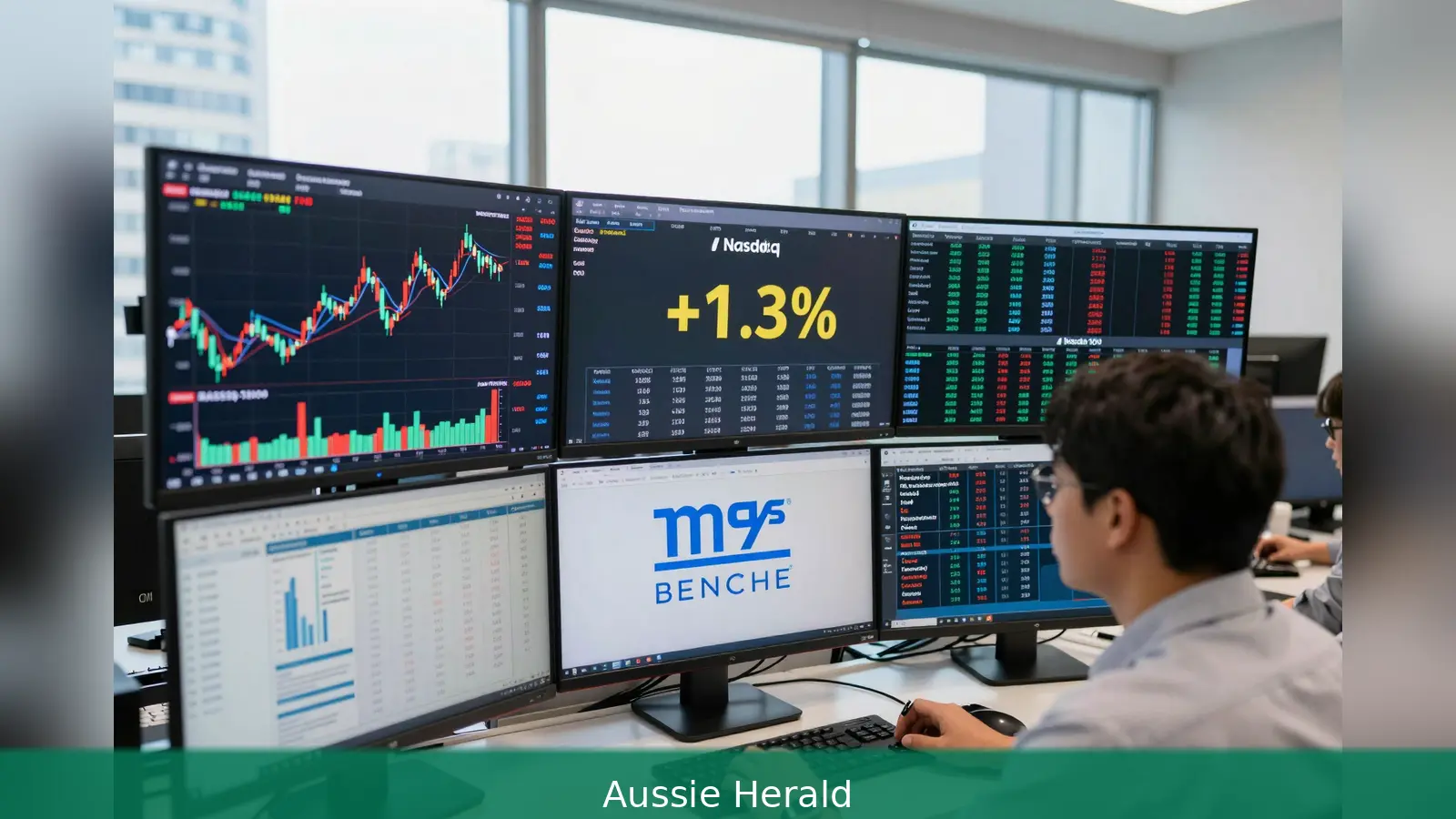
S&P 500 futures rose about 0.4% while Nasdaq-100 futures jumped 1.3%, even as oil eased roughly 0.2% after OPEC+ said it would raise output again for August. The move left the Dow with smaller overnight gains, extending a weekly advance that pushed the Dow to a fresh all-time closing high, according to Dow Jones Market Data. Households with equity exposure, institutional investors and technology firms stand to gain from the early strength, while energy producers face pressure from softer crude prices. Traders are now focused on the Federal Reserve as minutes from the Fed's June meeting are due later this week.
Semiconductor strength pushed tech-heavy indexes higher while energy names lagged as crude eased, a contrast that underlines the market's current tilt.
Markets reopened after the Fourth of July holiday with a clear tech bias. S&P 500 futures were up about 0.4% and Nasdaq-100 futures climbed 1.3%, while Dow futures rose only fractionally, reflecting a tech-led tilt in overnight gains, according to MarketWatch and Dow Jones Market Data. For the holiday-shortened week the benchmark indexes finished higher: the Dow advanced roughly 2%, the S&P 500 about 1.7% and the Nasdaq Composite around 2.1%, MarketWatch reported.
Momentum in semiconductor and other technology stocks has been a key driver. Analysts cited by MarketWatch pointed to last quarter's rally in chip names such as Micron as lifting tech-heavy measures and the Nasdaq. That momentum has sent some investors to hyperscaler stocks, with attention on potential rotations into firms like Microsoft and Meta Platforms, while energy producers felt the drag from weaker oil prices.
Households with equity exposure, institutional investors and technology-sector firms are the primary beneficiaries of the early strength in futures. By contrast, firms tied to crude production are under pressure because oil eased after OPEC+ announced another modest output increase for August.
Oil slipped about 0.2% after OPEC+ said it would raise output again, marking the fifth consecutive monthly hike, MarketWatch reported. The announcement was described as largely symbolic until traffic through the Strait of Hormuz recovers. Meanwhile bitcoin traded near the $63,000 level and was up roughly 5% over the past week, offering an additional risk-on signal for markets.
Are there warning signs or risks market participants are discussing and what should investors watch next?
Some strategists warned that momentum trades can struggle in July and flagged early signs of profit-taking in momentum ETFs. MarketWatch noted the Invesco S&P 500 Momentum ETF had slipped in early July and strategists suggested a sharp rotation away from momentum names is possible if macro data or Fed signals shift sentiment.
The next major data point for traders will be the minutes from the Federal Reserve's June meeting, due later this week, which MarketWatch highlighted as the primary macro event. On the corporate calendar, PepsiCo is scheduled to report quarterly results on Thursday and Delta Air Lines on Friday, and the main bank earnings cycle is due to accelerate mid-month, starting with several large banks reporting on July 14.
Related Articles
- Lumentum to join Nasdaq-100 on May 18, likely sparking index-driven buying
- S&P 500 Eyes Record Close After Ceasefire Rally
- Gold Down 1.1% as Oil-Driven Inflation Fuels Rate Bets
Watch the Fed minutes later this week for further clues on interest-rate expectations, with PepsiCo reporting on Thursday, Delta on Friday and big-bank earnings kicking off from July 14. Originally reported by marketwatch.com.
This article was created with AI assistance.



