
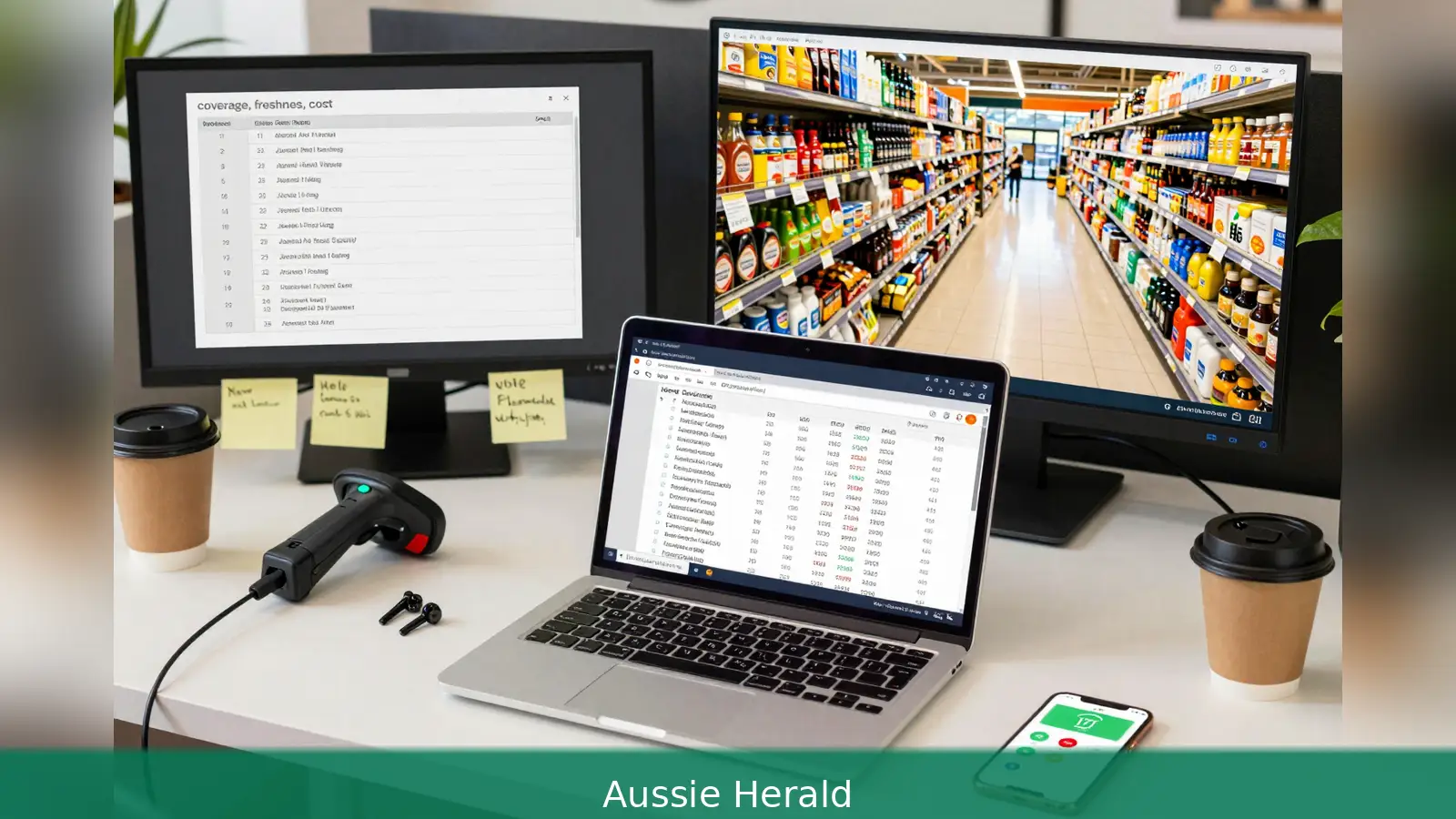
Vendors charge in very different ways, some meter per request, others offer free tiers or low-cost monthly plans, yet all promise near-real-time pricing that AI shopping agents need. This guide lays out the technical choices, commercial trade-offs and step-by-step integration work developers must do to add price comparison to shopping assistants in 2026. It compares scraping-focused services such as ScrapingBee, Amazon-targeted endpoints exemplified by Rainforest API, aggregators like PriceAPI, barcode-first flows and experimental Australian supermarket APIs that support store-level searches. Follow the procurement checklist and integration sequence here to measure coverage, freshness and cost before you commit to a vendor.
Scraping-focused services promise broad retailer reach while feed-based or partner-fed options promise stable, structured fields, and those two claims pull engineering and procurement in different directions.
1. Product families and what they deliver
Price-comparison APIs fall into clear product families. First, Scraping-focused services target breadth. They crawl retailer pages, expose parsed price and availability fields and bundle proxy rotation and anti-bot handling to reduce blocking. ScrapingBee is an example that markets proxy rotation and anti-bot handling as part of its Shopping API. These services give wide coverage out of the box but demand resilient client-side handling for intermittent failures.
Second, Marketplace-specific or retailer-targeted APIs dig deep for a single ecosystem. Rainforest API focuses on Amazon product pages and returns ASIN-based product details, pricing, availability, reviews and best-seller ranks. If your agent needs Amazon-native signals such as ASIN-level rank or review counts, these endpoints shorten the path to reliable, structured detail.
Third, Aggregators aim to compare across large sets of retailers. PriceAPI positions itself as a multi-platform comparator that searches Amazon, eBay, Walmart, Target and Google Shopping, and returns product matches, parsed prices and price-history features that simplify deal detection. Aggregators strike a middle ground: broader reach than a single-retailer feed, and more structure than raw scraping in many cases.
Fourth, Barcode- and UPC-first services are optimised for mobile flows that begin with a scan. These services map scanned barcodes to canonical identifiers such as UPC, EAN or GTIN, returning a canonical product ID the agent can use to search multiple retailers.
Finally, a region-specific experimental option exists for Australia. Some experimental servers expose Australian supermarket product search and pricing via a Model Context Protocol, including the ability to target searches to specific store IDs for store-level availability and pricing. That feature is critical where suburban stock and pricing diverge.
2. The capability set every AI shopping agent should expect
Providers converge on a handful of capabilities agents need to recommend and buy products safely. Expect real-time pricing and availability, product matching across retailer identifiers, historical price tracking, deal and price-drop alerts and inventory status flags. Most vendors publish REST endpoints and example client snippets for common languages. Rainforest API and PriceAPI both supply sample request code showing how to call endpoints and authenticate with an API key.
Product matching is a recurring engineering headache. A barcode lookup can return canonical identifiers for mobile flows, but for cross-retailer matching you still need to map ASINs, UPCs, EANs and GTINs, reconcile SKU variations and normalise titles and attributes. Build a product-identifier normalisation layer early so the agent can match like-for-like items and avoid showing apples-to-orange comparisons.
Normalisation also extends to price basis. Retailers display prices differently: tax included or excluded, membership discounts, bundle pricing or unit packs. Use a consistent basis for comparisons, for example a price-to-door that includes typical shipping when providers supply shipping estimates, or unit-price normalisation for multi-pack items.
3. Commercial models and procurement reality
Commercial models differ materially and must be matched to your query volumes, freshness needs and agent architecture. Vendor materials vary: some providers list per-request charges, others advertise very low per-request rates, and some offer free tiers plus paid monthly plans. Those figures aren't interchangeable; you should collect current rate cards and clarify any volume bands, overage rates and support costs from each vendor before modelling run costs.
Data quality and SLAs vary with product family. Feed-based integrations typically deliver structured fields, stable endpoints and stronger SLAs. Scraping-based services can cover more retailers but bring higher variability, requiring retries and more sophisticated error handling. Aggregators sit between those poles, sometimes offering price-history or deal-detection features that reduce the need to instrument your own history store.
Procurement should do two things before a final award. First, request up-to-date rate cards and examples of how usage is metered. Second, run a representative basket through trial accounts to measure effective cost and hit rate under realistic query patterns. That trial should include the kinds of SKU mixes your agent will query: a mix of national SKUs, store-level items and long-tail products if your agent targets local supermarket comparators.

4. Integration sequence: the engineering checklist
Follow a clear sequence when implementing a price-comparison layer. First, define the functional scope. Which retailers matter, does store-level pricing matter, do you need barcode lookup for mobile, and must the agent complete purchases or only surface comparisons? Second, shortlist vendors using coverage, freshness, data schema, SDK availability, rate limits and commercial fit as selection criteria. Third, acquire credentials and run sandbox tests. Most providers require an API key and expose test endpoints; use them to inspect identifier patterns and the vendor parsing work that will be required.
Fourth, implement product-identifier normalisation. Map ASINs, UPC/EAN/GTINs and SKU rules, and normalise titles and attributes. Fifth, design rate-limit handling and caching. Scraping-based services are more susceptible to transient failure and anti-bot throttling, so include retry logic with exponential backoff and short-term caching of recent price snapshots to reduce load and cost. Cache durations are a trade-off between currency and cost; move historical-price features to a separate, less-frequently updated store to avoid repeated high-cost lookups.
Sixth, request store IDs or location parameters when the provider supports them. Some experimental supermarket servers document the ability to search a specific store by store ID, which is necessary for accurate supermarket-level price comparisons in Australia. Seventh, normalise and reconcile price feeds before exposing results. Use the metadata returned by providers such as availability flags, seller type, fulfilment indicators and timestamps to calculate confidence scores and explain differences to users.
Eight, plan for checkout and payments if the agent will complete purchases. Agentic commerce platforms and directories list options for agent-initiated checkout and payments, but these require separate compliance and integration work. Completing a transaction on behalf of a user invokes stronger identity, consent and payment-security requirements than surfacing a price. If your agent will only surface prices, design clear call-to-action flows that hand the user to the retailer and include provenance information about the price snapshot the agent used.
5. Operational rules, monitoring and Australian specifics
Instrument three core operating metrics from day one: coverage, freshness and cost-per-relevant-result. Coverage is the percentage of queried SKUs that return a usable match. Freshness is the median age of the price data. Cost-per-relevant-result is the true operating cost after accounting for retries, caching and failed lookups. These metrics let procurement and engineering iterate on vendor mix and caching strategy.
Use vendor features to enrich signals. Price-history and deal-detection features reduce the need to backfill your own history store. Vendors advertise price history, deal detection and best-seller ranks to support signal enrichment. Rainforest API returns best-seller ranks and reviews which can be a useful relevance signal when ranking offers.
Operational considerations unique to Australia matter for supermarket-level comparison. Some experimental supermarket servers expose search by store ID and pricing, which supports Australian agent use cases where local stock and prices diverge across suburbs. Teams building Australian-focused agents should verify that the provider supports store-level queries and that any supermarket integration meets their expected latency and freshness requirements.
Finally, governance and measurement are ongoing. Instrument coverage and freshness dashboards, run representative baskets periodically, and keep procurement engaged to re-run trials when your SKU mix changes or when vendors change their rate cards or coverage claims.
6. Cost control patterns and error resilience
Design patterns to control cost and manage scraping variability. First, front-load cheaper, high-confidence sources for common SKUs and fall back to broader but costlier searches for long-tail queries. Second, short-term caching reduces repeated hits for the same SKU during a user session. Third, batch queries and pre-warm caches for anticipated baskets, for example when showing a comparable basket price for checkout. Fourth, use exponential backoff and capped retry budgets for scraping-based calls to avoid runaway costs when a vendor is partially blocked.
Also separate expensive signals. Move occasional historical-price enrichments into an asynchronous pipeline and materialise them in a low-cost store so that real-time requests read a consolidated enrichment rather than running fresh history queries per user interaction.
7. Procurement checklist and trial recipe
Procurement should formalise a short, repeatable trial. First, export a representative set of SKUs or barcodes covering national brands, long-tail items and store-specific supermarket items. Second, register test accounts and acquire API keys for shortlisted vendors. Third, run sample queries against sandbox or test endpoints and measure hit rate, latency and per-result cost. Fourth, normalise the returned fields and compare results across vendors for the same SKU to surface discrepancies in tax inclusion, shipping and pack counts. Fifth, report coverage, freshness and cost-per-relevant-result to stakeholders and use that data to finalise vendor selection.
Remember that vendor claims about coverage and success rates often conflict. A scraping-based product will typically assert broader reach while a feed-based offering will emphasise structural completeness and stability. Real procurement resolves these contradictions with representative tests, not marketing slides.
In short
First, pick the product family that matches your priorities: breadth for scraping, depth for retailer-specific feeds, or a middle path for aggregators.
Second, run a representative basket through sandbox accounts to measure coverage, latency and effective cost.
Third, implement product-identifier normalisation, caching and robust retry logic for scraping-driven sources.
Fourth, verify store-level queries for Australian supermarkets if local pricing and availability matter.
Fifth, instrument coverage, freshness and cost-per-relevant-result and revisit vendor mix as usage patterns change.
Related Articles
- 7 Python tools to build REST APIs without a framework
- Cost-of-living relief: 6 signs to watch
- Best floodlight cameras 2026: pick by lumen, not brand
Practical procurement step: collect current rate cards and run a representative basket trial, measuring coverage, freshness and cost-per-relevant-result, before you commit to a vendor.
This article was created with AI assistance.


