
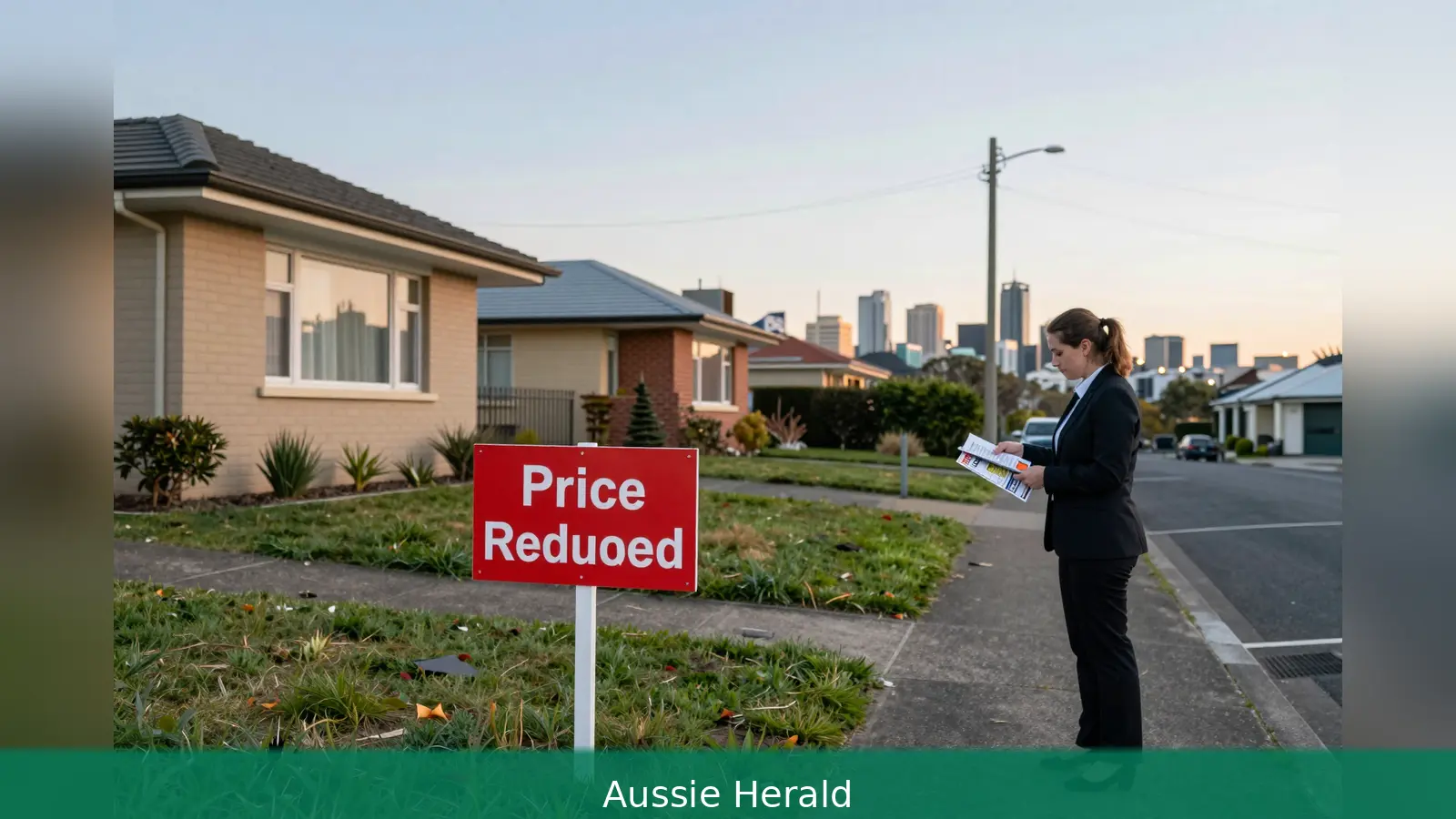
National dwelling values fell 0.4% in June, the biggest monthly drop since December 2022, a sign the federal budget's tax changes and a recent run of rate rises are cooling Australia's largest markets. The decline was concentrated in Sydney and Melbourne, where Cotality reported falls of 1.2% and 1.0% respectively, while PropTrack shows national prices 0.9% below their peak but still 5.8% higher than a year ago. Banks have already trimmed forecasts: NAB sees a 2% fall across major capitals, Commonwealth Bank cut its growth view to 3% from 5%, and Morgan Stanley sketched a 5 to 10% correction. July's indices will be watched closely to see if June was a pause or the start of a broader downtrend.
The immediate consequence has been a sharper pullback in the two largest markets, after budget tax changes and faster borrowing costs reduced investor demand and raised mortgage serviceability pressures.
Where the falls landed
Cotality's Home Value Index recorded a 0.4% fall in June, its largest monthly decline since December 2022, with Sydney down 1.2% and Melbourne 1.0% in the month. PropTrack's Home Price Index showed national prices are 0.9% below their peak, although still 5.8% higher than a year earlier, signalling a short-term downward turn on top of a longer-term upward trajectory. Regional markets remain divergent: PropTrack reported combined regional median values are 9.5% higher than a year ago, and most regional areas still sit at record median prices. PropTrack's median figures also show Sydney around $1.23 million, with other capitals substantially higher than five years ago.
Why prices eased
Analysts point to two proximate causes. First, the Albanese government's May budget reforms to negative gearing and the capital gains tax discount have reduced investor appetite, with firms expecting investment activity to fall sharply as investors reassess likely returns. Second, the Reserve Bank's recent tightening cycle has lifted mortgage costs and weakened demand. Some lenders say repayments have risen noticeably for many borrowers.

The policy and rate combination is already showing through in market activity. Transaction measures have softened, auction clearance rates are down in major capitals, and commentators note an increase in investor caution. Banks and broker forecasts have adjusted: NAB projects a 2% fall across major capital cities, Commonwealth Bank has trimmed its growth forecast from 5% to 3%, and Morgan Stanley has outlined a possible 5 to 10% correction scenario. At the same time, industry groups report worsening affordability, and the Reserve Bank has highlighted strain among highly indebted households.
Industry voices emphasise the move is a calibration after decades of strong growth rather than a uniform collapse. National indices remain positive over 12 months even as some capital-city values have begun to trend lower, and multiple factors are interacting: higher borrowing costs, cost-of-living pressure, and the budget measures all play roles, making it difficult to isolate a single driver for the recent falls.
For lenders and investors the balance is shifting. Some banks have already trimmed near-term price expectations and lenders will watch auction activity and investor enquiries for signs of further weakening.
For owner-occupiers, immediate affordability has worsened, while for investors the budget changes force a reassessment of after-tax returns and portfolio strategies.
Policymakers and industry groups will also be monitoring credit stress indicators and sales volumes. Earlier observations from the Reserve Bank and warnings from industry groups provide markers of household strain that could influence lending behaviour and market turnover over coming months.
Related Articles
- How much does negative gearing cost Australia 2026
- Government backs down on 'widows tax' for 680,000
- 30% minimum capital gains tax from July 2027 hits investors
July's monthly indices from the major data providers will be the first concrete test of whether June's 0.4% fall was a temporary pause or the start of a broader correction.
This article was created with AI assistance.


