
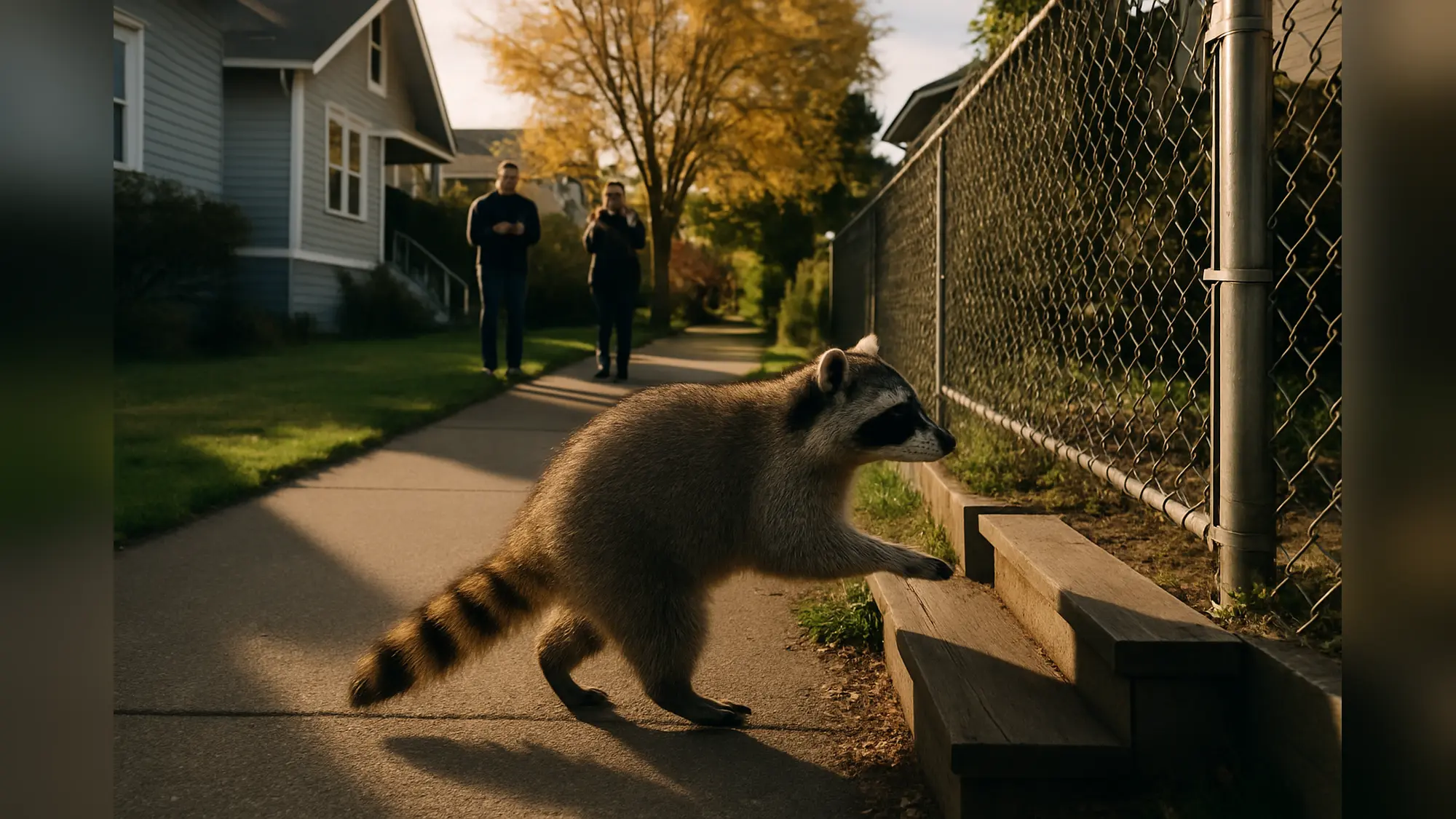
6.8 million views in three days and a neighbourhood full of fans, yet wildlife specialists warn the raccoon at the centre of the viral clip is likely living with a rare spinal deformity and should be left alone. The five-second Instagram video was filmed in Ballard by Seattle resident Kiana Hall on July 13 and shows a small, round-bodied raccoon darting across a footpath, climbing stairs and vanishing over a fence. Hall named the animal Jimothy and posts and security-camera clips shared by neighbours suggest he has been in the Ballard area for weeks, with sightings near Northwest 50th Street. There's no scheduled veterinary exam or formal intervention reported for Jimothy, and authorities urge residents to report any clear signs of distress to authorised wildlife responders.
A five-second clip made the animal famous almost overnight, but specialists say fame is the last thing Jimothy needs. The surge of online attention has brought affection, a rush of amateur tracking and concern that crowding or attempts to capture close-range photos could harm the animal.
Marcie Logsdon, an associate professor at Washington State University’s Veterinary Teaching Hospital, told The Seattle Times that Jimothy’s shortened neck and rounded upper body are consistent with a congenital spinal deformity commonly called short spine syndrome. Logsdon said she couldn't give a definitive diagnosis without an examination, but she believes the raccoon was born this year and that the appearance likely stems from vertebrae compression or fusion during fetal development. Short spine syndrome has been documented mostly in domestic dogs and cats and is rarely reported in wildlife.
Despite the abnormal shape, Logsdon told The Seattle Times she found Jimothy "very spry" and said his energy was encouraging. "I was surprised and honestly a little bit inspired that he's that resilient," she said.

That assessment is key to why wildlife experts cited in local coverage haven't recommended intervention: Jimothy appears to be moving, foraging and surviving in the neighbourhood.
Local coverage and social feeds have pushed the story well beyond Ballard. Posts on Reddit, Instagram and other platforms amplified Hall’s clip to millions, and Fox13 Seattle and other outlets reported repeated sightings while encouraging residents to respect wildlife space. Some commenters compared Jimothy to mythical creatures, and others urged caution as the clip prompted gatherings and daily tracking posts.
Practical guidance has come from local reporting and official advice. Kitsap Sun cited the Washington Department of Fish & Wildlife on typical raccoon measurements, noting adults are often around three feet long and weigh between 15 and 40 pounds. Kitsap Sun also provided contact information, saying anyone in Seattle concerned about wildlife or experiencing problems can call the PAWS Wildlife Center at 425-412-4040 or consult Seattle Animal Shelter and King County wildlife resources to determine the appropriate response.
Wildlife authorities and animal welfare groups continue to warn against feeding or harassing raccoons. Veterinary and wildlife sources emphasise simple precautions: don't feed them, secure garbage and pet food, and keep pets indoors at night. Those steps reduce the chance of conflict and help animals that are coping with injuries or congenital conditions to remain wild and mobile.
The Jimothy episode has also reopened a local conversation about how urban wildlife adapts to human environments and how residents should react when an animal looks abnormal. For now, residents and reporters are watching from a distance while sharing sightings, photos and video clips that track the raccoon’s movements through Ballard.
There is no scheduled veterinary examination or formal intervention reported for Jimothy, and anyone in Seattle with concerns can call PAWS Wildlife Center at 425-412-4040. Originally reported by ABC News.
This article was created with AI assistance.


