
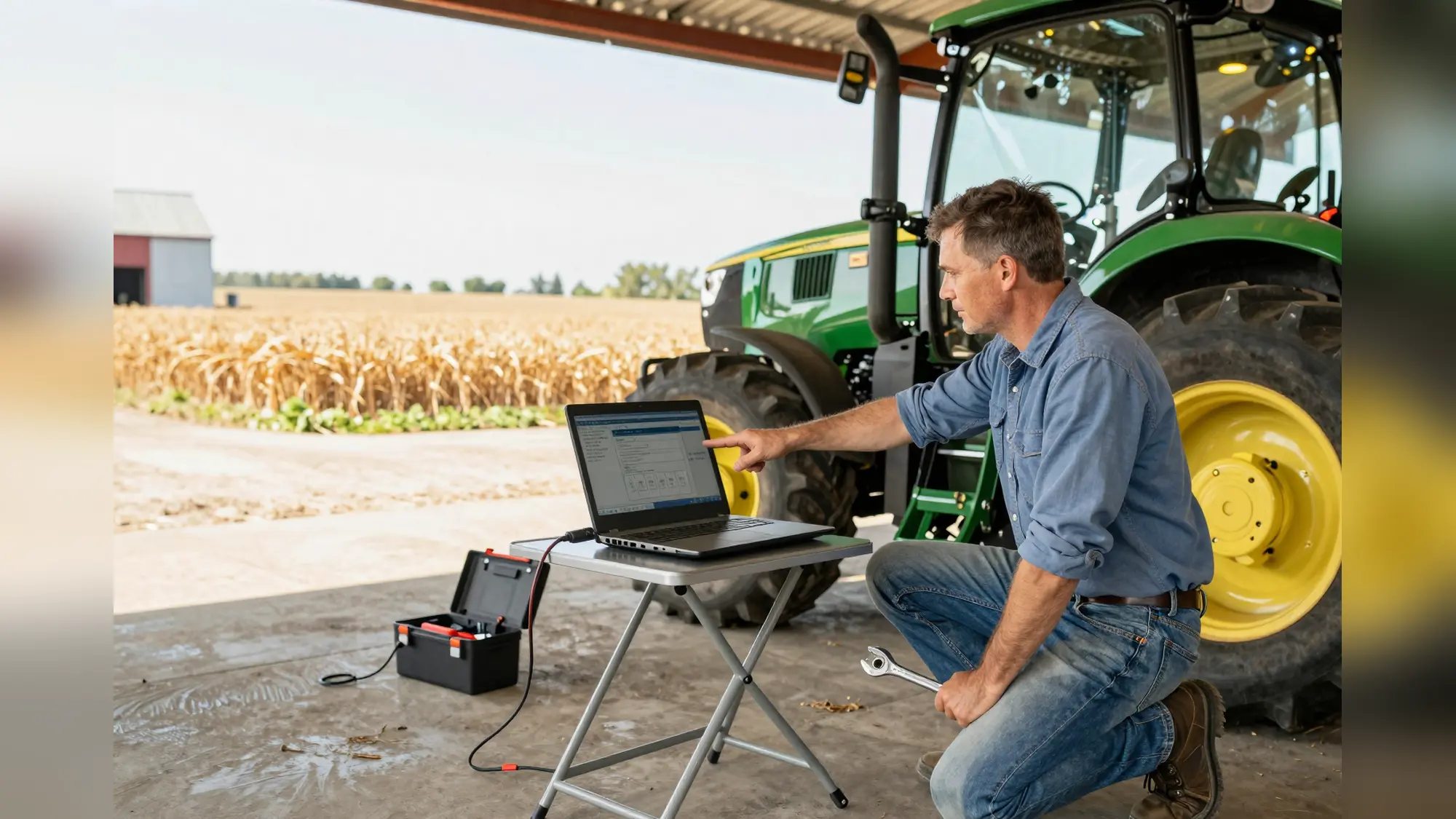
"Today’s settlement enables farmers to do what they’ve done for generations, fix their own tractors and other farm equipment, without having to pay an authorized John Deere dealer to do it," said Daniel Guarnera, director of the Federal Trade Commission competition bureau. The settlement, reached on July 8, 2026, requires Deere & Co. to give farmers and independent providers the same diagnostic and other repair resources available to authorised dealers for 10 years. New repair resources must be shared once more than 50 percent of authorised dealers have access to them. The consent order was filed in Illinois and is now headed for judicial review by U.S. District Judge Iain D. Johnston in Rockford, Illinois.
"Today’s settlement enables farmers to do what they’ve done for generations, fix their own tractors and other farm equipment, without having to pay an authorized John Deere dealer to do it," said Daniel Guarnera, director of the Federal Trade Commission competition bureau.
The Federal Trade Commission and the attorneys general of Arizona, Illinois, Michigan, Minnesota and Wisconsin sued Deere on January 15, 2025. They argued Deere had amassed monopoly power over repairs by withholding software and full diagnostic tools and steering customers to its authorised-dealer network. Arizona Attorney General Kris Mayes said, "For too long, Arizona farmers and independent mechanics have been at the mercy of Deere’s monopoly over repair tools, forced to wait, and pay, for authorised dealers just to fix broken tractors and other equipment." The agencies said those practices produced service delays and higher prices that could harm farmers and consumers.
Under the consent order filed in Illinois, Deere must make diagnostic and repair tools available to equipment owners and independent repair shops, not only to its authorised dealers. The company must also instruct authorised dealers to provide those resources on request. The order requires parity in the repair ecosystem rather than only a cash payment to affected customers, and it obliges Deere to expand access as new tools are rolled out. This settlement runs for 10 years, and a trigger requires Deere to share any new repair resources once a majority of authorised dealers have access.

That parity matters because trade groups and repair advocates have said lack of access to full service software caused delays that could affect harvests. Farmers who own Deere equipment and independent repair shops stand to gain immediate access to the same software capabilities and diagnostic functions previously reserved for authorised dealers. Authorised dealers themselves will be required to hand over tools and resources when owners or independent providers ask for them.
Deere agreed to pay $1 million collectively to the five states to cover antitrust enforcement costs. The company didn't admit or deny wrongdoing.
Deere said the agreement "reinforces Deere’s continued innovation toward more flexible repair options," and Denver Caldwell, vice president of aftermarket and customer support, said, "This is good news for our customers and for the future of how Deere equipment is supported."
The FTC also noted a related private class-action case earlier this year. Deere reached a separate resolution with private plaintiffs in April 2026, agreeing to pay $99 million to settle that litigation.
The consent order now awaits judicial approval. It was filed in an Illinois court and is scheduled for review by U.S. District Judge Iain D. Johnston in Rockford, Illinois. FTC Chairman Andrew Ferguson said the settlement protects competition in agriculture and the livelihoods of farmers.
The next concrete step is the court review in Rockford, Illinois before U.S. District Judge Iain D. Johnston, where the consent order will be considered for approval. Originally reported by Reuters.
This article was created with AI assistance.


