
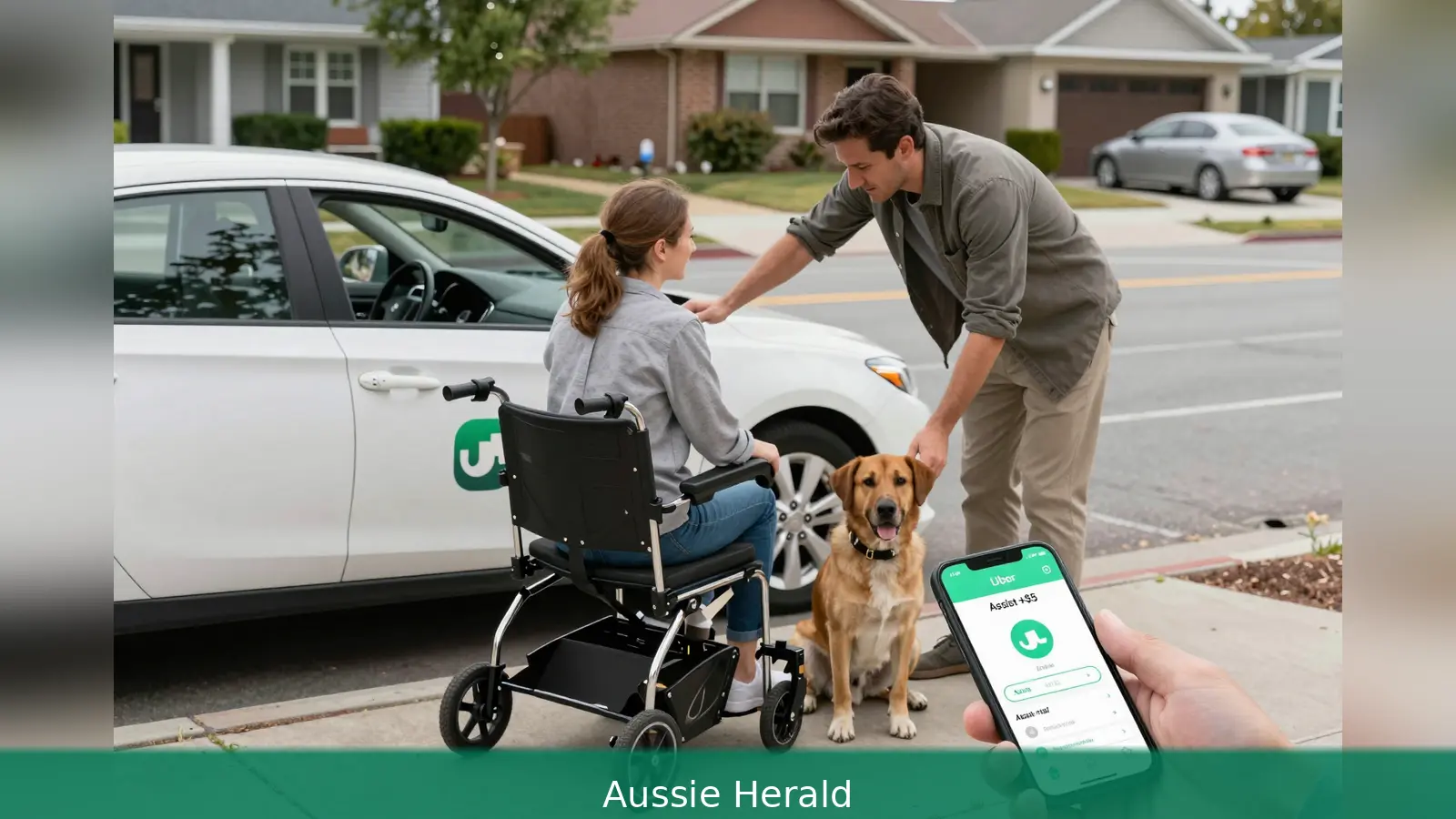
A $5 surcharge on Uber's Assist service has split opinion: Uber says the uplift pays drivers and shortens wait times, while disability advocates call it a 'disability tax'. The fee, introduced in May 2026, applies to Assist, Uber's kerb-to-kerb option launched in 2015 that helps with boarding, luggage and stowing mobility aids. Uber says it consulted more than 1,000 people with disability, carers and accessibility experts, and that the new payment is already improving reliability for Assist riders. Critics disagree and point to a recent discrimination settlement and an external review of Uber's Australian operations, the outcome of which the company says won't be released until 2028.
Uber frames the $5 uplift as a driver-facing fix, while advocates say it shifts the cost of access onto people who already face barriers.
The $5 surcharge applies only to Assist trips, a kerb-to-kerb product Uber introduced in 2015 for passengers who need extra help getting in and out of vehicles. Uber defines Assist users as people with disability, seniors and pregnant women who require assistance with boarding, bags or mobility aids. The company notified Assist customers by email when it rolled out the charge in May 2026, saying the uplift is paid to driver partners.
An Uber spokesperson told customers the extra fee "recognises and compensates driver partners for the extra time, care and effort that may be required and includes an extended wait time that ensures riders have the time they need to safely enter and exit the vehicle." Uber argued those payments have improved service reliability for Assist passengers while reducing wait times, and presented the change as part of a broader commitment to enabling safe, dignified travel for all riders.
Advocates call it discriminatory and not enough
Guide Dogs Australia framed the policy very differently. Tamara Searant, general manager of social change at Guide Dogs Australia, said the charge amounted to discrimination and called it "like a disability tax." Advocacy groups and some users say the surcharge compounds long standing problems with door refusal and patchy service from rideshare and taxi providers.
The criticisms gained momentum after Uber settled a federal discrimination case in late 2025 brought by Victorian woman Paula Hobley. Hobley had alleged Uber refused her service more than 30 times while she was travelling with her guide dog.

Uber settled the case without admitting liability and agreed to an external review of its Australian operations. The company hasn't released the results of that review and says the review's outcome won't be published until 2028.
Opponents also dispute both the fairness of the charge and the consultation process Uber described. While Uber said it consulted more than 1,000 people with disability, their carers and accessibility experts, public details of those consultations haven't been published in full.
Advocacy groups say requiring people to pay for assistance that helps them to use everyday services treats accessibility as a premium extra rather than a baseline right, and they're pressing for stronger enforcement and clearer obligations on platforms to provide accessible service without additional user surcharges.
The debate highlights a broader tension in platform economics: how pay and incentive structures for gig workers translate into access for vulnerable users. Uber positioned the fee as a payment designed to align driver incentives and reduce refusals by ensuring drivers are compensated for extra time and care. Advocates counter that the right remedy is systemic reform rather than a targeted charge on the people who need help.
From Uber's perspective, the surcharge is a practical way to improve reliability for Assist riders by compensating driver partners for extended wait allowances and the specialised care some trips require. From the advocates' side, the surcharge risks creating a two-tier system where people who need help must pay more to receive a basic service other passengers take for granted.
That clash is playing out in public and in private. Guide Dogs Australia and other disability groups have urged regulators and policymakers to demand clearer platform obligations and better enforcement. Uber, for its part, says it has already observed improved wait times and reliability in the weeks after the change.
There is also the unresolved question of the external review Uber agreed to after the Hobley settlement. Advocacy groups had hoped the settlement would prompt systemic fixes to door refusals and platform accountability. Instead, critics say, Uber introduced a policy that could further isolate people with disability.
Related Articles
- Billions flow to SMSFs as $1tn leaves retail super
- 5 years on, Meta leaves widow locked out of husband’s Facebook
- NAB flags up to $4bn tied to organised mortgage fraud
Uber says the external review of its Australian operations will not be published until 2028, meaning a formal appraisal of whether the $5 surcharge helps or harms Assist riders will have to wait until then.
This article was created with AI assistance.


