
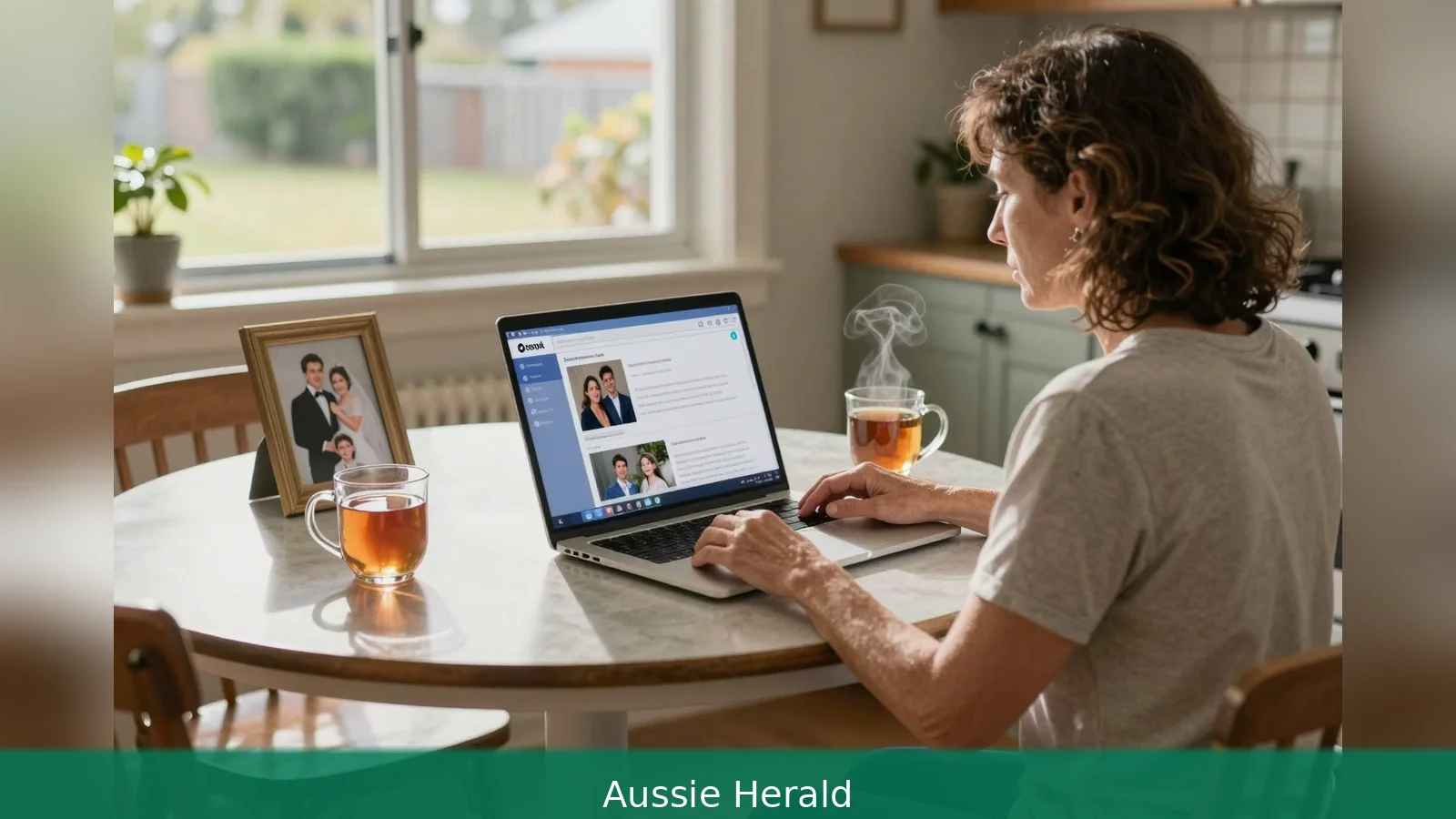
5 years. That's how long Marija Milisavljević has waited for Meta to change the status of her late husband’s Facebook profile. Her husband died from leukaemia in 2021 after eight years of marriage, and repeated attempts to have the account memorialised produced no result, she told ABC. The inactive profile sits in limbo, carrying photos and chats she can't reliably recover, a reminder that many estate plans don't cover social media.
That's how long Marija Milisavljević has waited for Meta to change the status of her late husband’s Facebook profile. Her husband died from leukaemia in 2021 after eight years of marriage, and repeated attempts to have the account memorialised produced no result, she told ABC. The inactive profile sits in limbo, carrying photos and chats she can't reliably recover, a reminder that many estate plans don't cover social media.
Meta introduced a memorialisation option for Facebook profiles. In principle the feature lets a profile be preserved or closed when an account holder dies, but the process depends on two practical conditions: someone must declare the account holder has died and the company requires proof of death. In practice, the process also works best if the person who died designated a legacy contact while alive. The ABC piece noted that the system is only effective when that preparatory step has been taken.
That combination of administrative hurdles matters when a grieving family member is trying to access photos, chats or other digital property. The memorialisation framework was not designed to hand over full control to relatives; rather it's intended to mark an account and allow limited management by a legacy contact. When no legacy contact exists the path becomes more difficult, and in Marija’s case it has led to years of silence.
Marija began trying to manage her husband’s digital legacy in 2021, shortly after his death. She told ABC she tried to memorialise his Facebook account "a few times" but eventually stopped pursuing the matter after the requests produced no result. "I miss everything about him, I miss his presence, just the comfort of having my person in the room," she said. Those words underline the emotional cost when online traces are out of reach.
Legal and academic commentators cited in the reporting framed the problem in practical terms. Bjørn Nansen, an associate professor in the School of Computing and Information Systems at the University of Melbourne, warned that issues around the digital afterlife are often overlooked and can leave families unable to access memories.

He said failing to plan for a digital legacy risks inaccessibility of online traces that can hold sentimental or monetary value, including videos, chats and other digital property.
Wills and estate lawyer Lisa Berte told ABC that estate planning rarely accounts for social media assets. That omission creates both practical and emotional problems for relatives who want to preserve or remove a deceased person’s online presence, she said. Without explicit directions in a will or a designated legacy contact, relatives can be left without a clear legal route to manage an account.
The ABC report also noted that different platforms handle deceased-user reports in different ways. Facebook’s memorialisation feature can work for families when the account holder has prepared in advance, but it offers limited remedies for those who did not. For people like Marija the locked, inactive account contains memories she can't reliably recover without Meta’s intervention.
There is a practical finance and legal angle to the story as well. The term "digital property" covers items that may have sentimental worth and, in some cases, monetary significance.
The brief expert commentary cited videos, chats and other digital holdings as assets that can matter to an estate. When wills don't list social media as an asset, executors and next of kin face uncertainty about what they're legally entitled to access or close.
Marija’s experience isn't unique. The combination of a globally large user base and an opt-in legacy system means many profiles worldwide sit in states that aren't easily resolved. For families coping with bereavement, the administrative friction compounds grief with ongoing uncertainty about what happens to memories stored online.
For now, Marija lives with the absence. Her attempts in 2021 yielded nothing, and the profile remains inactive. The case illustrates a simple structural constraint: Facebook’s memorialisation framework requires action while an account holder is still alive, a step many users don't take.
Related Articles
- NAB flags up to $4bn tied to organised mortgage fraud
- Oxford Street raids: 93 searched, 42 detections, one charged
- Government backs down on 'widows tax' for 680,000
Originally reported by ABC News.
This article was created with AI assistance.


