
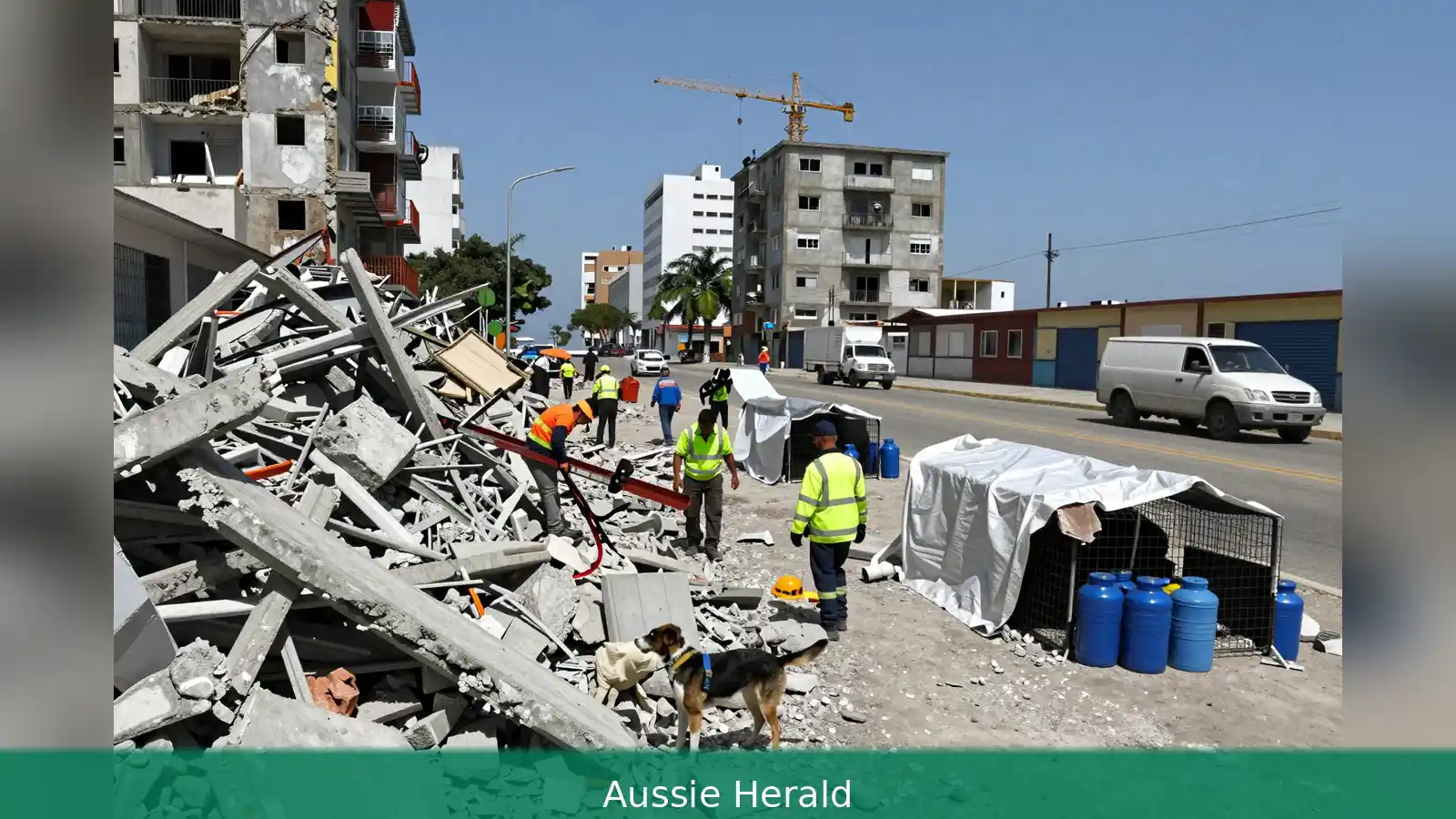
Nearly 3,000. That's the death toll from the twin magnitude 7.2 and 7.5 earthquakes that struck northern Venezuela on June 24, ABC News reported on July 5, 2026, as rescue teams sifted through collapsed apartment blocks and streets of rubble. The quakes triggered a large humanitarian emergency across coastal states, leaving more than 16,000 people homeless and an estimated 59,000 buildings damaged or destroyed, according to NASA and ABC News. The scale of the destruction is already translating into near-term fiscal pressure for municipal and regional authorities and a surge in international relief.
16,000. That's the number ABC News has reported as left without homes after buildings pancaked in several urban areas, while tens of thousands remain unaccounted for. The human toll has continued to climb as rescuers work beyond the 72-hour window that usually marks the end of most live rescues. U.N. briefings say more than 2,000 rescuers from 27 countries have been deployed, and search-and-rescue dogs are operating at collapsed sites.
The rescue stories have been stark and sometimes unexpectedly uplifting. An 18-day-old infant, Juan David Trujillo, and his mother Dayana Patiño were pulled from the rubble of an eighth-floor apartment in La Guaira after 32 hours; Patiño told ABC News she clung to her son and kept checking his breathing, saying, "As long as he was alive, I was going to be alive." A toddler was rescued after six days trapped in concrete, and several puppies were dug out alive, moments that have become focal points for crews and donors even as morgues, shelters and hospitals strain under the influx.
Humanitarian agencies are racing to meet basic needs. UNICEF reported that 680,000 children nationwide will need humanitarian assistance, including supplies for newborn and maternal care, and the agency has already delivered 47 metric tonnes of supplies that include emergency health kits and newborn-care items. The United Nations has moved to scale up its response and, as the official death toll rose, agreed with Venezuelan authorities to procure 10,000 body bags.
Emergency Relief Coordinator Tom Fletcher described an initial estimate of 50,000 unaccounted-for people as "terrifyingly plausible." Those figures underline both the human and logistical breadth of the crisis.

The immediate flows of aid and the visible arrival of rescue teams mask an unfolding fiscal story. On the ground, municipal and regional authorities face costly debris clearance, emergency shelter provision and the restoration of basic services. At the household level, losses of housing and income are acute and sudden. The concentration of damage in densely populated coastal cities implies a heavy short-term hit to local business activity, transport and utilities, even though national-level economic data haven't yet been released to quantify the macroeconomic cost.
Logistics are already a budget line. Governments and NGOs have mobilised cash, food, water and medical supplies to crowded shelters, while international teams focus on search and stabilisation.
NASA's estimate that nearly 59,000 buildings were damaged or destroyed gives a sense of scale: rebuilding, rehousing and reconnecting utilities will be expensive and time consuming. For local governments, the immediate bills will include temporary housing, repair of critical infrastructure and expanded health and mortuary capacity.
The international component is substantial and not purely charitable. More than 2,000 rescuers from 27 countries, operating with specialised equipment and sniffer dogs, mean costs and coordination burdens for the Venezuelan state and its partners. UNICEF and other agencies are deploying targeted supplies for infants and mothers, but the broader fiscal pressure will land on municipal budgets and on national systems that must pick up longer-term shelter, health and social welfare responsibilities.
At present there's no wide estimate of the macroeconomic impact. The briefest national gauges are absent, and international agencies are focused on life-saving operations. Still, the fiscal arithmetic is simple: mass destruction of housing and urban infrastructure, a large displaced population and the need for sustained humanitarian support will push public spending up and disrupt local economic activity until reconstruction and rehousing can proceed.
Beyond numbers, the rescues that have made headlines matter for more than morale. They shape donor attention, direct the flow of specialised equipment and can speed the arrival of targeted supplies. But the scale of need documented by UNICEF and the United Nations suggests rescue headlines will soon give way to a longer, costlier phase of relief and recovery.
Related Articles
- 123 states condemn slave trade, Accra pushes reparations
- France abstains on UN slave-trade motion
- AI Model Breach: Who's in Control?
The rescue of Juan David and his mother captures what has already been lost and signals the scale of the bill to rebuild and rehouse communities. Watch for official damage estimates, budget reallocations and the size of international aid pledges in the weeks ahead to gauge the full fiscal hit.
This article was created with AI assistance.


