
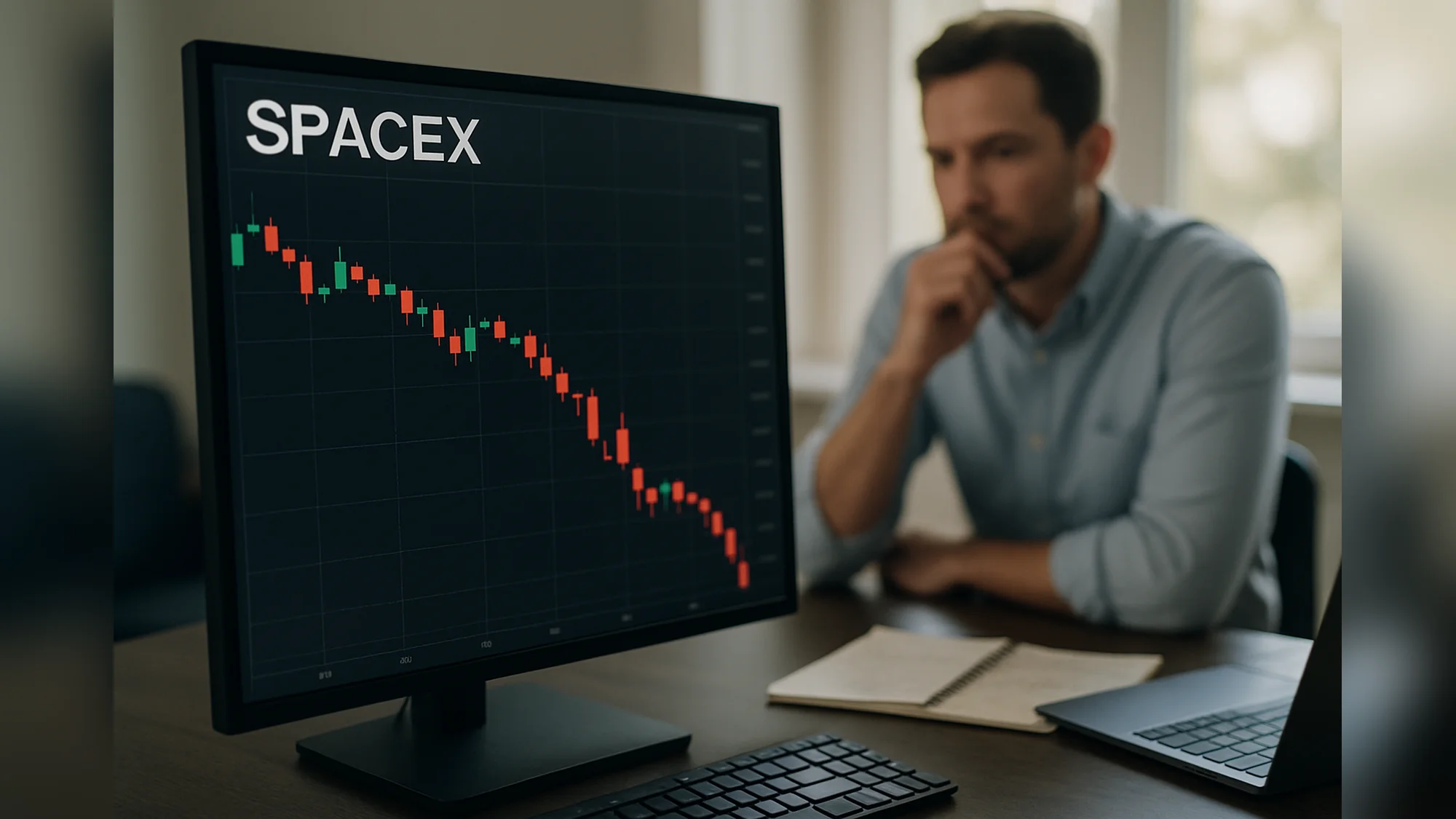
SpaceX shares have tumbled about 40% from their post-IPO peak, wiping out much of the initial rally and returning the price close to the US$135 offering level. "There’s a lot of folks that are in the stock and maybe some of them or a good number of them are wanting to take some liquidity, which is essentially putting a lot of pressure on the stock," said Justus Parmar, CEO of Fortuna Investments. The company priced the largest IPO in history on June 12 at US$135 a share and rocketed to roughly US$225-226 within days before reversing sharply. Traders are now watching the firm’s first post-IPO quarterly results and early August lock-up expiries for clues on whether selling pressure eases.
"There’s a lot of folks that are in the stock and maybe some of them or a good number of them are wanting to take some liquidity, which is essentially putting a lot of pressure on the stock," said Justus Parmar, CEO of Fortuna Investments.
What happened to the SpaceX share price and by how much did it change? SpaceX completed the largest IPO in history on June 12 at US$135 per share. The stock rallied quickly to about US$225-226 within days, then reversed sharply. By July 15 it had fallen roughly 40% from that peak, with an intraday low of US$132.28 and a close at US$135.27, bringing the company’s market value back near pre-rally levels.
Why did the stock reverse so sharply? Analysts quoted by Reuters pointed to profit-taking, valuation reassessment and technical pressures after heavy positioning around the IPO. Investors were also unsettled after SpaceX raised about US$25 billion in bond debt shortly after listing, which revived concerns that spending on Starship rockets and AI infrastructure is being funded with aggressive borrowing. Broader risk-off moves in technology and semiconductor stocks added to the downside, and markets expect insider selling once lock-up windows open.
Who is being hurt by the decline? Retail and institutional investors who bought at or shortly after the IPO now face substantial paper losses as the price slipped back toward the US$135 offering level.
Australian demand was real: CommSec reported 28,000 applications from Australian investors during the IPO process. Employees, early backers and wealth managers who stand to unlock holdings in August and beyond could see their paper gains evaporate or be forced to sell into a weak tape, prolonging liquidity pressure.
How do the company’s fundamentals feed into the share-price move? SpaceX remains unprofitable on a consolidated basis, reporting a net loss of US$4.9 billion for fiscal 2025 and a further US$4.3 billion loss in Q1 2026. Starlink, the satellite broadband arm, delivers the majority of revenue and has been growing quickly, but the wider company is burning cash on Starship development, orbital data centres and the xAI acquisition. That gap between high-growth promise and negative free cash flow encouraged some investors to reassess the valuation multiple assigned at the IPO.
What are the market mechanics to watch next? Market participants flagged two near-term catalysts. The company’s first quarterly results since listing were expected in the first week of August, and the close of that reporting period marks the start of the first phase of lock-up expiries that let eligible employees and early investors sell portions of their holdings. Both events are likely to influence liquidity and share-price direction in the short run.
Related Articles
- SpaceX shares fall from $161 debut to $132.15 low
- SpaceX IPO prices at $135, creating $1.77tn valuation
- SpaceX IPO priced at $1.75 trillion, $75bn raised
The immediate signpost to watch is SpaceX’s first post-IPO quarterly results, expected in the first week of August, and the lock-up expiries that follow, which could either relieve or add to the selling pressure identified by Fortuna Investments’ Justus Parmar. Originally reported by Reuters.
This article was created with AI assistance.