
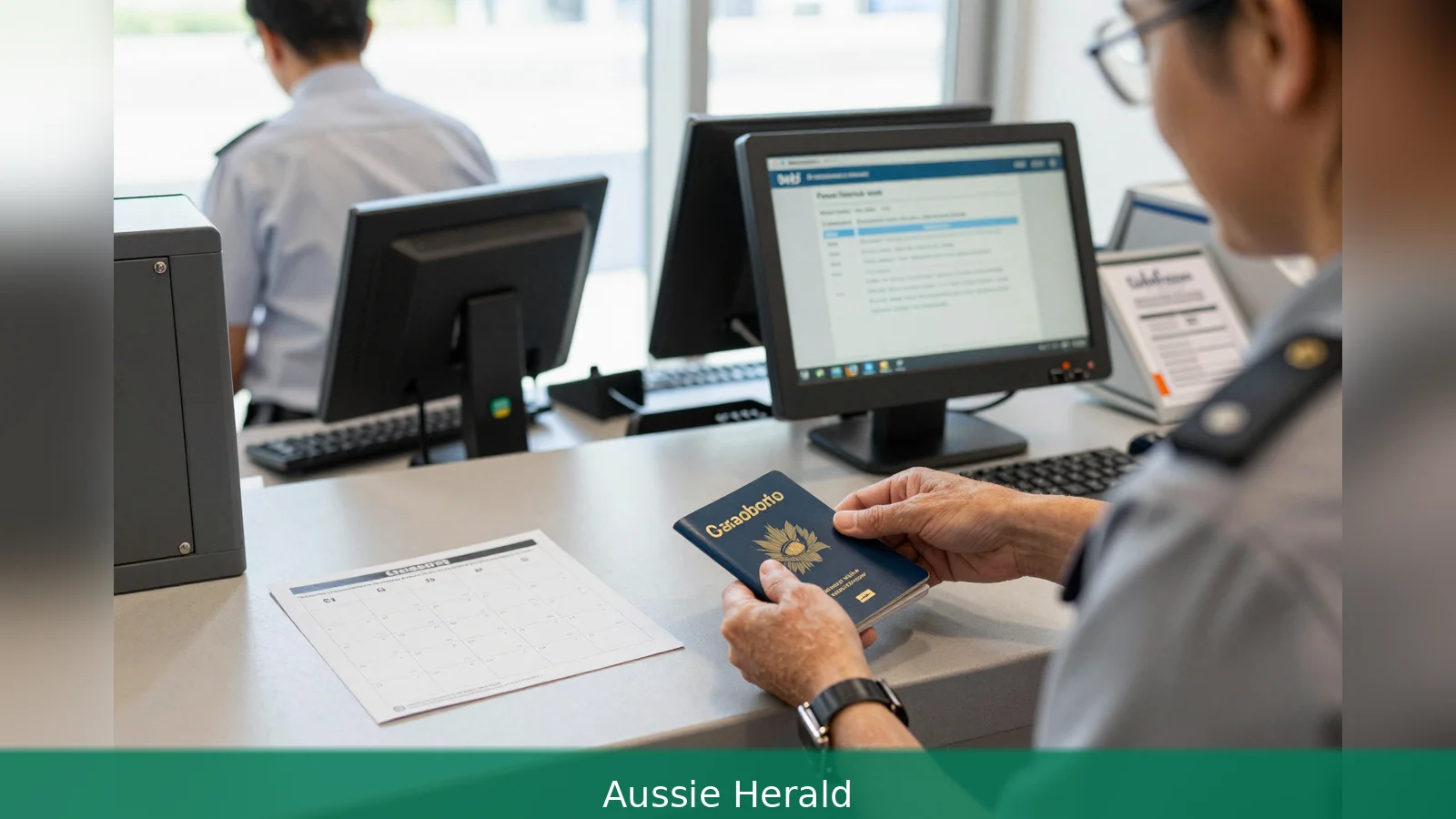
Allow at least six weeks to receive a new or renewed passport because the Australian Passport Office requires identity and citizenship checks before issuing travel documents. If your current passport meets the renewal conditions you can complete that renewal online, but only for eligible adult passports that match the office's criteria. First-time adult applicants, replacements and child passports follow different pathways and often require an in-person lodgement and original documents. Before you start, confirm the right form, gather photos and identity documents, and check urgent processing rules on the Australian Passport Office website.
1. Decide which application applies to you
Start by identifying the correct pathway. The process differs depending on whether you are applying for a new adult passport, renewing an eligible adult passport, replacing a lost or stolen passport, or applying for a child passport. The Australian Passport Office groups forms, fees, processing times and lodging pathways under separate pages, so pick the page that matches your situation before you begin.
New adult passports historically required either completing an online application and then lodging it in person at a participating post office, or filling in a paper application and lodging that at a post office. Renewals that meet the office's specific eligibility conditions can be completed online, but the current passport still has to be presented when you lodge. Replacement and child passport processes follow different rules and may require additional supporting evidence or parental consent.
Worked example: imagine you are renewing a passport that was issued when you were 18 in 2010 and still contains your current name and details. That passport may qualify for the online renewal pathway, but you must confirm it was issued on or after 1 January 2006 and that it was issued with at least two years of validity when first issued.
2. Confirm eligibility for renewal or new passport
Eligibility rules determine whether you can renew online. The Australian Passport Office issues adult passports only to Australian citizens, and you must be able to prove your citizenship. Online renewals are available only when the passport to be renewed meets all of these conditions: it was issued when the holder was aged 16 or older; it was issued on or after 1 January 2006; it was issued with at least two years' validity at the time of issue; it contains the applicant's current name, date of birth, place of birth and gender; and it hasn't been reported lost, stolen or cancelled.
If any of those points aren't met you will need to use the pathway for a new passport or for a replacement. Don't attempt an online renewal if the passport is lost, stolen or cancelled. First-time adult applicants must provide proof of Australian citizenship as part of the application.
Worked example: if your passport was issued in 2004 it can't be renewed online under the online criteria because it was issued before 1 January 2006. That forces the paper or in-person lodgement route.
3. Gather identity, citizenship and photo evidence
Missing or incorrect documents are the most common cause of delay because the passport office requires original documents or certified copies to prove identity and citizenship. For first-time adult applicants, Proof of Australian citizenship is mandatory. For renewals that meet online criteria you still need to present the existing passport when lodging. If you rely on secondary identity documents or certified copies, follow the passport office's certification rules exactly.
The Australian Passport Office publishes passport photo guidelines and document checklists on its website. Use those tools to prepare photos that meet the official specifications and assemble primary identification before you lodge. If you are required to lodge in person a witnessing or identity verification step will form part of the lodgement at a post office or another authorised lodging point.
Worked example: a common delay is a photo that doesn't meet size or background rules. Checking the passport office photo checklist and using an authorised photographer or the office's photo tool reduces the risk of the application being returned.
4. Choose how to lodge and pay
The Lodgement method depends on the application type and your location. Applicants inside Australia follow the in-Australia application pathway on the Australian Passport Office pages. If you are overseas you must follow the Applying outside Australia pathway and communicate with the relevant consulate or embassy.
Fees and urgent processing options are managed by the passport office and listed on its site. Pay the fee as instructed when lodging. If you have imminent travel the office offers faster processing for urgent travel, but that option has eligibility rules and documentary evidence requirements which are set out on the urgent travel page. Don't rely on historical press accounts for current fees or urgent travel criteria; use the office pages for up-to-date amounts and documentary rules.

Worked example: if your travel is imminent, check the urgent travel eligibility page and be ready to supply proof such as a booked flight that falls within the times the office accepts for priority handling. The exact proof required is listed on the passport office's urgent travel guidance.
5. What happens at lodgement and during processing
Expect identity and citizenship verification as part of the processing. After lodgement and payment the Australian Passport Office performs the necessary checks and issues the passport. Routine guidance from the office is to allow at least six weeks from lodgement to receiving a new or renewed passport. That's the standard benchmark for non-urgent applications.
When a passport is issued the passport number changes. The passport office explicitly reminds applicants to update travel bookings and visa records with the new passport details to avoid problems at borders. Keep the issued passport and the documents you used to apply in a safe place.
Worked example: if you lodge a renewal online and the office approves it, the system will issue a new passport number. Before you travel, update any visa applications or airline bookings that used the old passport number.
6. Applying from overseas and non-citizen processes
If you are applying from outside Australia, follow the Applying outside Australia pathway on the passport office website. The office directs non-citizens to travel documents for non-citizens and advises they consult their national consulate or embassy for that country's passport process.
7. Common pitfalls and how to avoid them
Small errors can add weeks. Confirm that the passport you intend to renew was issued when you were aged 16 or older, that it was issued on or after 1 January 2006, and that it had at least two years' validity when it was issued if you want to use the online renewal pathway. Confirm that your current name, date of birth, place of birth and gender details are correct and match across documents.
Do not lodge an online renewal if the passport has been reported lost, stolen or cancelled. Those cases require different application types and supporting evidence. Follow the passport office's certification rules if you supply certified copies of documents. And always check the office's photo rules to avoid returned applications.
Worked example: a traveller who renews online but forgets to present the existing passport at lodgement will face delays because the office needs that document to complete verification.
8. Where reporting and the official pages differ
News coverage in 2016 and 2017 recorded that the Department of Foreign Affairs and Trade explored allowing fully online new adult passport applications and opening lodgement to other service providers such as travel agencies and pharmacies. Those reports referred to tender activity and proposed changes at the time.
The Australian Passport Office's current pages centralise application forms, fees, and pathways and remain the authoritative source for eligibility, processing times and required documentation. Because media reporting and the passport office guidance differ on the scope and timing of changes to in-person lodgement, confirm the live lodging requirements on the official website just before you apply.
9. Tracking, delivery and urgent options
After you lodge and pay, the office processes the application and issues the passport. The office's guidance to allow at least six weeks is the standard benchmark for routine applications. If your travel is urgent use the office's urgent travel guidance and the evidence list it provides for expedited handling.
Remember the new passport number will differ from the old one. Update travel bookings and any visa records to match the new passport details to prevent problems when travelling. If your travel plans change consult the passport office's urgent travel pages for options.
In short
- Allow at least six weeks from lodgement for routine passport processing.
- Renew online only if your passport meets every eligibility condition, and present the current passport when lodging.
- Gather original or certified identity and citizenship documents, and follow the passport photo rules.
- Check the Australian Passport Office pages for forms, fees and urgent travel rules.
- If you aren't an Australian citizen consult your national embassy or consulate for that passport process.
Related Articles
- Kubernetes complexity is costing businesses developer time and money
- Price APIs for AI shopping agents: cost versus coverage
- 7 Python tools to build REST APIs without a framework
Allow at least six weeks from lodgement before you book travel. When your new passport arrives, note the new passport number and update airline bookings and any visa records.
This article was created with AI assistance.


