
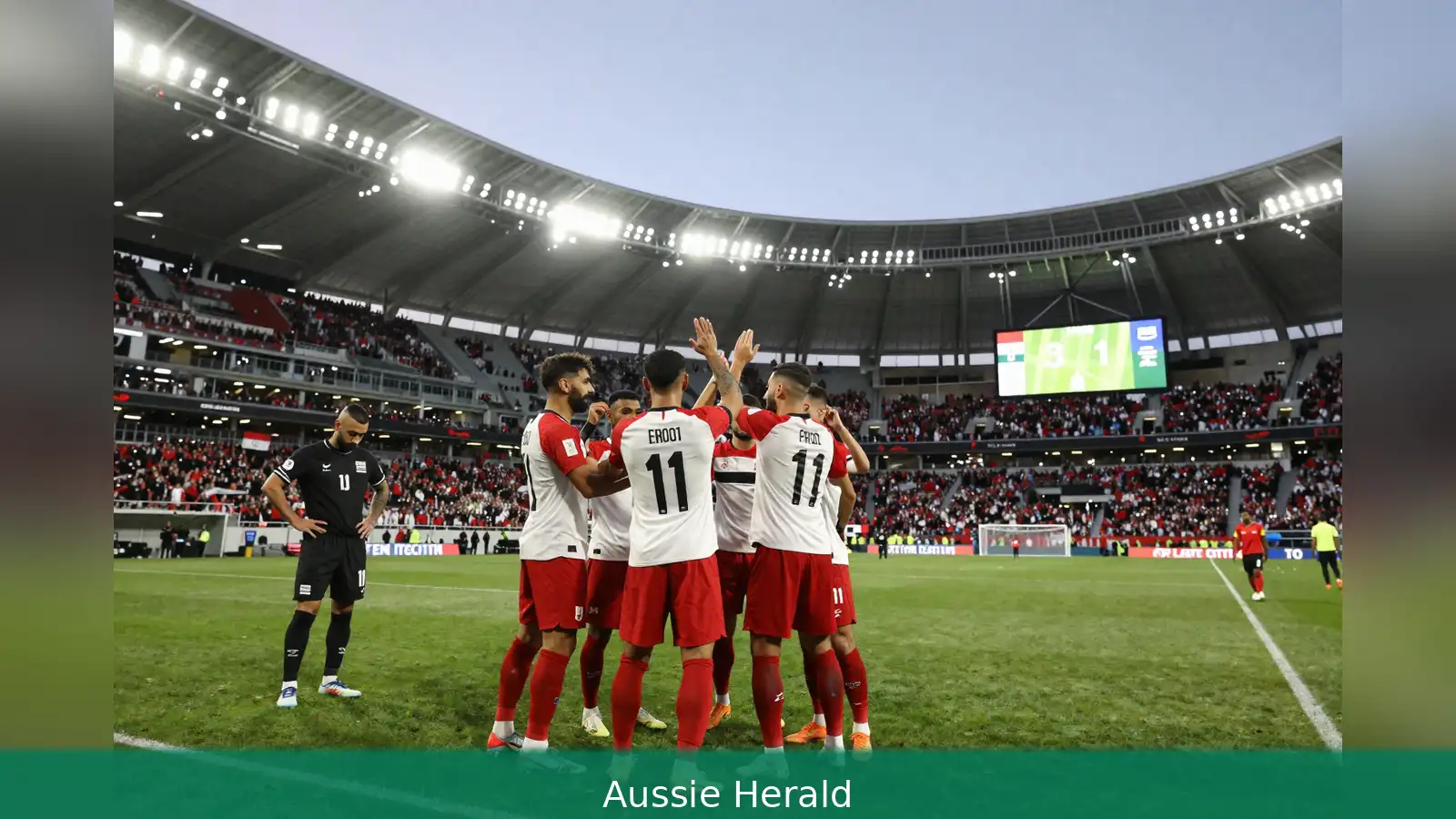
How can New Zealand score first in Vancouver, give a spirited display, and still leave BC Place with a 3-1 defeat that keeps a narrow path to the last 32? The Group G fixture at BC Place kicked off on Sunday June 21 in North America, which was Monday June 22 for Australian viewers, and finished Egypt 3, New Zealand 1. Egypt moved to the top of Group G on four points while New Zealand dropped to one point, with Omar Alali listed as the match referee and SBS among the broadcasters carrying the game. The result leaves a clear but tight route for the Kiwis: they must beat Belgium on Friday in Vancouver and hope Egypt fail to beat Iran in Seattle, or rely on other permutations governed by FIFA group rules.
How did an early headed set-piece not decide the match for New Zealand? That contradiction is the tidy but painful story from Vancouver: a set-piece opener, competent first-half defending, and a second-half turnaround by an Egypt attack that proved deeper and more dangerous than the scoreboard suggested at half-time.
1. Match overview and how the goals came
The Group G fixture was settled in three decisive phases. First, New Zealand struck early when a defender rose to meet a short corner and headed the visitors in front. That goal gave the Kiwis a foothold and set the tone for a first half in which they showed organised defending and produced attacking moments.
Second, the match became a tactical tussle with New Zealand holding the advantage into half-time and creating notable chances. But the balance of play began to tilt after the interval.
Third, Egypt turned the match with three second-half goals, including a strike from Mohamed Salah that put them ahead. A substitute later added a headed goal from a Salah corner to complete the comeback and seal the 3-1 result.
Match statistics published after the game showed Egypt had more possession and more shots on target than New Zealand.
The match referee listed in pre-match coverage was Omar Alali, and the result confirmed what many pre-game analysts had flagged: Egypt’s attacking depth and ability to change the game with substitutes.
2. Group G table and what the result changes
At the close of the second round of fixtures, Egypt sit top of Group G on four points. Belgium and Iran are on two points each, and New Zealand are on a single point. Those numbers reshape the simple arithmetic of qualification: Egypt can effectively secure progression with a positive final result, while New Zealand’s route becomes much narrower but stays mathematically open.
The most straightforward scenario for the Kiwis, repeated across match reports and post-match analysis, is explicit: New Zealand must beat Belgium in their final group match in Vancouver and hope Egypt lose to Iran in Seattle. If that exact pair of results occurs, New Zealand could finish second.

Other combinations of results can also produce the same outcome, provided New Zealand finish level on points with one or more rivals and win the relevant tie-breaks. Fans tracking those permutations should consult the official FIFA group table for tie-break rules and the precise permutations that apply if teams finish level on points.
In short, the defeat did not eliminate New Zealand. It made the margin for error tiny. For Egypt, the win moved them into a position where a draw or another positive result in the final round would likely be enough to confirm progression from the group.
3. Tactical takeaways, who stood out and how to follow the final round
There are two clear tactical threads to carry into the last round. First, New Zealand’s first-half performance proved they can create chances against strong opposition, particularly from set pieces where the opener originated. Set-piece work is a practical advantage for the Kiwis and a repeatable source of danger in a fixture like the coming match with Belgium.
Second, defence is the immediate concern. New Zealand have conceded three goals in two matches, and that puts pressure on coach selection and defensive adjustments ahead of the decisive game. The team will need to decide whether to persist with the current backline and tweak structure, or to alter personnel to bolster resilience against teams with pace and varied attacking threats.
For Egypt, the comeback reinforced the coach’s choices. Pre-match analysis had highlighted Egypt’s attacking depth and the second-half display validated that. Mohamed Salah influenced the game and the introduction of attacking substitutes directly affected the scoreline. That use of substitutes to change momentum is a selection pattern Egypt are likely to repeat.
Individual moments mattered more than match tallies in a fixture like this. The early header that put New Zealand ahead showed how set pieces can alter a match, while Salah was decisive for Egypt in turning the game. A substitute’s headed finish from a Salah corner completed the comeback.
For Australian viewers the match was carried by SBS, with the kickoff listed in Australian Eastern Standard Time at 11:00 a.m. on Monday June 22. International broadcast arrangements named in pre-match listings included Fox Sports in the United States, ITV in the United Kingdom and Zee5 in India. Fans wanting replays, highlights and detailed match stats should use the official broadcasters’ platforms and the World Cup tournament app or website for official box scores and post-match reports.
Both sides must balance rotation and results in the last round. New Zealand face the classic trade-off: chase a win against Belgium and risk defensive exposure, or play conservatively and hope for an Egypt slip in Seattle. Egypt must weigh the value of maintaining attacking momentum against resting key players ahead of a possible knock-out tie.
There are three practical things to monitor on the final matchday. First, New Zealand must win their game against Belgium. Second, Egypt must fail to beat Iran for New Zealand’s simplest route to the last 32 to open. Third, if multiple teams finish level on points, the tie-break rules in the official FIFA group table will decide who advances. Those are ordinary World Cup group mathematics.
Matchday viewers should also watch for two in-game indicators that often decide tight groups: goal differential and head-to-head results. A narrow New Zealand win, combined with an Egypt loss by multiple goals, would produce a different set of permutations than a single-goal Egyptian defeat. For supporters tracking progression, that means three live numbers to follow: the result at full-time in Vancouver, the result at full-time in Seattle, and the updated FIFA group table that applies the tie-break criteria.
Worked example: If New Zealand beat Belgium 1-0 in Vancouver and Egypt lose to Iran 1-0 in Seattle, New Zealand and Egypt would both finish on four points while Belgium and Iran would stay on two and two. The tie-break rules would then apply to decide who finishes second in the group. That's the exact permutation most often cited by post-match analysis and leaves New Zealand alive if those two results fall their way.
Fans who missed the live game and want a concise replay should prioritise three sources: 1) the official highlights package on the match broadcaster’s platform, 2) the World Cup tournament app for the box score and possession and shot data, and 3) a post-match report that quotes the players and coaches. That combination will restore the sequence of events, the match stats, and direct comments from key figures.
Related Articles
- Japan 4-0 Tunisia: rout ends Tunisia's World Cup hopes
- 2-2 draw leaves Iran and New Zealand level in Group G
- Why Swiss AI projects blew budgets in 2026: 10 costly obligations
New Zealand’s last group match is on Friday in Vancouver and Egypt meet Iran in Seattle the same day. That pair of fixtures decides the narrow path the Kiwis must take: a win over Belgium coupled with an Egyptian defeat to Iran gives New Zealand their clearest route into the round of 32.
This article was created with AI assistance.


