22% of processed tomato products tested failed country-of-origin checks, according to forensic testing commissioned by ABC Four Corners that aired July 27 to 29, 2026. The eight-month probe found misleading origin claims and high rates of added sugar and undeclared ingredients across everyday supermarket items, hitting households and local growers alike. Source Certain, the forensic traceability laboratory that worked with Four Corners, tested 221 processed tomato products from 39 brands and flagged failures it said often had more than 98 per cent probability of originating in China. An independent arbiter has been asked to review a government claim of privilege over withheld NSW Food Authority files, the program reported.
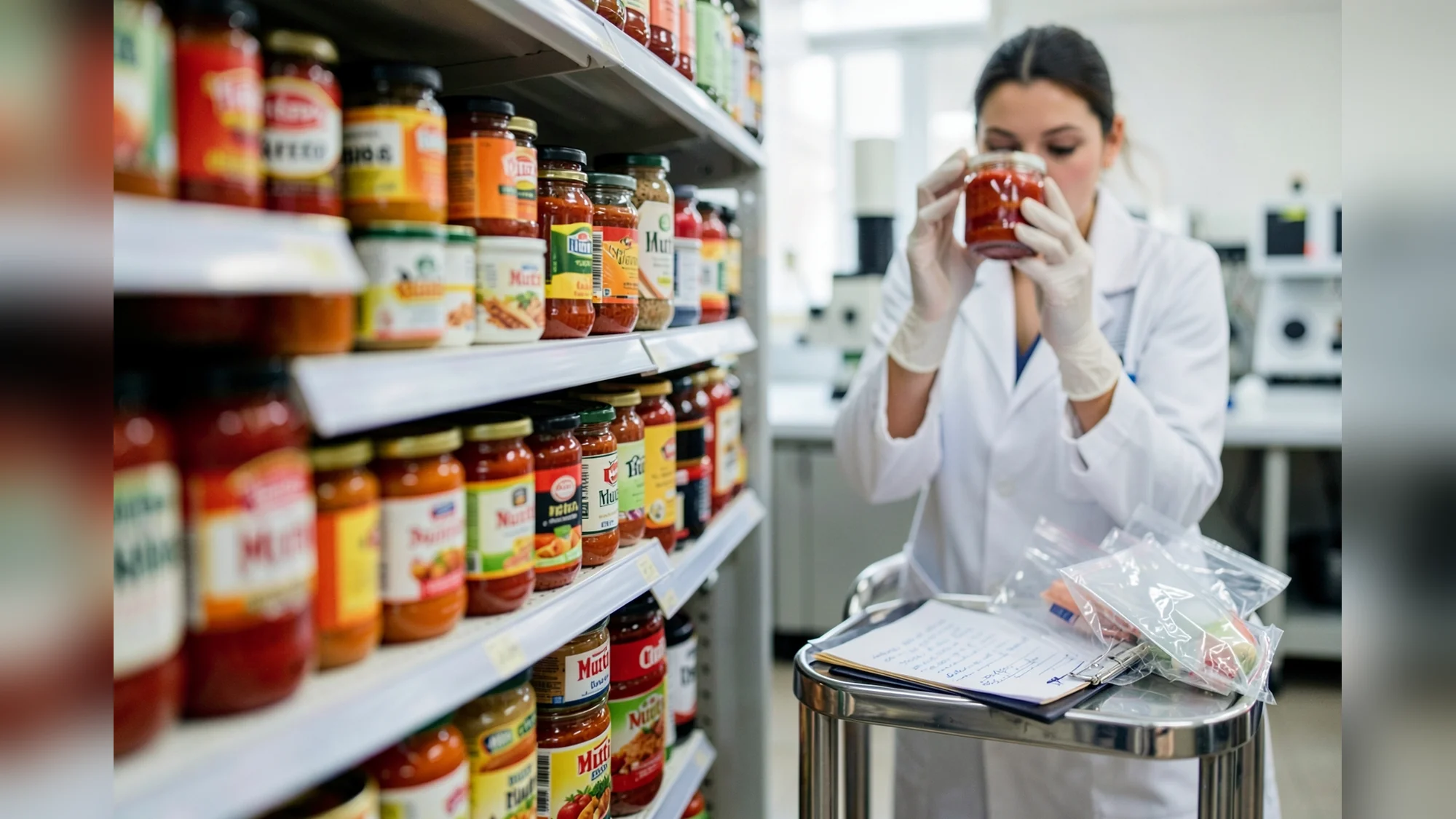
22% was the failure rate Source Certain recorded among processed tomato products sampled for the Four Corners investigation. The lab used stable isotope and trace element analysis to compare hundreds of blind-purchased samples with verified reference fingerprints, and it reported a high degree of confidence that many failed samples came from China.
The testing covered 221 processed tomato products from 39 brands. Source Certain flagged failures across that set and singled out Leggo's tomato paste in detail: the laboratory tested 33 samples of Leggo's and found multiple failures. Four Corners noted that forensic science can't yield absolute certainty, and the lab only reports an origin finding when it's sufficiently confident in the evidence.
The investigation didn't stop at tomatoes. Journalists bought items from Coles, Woolworths, Aldi and independent retailers across four states and commissioned specialist laboratories to examine composition and provenance for a range of products.
Reporting highlighted that hundreds of contaminated or unsafe imported items are detected at the border each year, including rice with arsenic and cheese with listeria, yet only a fraction of imports are inspected. Routine testing for dangerous contaminants has declined since 2019, the program said.
Honey is the only imported food routinely tested for adulteration, and it's sampled at about 5 per cent, Four Corners reported. That limited sampling regime, combined with reduced border testing overall, was presented as a major gap in the system that verifies what ends up on supermarket shelves.
Lab work and undercover reporting also focused on marketing and labelling for ultra-processed foods. Former food technologist Min Sheen Tan told Four Corners manufacturers engineer products to hit the 'bliss point' of fat, sugar and salt to maximise palatability and repeat purchases.

The program gave examples of products marketed to babies and toddlers that carry fruit imagery or health claims despite very high added sugar levels.
Rafferty's Garden Mixed Berry Yogurt Buttons, promoted to babies as young as 10 months and labelled '99 per cent fruit and yoghurt', was found on close examination to be more than 60 per cent sugar. Kiddylicious Raspberry Crispy Tiddlers was reported to contain almost 66 per cent sugar.
The investigation also questioned the term 'natural', pointing to Mayver's Low Carb High Protein Bars, which displayed '100 per cent natural' while containing emulsifiers and added flavours. Mayver's told Four Corners it planned to change the label to 'packed with natural ingredients' and maintained its labelling complied with Australian regulations.
The Food for Health Alliance at Cancer Council Victoria analysed the regulatory record and found only three of 40 public health recommendations from the 2011 Labelling Logic review have been fully implemented, all relating to alcohol. The alliance used that tally to argue the system is failing to protect shoppers from misleading claims and unhealthy formulations.
Political fallout followed the broadcast. New South Wales Greens MP Abigail Boyd used parliamentary powers to obtain restricted NSW Food Authority documents she said showed serious food safety breaches, including allegations horse meat may have been present in mince and that foreign objects such as mouse fur, metal shavings and needles had been found in food. The NSW Food Authority issued a statement saying it had not detected horse meat in beef, lamb or any food for human consumption.
Boyd told Four Corners she believes the regulator typically doesn't test for animal species and has sought release of the withheld files. She challenged the government's claim of privilege and triggered an independent review of whether those documents should remain secret.
Companies named in the investigation, including Leggo's owner Simplot and the major supermarkets, rejected or disputed specific findings. In some cases the businesses announced further independent testing, the program reported. Across the interviews and technical analysis, industry insiders, public health advocates and the forensic scientists pointed to gaps in verification, enforcement and routine testing that allow provenance and composition claims to be misleading or, in some cases, false.
Four Corners presented lab science alongside supply chain reporting to show how profit motives, weak definitions such as for the word 'natural', and limited border testing combine to leave consumers uncertain about what's actually in their pantry. The program made clear the policy problem isn't only about lab reports but also about how regulators, standards and routine sampling protect trust in food labels.
An independent arbiter has been asked to review the NSW government's claim of privilege over certain Food Authority documents and decide whether those files should be released for public scrutiny. Originally reported by ABC News.
This article was created with AI assistance.


